Island Comparison
São Tomé vs Cape VerdeWhich Should You Visit?
Two Portuguese-speaking African island countries, two completely different holidays. An honest comparison of São Tomé and Cape Verde from someone who lives on São Tomé.
By Jack Fitzgerald · British resident living in São Tomé · Reviewed and updated: 12 September 2026
São Tomé and Cape Verde are often compared because both are small Portuguese-speaking island countries off the coast of Africa. That is a perfectly sensible place to start and a fairly useless way to decide between them.
Cape Verde, officially Cabo Verde, is an archipelago of ten islands. A resort week on Sal, a walking trip on Santo Antão and a few days listening to live music in Mindelo are three different holidays. São Tomé and Príncipe has two main islands, and adding Príncipe changes both the cost and the logistics of the trip.
I live on São Tomé. I can tell you what the roads are like after rain, which beaches need a full day and why a short distance on the map may still take most of the morning. Cape Verde has to be understood island by island: Sal and Boa Vista for resort beaches, Santo Antão for walking, São Vicente for music, Santiago for history and everyday city life, and Fogo for the volcano and vineyards. Comparing São Tomé with “Cape Verde” without making those distinctions is where most of these articles go wrong.
The shortest honest answer is this: for a straightforward all-inclusive beach holiday, look at Sal or Boa Vista. For rainforest, roças, waterfalls, wildlife and a road trip where the stops matter as much as the destination, look at São Tomé. For serious mountain walking, compare São Tomé with Santo Antão rather than with a resort on Sal.
All-Inclusive
Sal and Boa Vista have the resort packages. São Tomé does not, and that is not what a trip here is for.
Hiking
Santo Antão has the established mountain trails. São Tomé offers rainforest, roças, waterfalls and wildlife instead.
Weather
Cape Verde is drier, roughly November to July. São Tomé is greener and more humid, with its drier gravana from June to September.
Malaria
Cape Verde was certified malaria-free by the WHO in January 2024. São Tomé still has malaria, so discuss prophylaxis with a travel-health professional.
Budget
On São Tomé, roughly €27–€45 to €122–€245 per person per day (two sharing, excluding flights and the €20 arrival fee).
First, decide which Cape Verde you mean
This is the part most São Tomé versus Cape Verde comparisons miss.
Sal is the obvious Cape Verde choice for an easy beach holiday. It has a large choice of accommodation, including all-inclusive resorts, direct beach access and an established watersports industry around Santa Maria. Away from the hotel, the usual island circuit includes the Pedra de Lume salt pans inside an extinct volcanic crater, Buracona and the fishing town of Palmeira. Sal is flat, dry and compact. You can organise very little and still have the holiday you expected.
Boa Vista also makes sense if wide white beaches, dunes and a resort base are the priority. Praia de Santa Mónica alone runs for around 11 kilometres. São Tomé has nothing comparable in scale, nor does it try to.
Santo Antão is different. It is a mountainous walking island of deep valleys, villages and long trails. The Cova–Paúl route drops through one of the island’s most fertile valleys; the coastal path between Cruzinha and Ponta do Sol passes Fontainhas; and the Ribeira da Torre–Corda route is the more demanding option. There is no airport, so visitors reach Porto Novo by ferry from Mindelo on São Vicente. Anyone choosing between São Tomé and Santo Antão is making a much closer comparison: green landscapes, walking, smaller communities and a trip that rewards effort.
São Vicente is different again. Mindelo has the strongest claim if music and evenings out matter. Morna, coladeira and funaná belong to the life of the city, with bars and venues around Rua de Lisboa and Praça Nova. São Tomé nightlife can be excellent, but it is small and unreliable. In Mindelo, live music is part of the reason to go. Here, the first task on a Friday night is often finding out where everybody has gone.
Santiago contains Praia, the national capital, and Cidade Velha, whose historic centre is Cabo Verde's first UNESCO World Heritage site. Ribeira Grande, as the town was originally called, was the first European colonial outpost built in the tropics and became an important port in the Atlantic trade of enslaved people. Santiago is the most populous island and a better choice for travellers who want Cape Verdean history and daily urban life alongside beaches and walking. Fogo is centred on Pico do Fogo, the active volcano rising from Chã das Caldeiras, where vines grow in the volcanic soil. Neither belongs in an article that reduces Cape Verde to sun loungers and kitesurfing.
Treating all of that as one column headed “Cape Verde” produces a neat table and a bad answer.
São Tomé or Cape Verde for an all-inclusive holiday?
Cape Verde, specifically Sal or Boa Vista.
The package resorts on those two islands are among the places to go if you want to visit Africa without being too aware that you are there. The flight lands, the coach meets you, the buffet opens and the hotel supplies the beach, pool and evening entertainment. You can spend a week inside that system with very little friction and very little contact with the country beyond it.
That is not a description of Cabo Verde as a whole. It is a description of the product sold on parts of Sal and Boa Vista. Leave the resort strip, or choose Santiago, São Vicente, Santo Antão or Fogo, and the idea falls apart quickly. Cape Verdean history, music, food and ordinary life have not disappeared because an international tour operator found a good beach.
Google suggests “São Tomé holidays all inclusive” because people search for it. The search does not create the product. São Tomé has comfortable hotels, swimming pools, good restaurants and places where you can spend several quiet days without roughing it. What it does not have is a large all-inclusive tourism system with rows of resorts, packaged entertainment and a dependable set of facilities immediately outside the room.
Pestana São Tomé is a full-service seafront hotel. Omali has a pool, gardens and one of the better hotel restaurants. They can give you a comfortable base. They do not turn São Tomé into Santa Maria, where large beachfront properties package the room, meals, drinks and organised activities into a holiday that can function almost entirely inside the resort.
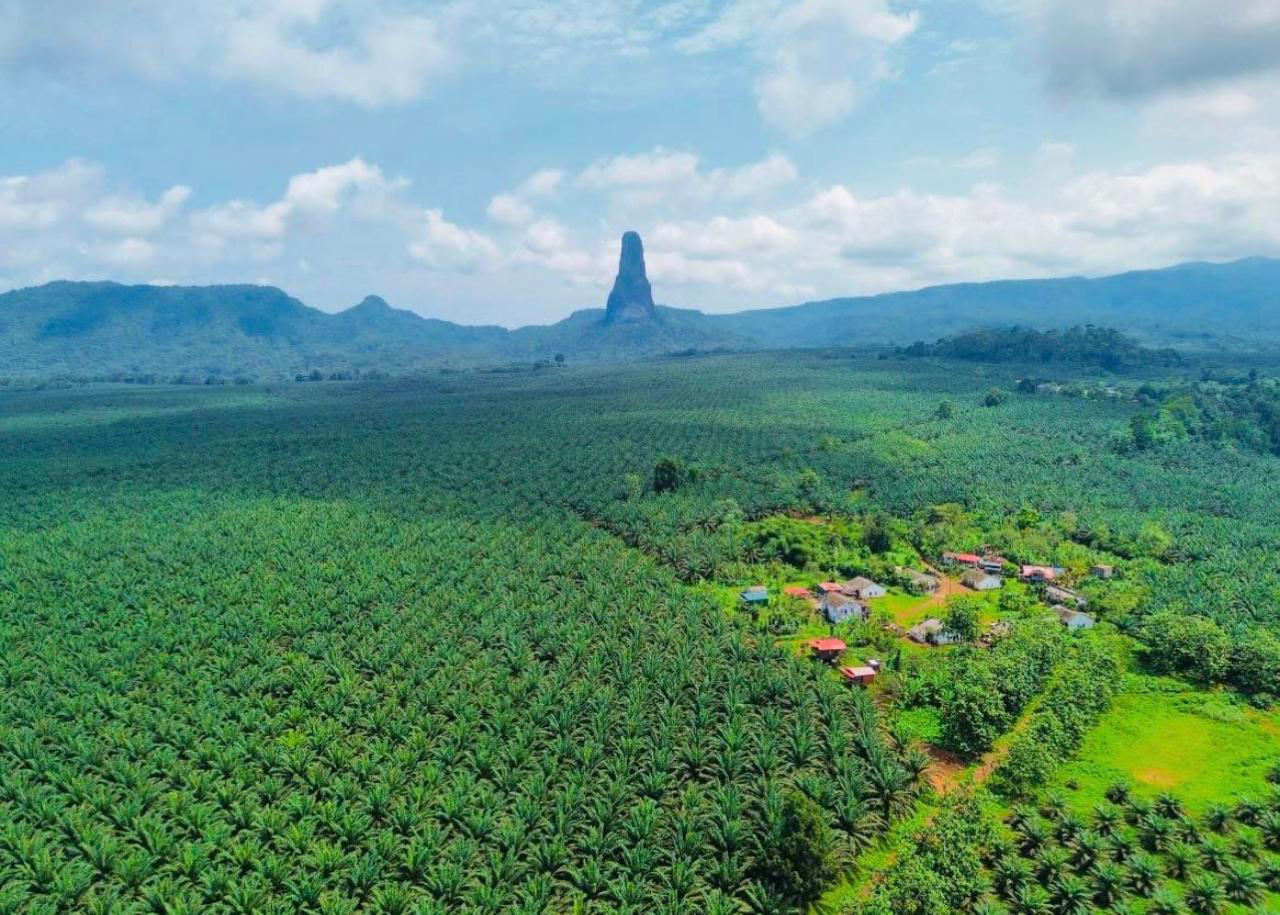
The point of coming here is normally to leave the hotel. You drive south, stop when Pico Cão Grande appears between the trees, eat whatever has been cooked at a small restaurant above a waterfall and reach Porto Alegre with enough time to argue sensibly about the boat price to Rolas. If that sounds inconvenient, choose the resort. If it sounds like the day you came for, choose São Tomé.
Our guide to hotels in São Tomé explains which properties work as comfortable bases and what their locations mean once you want to go out.
Which has the better beaches?
Cape Verde has the better beaches for a conventional beach holiday. São Tomé has the better beach days for people who enjoy finding them.
On Sal and Boa Vista, long sand beaches are central to the tourism industry. Santa Maria Bay on Sal has the clearest concentration of hotels, watersports and places to eat. Boa Vista is quieter and more spread out, with around 55 kilometres of white sand, the dunes of the Deserto de Viana and the 11-kilometre Praia de Santa Mónica. The official Cape Verde tourism guide recommends Sal, Boa Vista, Santiago and São Vicente for families with small children partly because more beaches are close to urban services.
Cape Verde’s wind is an asset if you are going to kitesurf and a nuisance if your idea of a beach day involves keeping a paperback and a towel in the same place. Sal has established schools and equipment hire for kitesurfing, windsurfing, diving and other water sports. São Tomé has surfing and diving, but nowhere near the same organised industry.
São Tomé’s beaches are smaller, less managed and more changeable. Lagoa Azul is an easy northern swim on a calm morning. Praia dos Governadores has no facilities and requires a sandy track. Praia Jalé is a wild southern beach associated with turtle nesting. Praia Piscina can be beautifully sheltered when the sea allows it, but its name is not a safety certificate.
There are no lifeguards anywhere on São Tomé. Shade, food, road access and mobile reception cannot be assumed. A beach that was calm yesterday may not be calm today. This is why our São Tomé beaches guide talks about access and swimming conditions rather than lining up ten photographs and calling them all paradise.
Príncipe has the palm-backed beaches most often used to sell the country, including Praia Banana. It also requires another flight, a separate accommodation budget and, in some cases, difficult access. If a photograph of Praia Banana is the reason you are booking, read the Príncipe guide before assuming it is part of an ordinary week on São Tomé.
São Tomé vs Cape Verde weather
If dependable dry weather is the main requirement, Cape Verde is the safer choice.
Cape Verde has an arid to semi-arid climate. Its long dry season generally runs from November to July, with most rain falling during a short period from August to October. Average daytime temperatures sit roughly between 24°C and 28°C through the year, while sea temperatures run from about 21°C in February and March to 25°C in September and October. January and February are among its mildest months. They can also bring harmatão, the dry Saharan mist that sometimes reduces visibility and affects flights or small-boat travel.
Rainfall varies between the Cape Verde islands. Sal, Boa Vista and Maio are flatter and more arid. The higher terrain of Santo Antão, Santiago, Fogo, São Nicolau and Brava catches more rain, which is why photographs of green Paúl Valley and the desert around Sal can both be truthful pictures of the same country.
São Tomé is equatorial, humid and green because rain is part of the system. The longer drier period, gravana, normally runs from June to September. The shorter gravanito falls around December to February. Neither means guaranteed blue sky, particularly in the forested interior.
March to May and October to November are usually wetter. Roads become slower, forest paths become muddier and plans involving boats or remote beaches need more flexibility. The island does not shut down, but a rigid itinerary becomes more irritating.
For a January or February escape built around sun and sand, Cape Verde has the stronger weather case. For a June to September trip mixing roads, forest and walking, São Tomé can work very well. Month-by-month searches belong on our best time to visit São Tomé page, where the effect on beaches, hiking, turtles and whales is covered properly.
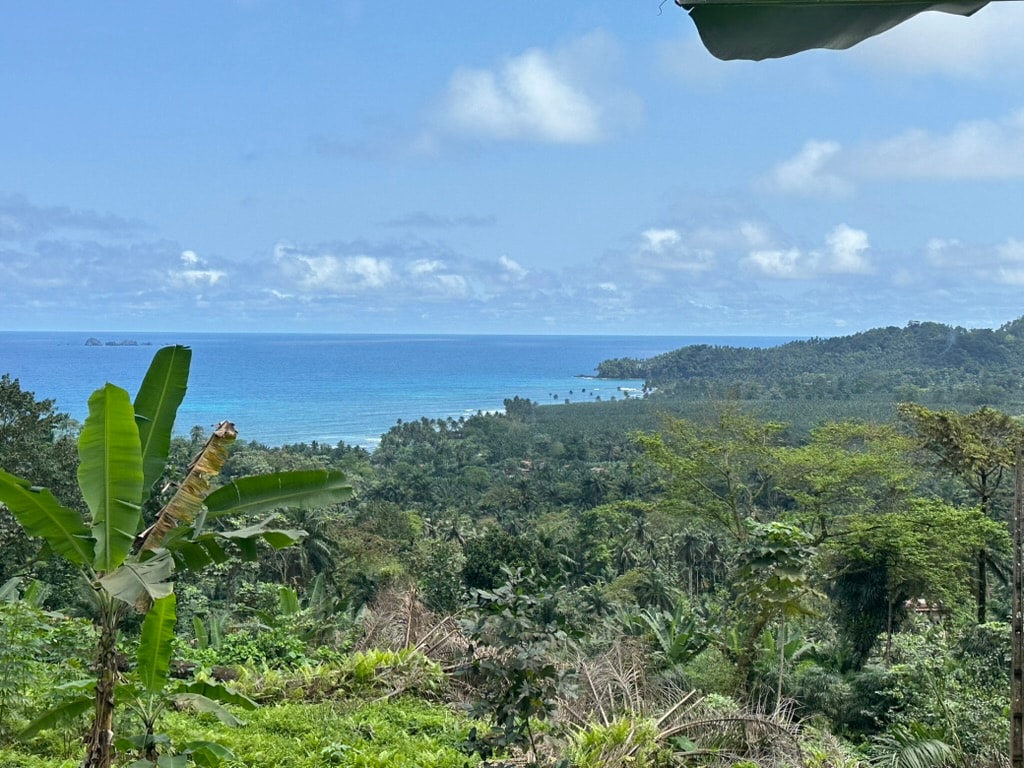
Rainforest, ocean and road: the landscape that sets São Tomé apart
Which is better for hiking and nature?
There is no honest single winner. They offer different kinds of walking.
Santo Antão is the Cape Verde island to examine for established mountain routes. The Cova crater and Paúl Valley route, the coastal walk through Fontainhas and the paths around Ribeira da Torre make walking the main event rather than something fitted between beach days. The terrain is open enough to give long views across ridges, valleys and sea.
Fogo offers the other serious Cape Verde hike. Pico do Fogo reaches 2,829 metres, and the summit climb from Chã das Caldeiras takes several hours across steep volcanic ground. The same caldera supports vineyards and wineries. It is a completely different landscape from either Santo Antão or São Tomé: black ash, exposed slopes and an active volcano rather than enclosed rainforest.
São Tomé is a forest destination. Paths can be wet, steep and poorly marked. The reward is a landscape of endemic plants, birds, old plantation land and volcanic formations that appear through dense vegetation rather than across open slopes. A morning in the central highlands can involve coffee at Roça Monte Café, the slippery steps near São Nicolau waterfall and cloud sitting over the forest before lunch.
Some attractions require less walking than their photographs suggest. Pico Cão Grande is normally seen from the southern road; reaching its base is a different proposition. Other walks require more effort than their distance suggests because heat, mud and humidity do the arithmetic differently.
If you want long, established mountain trails, start with Santo Antão. If you want rainforest, biodiversity and days combining shorter walks with roças, waterfalls and coast, São Tomé is the stronger fit. Use a local guide for serious forest routes. Paths are not consistently marked, weather changes quickly and a downloadable map is not a machete.
Which is cheaper: São Tomé or Cape Verde?
Anyone giving one daily figure for each country is comparing imaginary holidays.
A package to Sal may include flights, transfers, meals and drinks. A room rate on São Tomé may include breakfast and little else. A cheap guesthouse becomes a more expensive trip once you add international flights, a hire car and several guided days. Compare the whole booking, not two hotel prices.
On São Tomé, local life is inexpensive. A bread roll is about 5 dobras, a beer around 40 to 50 and fresh fish from a roadside barbecue roughly 100. Accommodation and transport create the larger differences. Our August 2026 working budgets range from €27–€45 per person per day for a simple trip using local food and shared transport to €122–€245 for a comfortable hotel with room for car hire and guided days. Those figures assume two people sharing and exclude international flights, the €20 arrival fee and Príncipe.
Príncipe needs its own budget. The inter-island flight and limited accommodation make it substantially more expensive than simply adding another part of São Tomé.
The São Tomé trip cost guide contains the current prices and example weekly budgets. Use it beside an actual Cape Verde package quote. That will tell you more than a comparison site confidently awarding a “budget winner” to an entire country.
Getting there and getting around
Cape Verde has more international tourism and more gateways. Sal, Boa Vista, Santiago and São Vicente all receive international traffic, while the smaller islands require another flight or ferry. Which route is easiest still depends on the island and your starting airport. A direct flight to Sal does not make Santo Antão direct; it has no airport and requires the onward journey through São Vicente.
Cape Verde has a real inter-island ferry network, but “there are ferries” is not the same as “every island combines easily.” The São Vicente–Santo Antão crossing is the simple one: regular sailings connect Mindelo and Porto Novo in under an hour. Longer routes take commitment. The service linking São Vicente, São Nicolau, Sal, Boa Vista and Santiago runs only a few times a week, with individual legs measured in hours. Fogo and Brava combine naturally; Sal and Santo Antão do not.
On the islands, taxis are widely available and shared vans provide cheaper local transport. As in São Tomé, agree taxi fares before travelling and confirm local schedules rather than building the day around an app. Cape Verde’s visitor infrastructure is broader, but island-hopping still rewards a realistic itinerary.
Most visitors flying from Europe to São Tomé connect through Lisbon. Other routes operate through Luanda or Lomé. Seats can become expensive on busy dates, so check the current São Tomé flight guide before deciding that either destination is easier in theory.
Once here, you can visit São Tomé without hiring a car. Yellow Hiaces link the capital with the main towns, moto-taxis fill shorter gaps and private drivers cover the journeys where shared transport becomes awkward. What you will not find is a timetable worth printing. A Hiace leaves when it is full, and local ideas about full are ambitious.
The difficulty is the final stretch. Waterfalls, roças and quieter beaches are not necessarily beside the Hiace route. A car gives you control over the stops and lets you change the day when the weather changes. For the south, vehicle clearance matters. The drainage ditches and fine beach sand are much less photogenic than Pico Cão Grande and considerably more capable of ruining the afternoon.
Read getting around São Tomé before choosing between public transport, a driver and car hire.
São Tomé or Cape Verde with children?
For a resort holiday with easy facilities, Cape Verde’s main tourist islands are the simpler choice.
São Tomé works for families who want to travel together rather than hand the children to a kids’ club. Children are welcomed everywhere. Dedicated facilities are the problem: child seats are not standard in taxis, high chairs are rare, pavements are poor and beaches have no lifeguards. Local boats do not routinely carry child-sized life jackets.
None of that makes the islands unsuitable for children. It makes preparation more important. Older children may love turtles, cacao, forest walks and the fact that lizards are more dependable than organised entertainment. Younger children may be entirely satisfied with warm water and the attention they receive wherever they go.
Our São Tomé with children guide covers child seats, food, medical care, beaches and boat safety in detail. Read it before assuming that “family friendly” means the same thing here as it does in an all-inclusive resort.
Health and practical differences
Cabo Verde was certified malaria-free by the World Health Organization in January 2024. São Tomé and Príncipe still has malaria, and visitors should discuss preventive medication with a qualified travel-health professional. That is a material difference for families, pregnant travellers and anyone for whom malaria prophylaxis presents a problem.
Medical care remains limited in both countries once you move away from the main population centres. On São Tomé, serious cases may require evacuation; on Príncipe, facilities cover only basic treatment. Proper travel insurance matters whichever country you choose, and the policy needs to cover evacuation rather than merely paying a local clinic bill.
São Tomé is also more cash-dependent. Cards work inconsistently, ATMs can run out after an international flight and mobile data is more dependable than public Wi-Fi. Cape Verde’s main tourist areas have more card acceptance and tourism services, though cash and small notes remain useful once you move away from resorts and cities.
Is São Tomé or Cape Verde safer?
Current UK travel advice describes crime as generally low in both countries. That does not make ordinary precautions optional.
In Cape Verde, pickpocketing, bag snatching, burglary and muggings are reported most often in Praia and on Sal and Boa Vista. Use authorised taxis, avoid isolated or poorly lit places after dark and do not treat a resort island as a reason to leave a phone on a restaurant table. The sea is the more easily underestimated danger. Currents and undertow can be strong even beside an inviting stretch of sand, so use a supervised beach, read the flags and take local advice before swimming.
São Tomé is generally calm, but ordinary precautions still apply. Do not leave valuables unattended on a beach or visible in a parked car. Roads outside the capital are often unlit and in poor condition, animals use them at night and heavy rain can bring landslides. Here too, an empty beach is not automatically a swimming beach.
Neither destination needs melodrama. Cape Verde generally gives you more formal tourist infrastructure, including authorised taxis and lifeguards at some beaches. São Tomé is quieter, but you rely more heavily on judgement, local advice and planning around limited medical care.
Food and nightlife
Cape Verde has a stronger internationally known music culture and, in its larger tourist centres, a wider and more dependable evening scene. Mindelo is the obvious choice if live music is part of the reason for travelling. This is the home territory of Cesária Évora and morna, with coladeira and funaná also part of the soundtrack rather than something performed only for hotel guests.
The food has a clearer set of nationally recognised dishes. Cachupa, a slow-cooked mixture based on maize and beans, changes by island and by household; the fried leftover version, cachupa guisada, is commonly eaten at breakfast. Fish and seafood are central, while Santo Antão is known for grogue, the sugarcane spirit used in ponche, and Fogo produces wine from vineyards inside the volcanic landscape of Chã das Caldeiras.
São Tomé is less organised. Zima is the usual meeting point, Kizomba is the only proper nightclub and the Sunday stadium party can draw a large local crowd. Schedules move, online opening hours are often wrong and a private event can empty a venue that was busy the week before. Ask a taxi driver. Word of mouth remains more useful than an app.
Food here is strongest when you stop treating the hotel menu as the safe default. A fish barbecue beside the road is not the budget version of eating properly; it is eating properly. In the city, some restaurants are excellent, some survive on an old reputation and some can produce three different explanations for why the food you ordered is not available. The São Tomé restaurant guide names them and explains the difference.
Choose Cape Verde if you want a larger choice of established venues and live music you can plan around. Choose São Tomé if you are happy to ask what is happening that night and change direction when the answer is somewhere else. Our São Tomé nightlife guide is updated from the island because a dependable-looking online schedule is often the least dependable part of the evening.
Is one week enough?
One week is enough for São Tomé if you accept that it is not enough for everything.
A realistic route gives time to the city, the central highlands, the southern road and at least one slower day. It should not turn the island into a sequence of photographs taken through a car window. Our seven-day São Tomé itinerary uses different bases so that the journey south is part of the trip rather than one punishing return drive.
Adding Príncipe to seven nights is possible and often a bad use of the week. You lose time to another flight, another check-in and the risk of a changed connection. With ten to fourteen nights, the second island makes more sense.
Cape Verde requires the same discipline. A week on Sal is simple. A week trying to collect Sal, São Vicente and Santo Antão is a transport plan wearing a sun hat.
The honest answer
Choose Sal or Boa Vista if you want an all-inclusive resort, long sandy beaches, organised watersports and a holiday that asks relatively little of you. A package can carry you from airport to pool to buffet and home again without requiring you to learn much about where you have been. For some travellers, that is precisely the appeal.
Choose Santo Antão if mountain walking is the centre of the trip. Add São Vicente if Mindelo’s music and evenings appeal.
Choose São Tomé if you want rainforest, wildlife, cocoa history, waterfalls, small beaches and the freedom to follow a road simply because it looks interesting. Come prepared for cash, uneven roads, uncertain opening hours and plans that occasionally need changing. Those are not defects hidden behind the brochure. They are part of travelling here.
If you are still unsure, send us your dates, flight options and what you actually want to do. We will tell you honestly whether São Tomé fits the holiday. If it does, we can help with the route, tours, accommodation and a vehicle. If what you really want is a week in an all-inclusive resort on a wide white beach, Cape Verde is the answer, and it is better to know that before you book.
Still deciding? Tell us what you want from the trip.
Send us your dates and priorities and we will give you an honest answer about whether São Tomé fits, plus a route, guides and a vehicle if it does.