Plan Your Trip
Best Time to VisitSão Tomé and Príncipe
When to go, what the seasons mean, and honest advice from someone who lives on the island.
The best time to visit São Tomé and Príncipe depends on what you want from the trip. The islands are tropical, humid and green throughout the year, but the weather changes enough to affect hiking, beach days, boat trips, road conditions and wildlife watching.
For most visitors, the easiest months are during the drier periods, especially from June to September and from December to February. These months usually bring less rain than the wetter parts of the year, although São Tomé and Príncipe is still a tropical country, so short rain showers can happen at almost any time.
The wetter months are not automatically bad months to visit. Rain is part of what makes the islands so green. The main difference is that travel can feel slower, trails can be muddier, and some plans may need more flexibility.
The dry seasons in São Tomé and Príncipe
São Tomé and Príncipe has two commonly recognised drier periods. The longer dry season usually runs from June to September. This period is often called gravana. It is generally cooler, less rainy and easier for hiking, exploring by road and visiting different parts of the island.
Locally, gravana can also be described as the time of flying fish rain: a light spray rather than heavy tropical rain. After the hotter months, the rivers are full, the air feels cooler, and the island seems to breathe again. It is not dry in the way many visitors from Europe or North America might imagine. The forest can still be damp, the hills can still hold cloud, and short showers can still pass through.
There is also a shorter drier period around December to February, known locally as gravanito. This can be a good time for visitors who want warmer beach weather and better chances of seeing turtles during the nesting season.
Neither dry season means completely dry weather. These are humid equatorial islands, and rain can still fall, especially in forested and mountainous areas. The coast, the interior and the higher parts of the islands can feel very different on the same day.
The rainy seasons
The rainier periods are usually from March to May and around October to November. These months can bring heavier showers and more unpredictable conditions. Roads, forest trails and remote beaches may be harder to manage after rain, especially outside the main towns.
That does not mean the islands shut down. Travellers still visit during wetter months, and the landscape can be especially lush. However, it is better not to build a tight schedule around perfect beach weather or fixed outdoor plans during the rainiest times.
If you visit in the rainy season, leave more space in your itinerary. Plan important journeys with extra time, take proper footwear, and expect some plans to move with the weather.
Best time for beaches
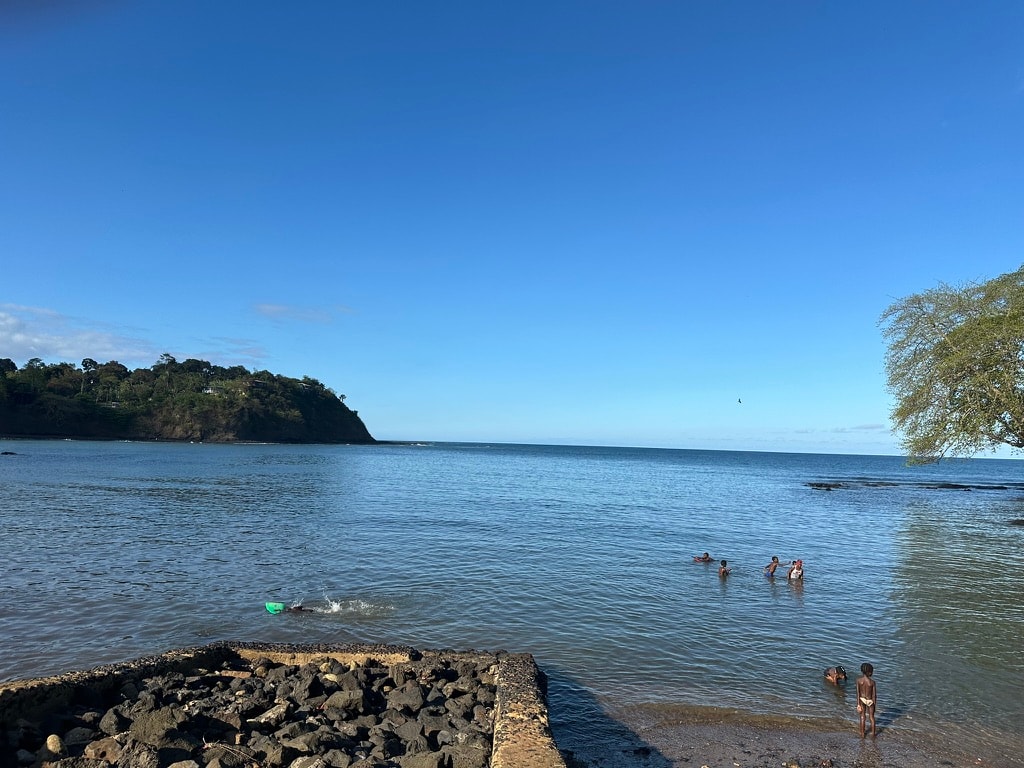
For beaches, the drier months are usually the safest choice. June to September and December to February generally give visitors better odds of usable beach days.
Even then, São Tomé and Príncipe is not a polished resort destination where every beach is managed, signposted or supervised. Sea conditions vary. Some beaches are calm, while others can have stronger waves, rocks or currents. Always check locally before swimming, especially on remote beaches.
If your main aim is beach time, avoid planning every day around one distant beach. It is better to keep the trip flexible and ask locally about conditions.
Best time for hiking and exploring
June to September is often the most practical period for hiking and general exploring. Lower rainfall usually makes trails easier and roads more manageable. It can also feel slightly cooler than the hotter, wetter months.
The interior of São Tomé is wetter and cooler than the coast, especially in higher areas. Even in the dry season, forest walks can be damp, muddy and humid. Good shoes are more useful than smart travel clothes.
For serious hikes, use a local guide. Weather, trail condition and visibility can change quickly, and some routes are not clearly marked.
Best time for turtles
Turtle activity is seasonal. Nesting is generally associated with the period from around September to March or April, depending on the island, beach and species. The peak months are roughly November to February, with hatching continuing later into the year.
Turtle watching should be done carefully and quietly, with local guidance. Beaches used by nesting turtles should not be treated as ordinary night-time tourist spaces. Avoid lights, noise, touching, flash photography and walking close to nesting turtles.
If turtles are one of your main reasons for visiting, ask for current local information before planning exact dates.
Best time for whale watching
Whale watching is also seasonal. Humpback whale activity is generally linked with the period from about July to October, with the main viewing months between July and September.
As with all wildlife, sightings cannot be guaranteed. Boat trips depend on weather, sea conditions and responsible operators. A good whale-watching trip should be honest about uncertainty.
So, when should you go?
For a first visit, June to September is probably the simplest choice. It usually gives the best balance of lower rainfall, easier travel, hiking, exploring and sea-based activities.
December to February can also be a strong choice, especially if you want warmer weather, beach time and the possibility of turtle nesting.
March to May and October to November can still work, but they need a more flexible style of travel. These months are better for visitors who understand that rain may change the rhythm of the trip.
São Tomé and Príncipe is not a destination that should be rushed. The best time to visit is not only about choosing the right month. It is also about travelling with realistic expectations, leaving space in your plans, and allowing the islands to move at their own pace.