Scuba Diving
Diving inSão Tomé and Príncipe
Volcanic walls, tunnels, wrecks and warm Atlantic water.
São Tomé and Príncipe sits in the Gulf of Guinea on the volcanic edge of the African continent. It is not a mass-market dive destination, and that is largely the point. The reefs, walls, tunnels, wrecks and rocky formations around the island are explored by a small number of visitors each year, the operators are experienced and personal, and some sites genuinely reward the effort of getting here.
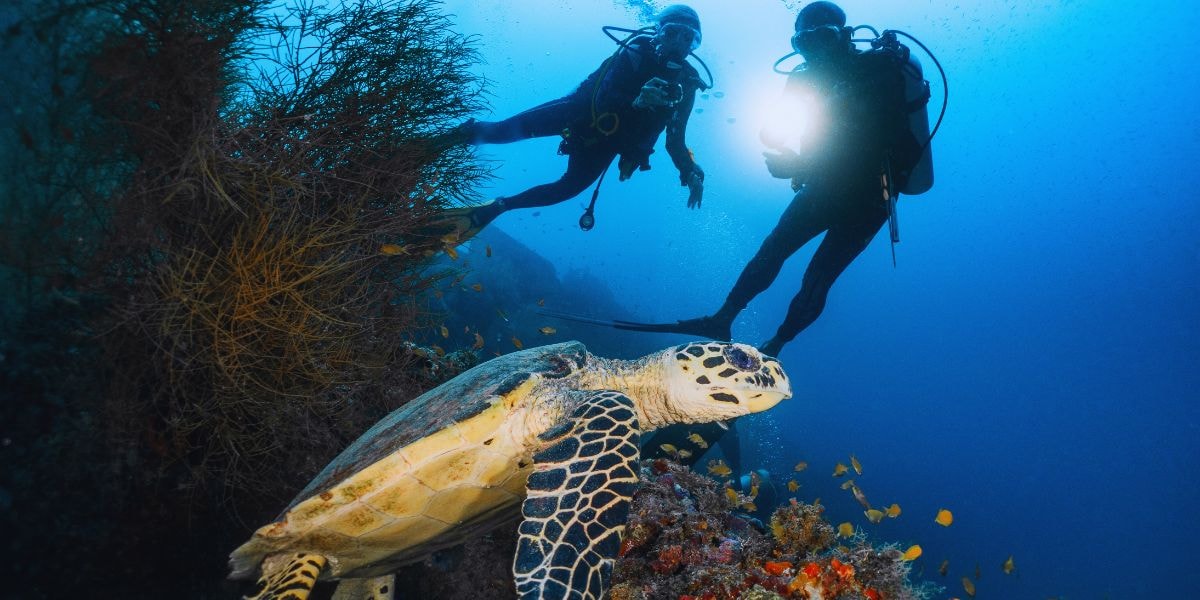
Visibility is generally good, with a minimum of around 15 metres year round. The water is warm. The underwater landscape is volcanic in character: rocky formations, dramatic walls, caves and tunnels rather than the coral gardens of the Indian Ocean. Wildlife is Atlantic and equatorial: seahorses, nurse sharks, stingrays, eagle rays, octopus, moray eels, tuna, grouper and more.
This is not Indonesia or the Maldives. The diversity is different. But for divers who want somewhere genuinely off the beaten track with real underwater interest, São Tomé delivers.
The dive operators
Three operators currently run diving in São Tomé:
Dive-Tribe
Dive-Tribe operates from two bases: one at Hotel Pestana São Tomé in the city and one at Hotel Pestana Equador on Ilhéu das Rolas. They are a PADI and SSI centre running daily dives, snorkelling trips and whale watching. Contact through the Pestana hotels or search Dive-Tribe São Tomé.
Atlantic Diving Center
Atlantic Diving Center is based at Club Santana on the east coast, ideally positioned for the Santana dive sites. They run daily outings with nitrox available and good equipment. Contact through Club Santana.
Dive São Tomé
Dive São Tomé is based on Av. Marginal 12 de Julho in the city. They can be reached at +239 995 9088 or info@divesaotome.com. They publish a full dive site list on their website and run snorkelling tours as well as guided dives.
Book directly with any of these operators. Do not assume availability: confirm before your trip.
The dive areas
Diving is broadly grouped into four areas: the north coast around Lagoa Azul, the east coast around Santana, the south coast, and the offshore sites around Ilhéu das Rolas.
Lagoa Azul and the north coast
Lagoa Azul is the best-known dive and snorkel area on the island. The bay sits in the northwest, around 18km from the city, inside the Parque Natural Obô de São Tomé. The water is clear, the conditions are generally calm and it works for a range of experience levels.
The north also has a seahorse sanctuary. On a single dive here it is not unusual to see a dozen or more seahorses. For underwater photographers this alone is worth the trip.
| Site | Max Depth | Level |
|---|---|---|
| Lagoa Azul Bay | 15m | Beginner |
| Lagoa Azul Wall | 26m | Beginner / Intermediate |
| Fundão | 37m | Advanced |
| Pico D'Ouro | 25m | Intermediate |
| Barco do Arroz | 10m | Beginner (wreck) |
| Kia | 22m | Beginner / Intermediate |
| Marvão | 6m | Beginner |
| Marvasa | 7m | Beginner |
| Ilhéu de Santana (north) | varies | Various |
Santana and the east coast
The village of Santana on the east coast is widely considered the best base for diving on the island. The Atlantic Diving Center is here, and the sites around Ilhéu de Santana are among the most talked-about in visitor accounts.
The Santana tunnel is the standout. It passes through the islet and is consistently recommended by divers at every level. The rocky formations, caves and arches around the islet are full of life.
| Site | Max Depth | Level |
|---|---|---|
| Ilhéu de Santana Tunnel | 24m | Intermediate |
| Ilhéu de Santana Sul | 35m | Advanced |
The south coast
The south coast has a good spread of sites suited to beginners and intermediate divers, with one advanced option.
| Site | Max Depth | Level |
|---|---|---|
| Pedra do Vitorino | 20m | Advanced |
| Furnas | 22m | Beginner / Intermediate |
| Ponta Joana | 15m | Beginner |
| Pedra do Braga | 26m | Beginner / Intermediate |
| Pedra Nanook | 25m | Beginner |
| Pedra Sa Pinto | 15m | Beginner |
| Ponta da Garça | 15m | Beginner |
| Baía de Chinha | 8m | Intermediate |
| Ponta Baleia | 25m | Beginner |
Ilhéu das Rolas and the offshore sites
Rolas is the small island that straddles the equator in the south. Dive-Tribe operates here from the Pestana Equador hotel. The diving is characterised by caves, caverns, tunnels and arches: sheltered spots dense with fish and macro life. Seahorses, nudibranches, moray eels, octopus, cowfish and arrow crabs are regularly spotted here.
The south around Rolas is also the best area for pelagic life. Between December and May, stingrays, eagle rays, large groupers, tuna and swordfish appear in the waters offshore.
Two special offshore sites, São Miguel (40m, advanced) and Sete Pedras (38m, advanced), are available at additional cost for qualified and experienced divers when conditions allow. These are serious dives, not casual add-ons.
| Site | Max Depth | Level |
|---|---|---|
| São Miguel | 40m | Advanced (additional cost) |
| Sete Pedras | 38m | Advanced (additional cost) |
Snorkelling
Several of the same areas work well for snorkelling, particularly Lagoa Azul, Ilhéu de Santana and the waters around Rolas. All three operators run snorkelling trips. The Barco do Arroz wreck at 10m is also accessible to confident snorkellers in calm conditions.
Visibility and best season
Water visibility is generally 15 metres or better year round. The clearest conditions are typically associated with December to March. The pelagic season around Rolas runs from December to May.
As with all diving, conditions on the day are what matter. Sea state, weather and current all vary. If specific sites are central to your trip, check with your operator before locking in dates.
What to expect
São Tomé is a small island destination. Diving here is personal, unhurried and organised by people who know these waters well. You will not find dive resort infrastructure or large groups. You will find experienced local operators, warm water, volcanic scenery and a corner of the Atlantic that very few divers have visited.
Not sure which operator suits you?
WhatsApp Jack for a straight answer on which dive operation fits your level, schedule and location.
WhatsApp JackBring your certification card, be honest about your recent experience and contact your chosen operator before you arrive.