1470 to Today
The History of the
Chocolate Islands
From Portuguese settlement to the slave trade, the cocoa boom, massacre, independence, and democracy. A small island with a large and complicated past.
São Tomé and Príncipe was uninhabited when Portuguese navigators arrived in 1470. In the five centuries since, the islands have been a sugar colony, a transit point in the slave trade, the world's largest cocoa producer, a Portuguese colony, and since 1975, an independent republic and one of Africa's most stable democracies.
The physical traces of this history are everywhere. Colonial-era churches and administrative buildings in the capital. Roça estates scattered across the hillsides, from the beautifully restored to the elegantly ruined. Cacao trees still growing on land first planted two centuries ago.
Understanding the history does not diminish the pleasure of the islands. It deepens it. This is a place that has been shaped by extraordinary forces, and the landscape and culture carry those marks in ways that reward a curious visitor.
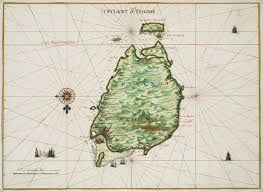
A Portuguese nautical chart of São Tomé, from the era when the island was the centre of the Atlantic sugar trade.
Five Centuries
A Timeline of the Islands
Discovery
On the feast day of Saint Thomas, Portuguese navigators João de Santarém and Pêro Escobar reach an uninhabited equatorial island in the Gulf of Guinea. They name it São Tomé, the island of Saint Thomas. A second island, sighted ten days earlier on the feast of Saint Anthony, becomes Príncipe. Both islands are found empty: no indigenous population, no settlement. A blank canvas at the edge of the known world.
First Settlement
The first permanent Portuguese settlement is established. The Crown dispatches settlers, including convicts released specifically for the purpose, along with a small number of Jewish children expelled from Iberia following the Spanish Inquisition. The islands are difficult: equatorial heat, disease, and isolation. Early mortality is high. The settlers who survive begin to build something.
Sugar and the Slave Trade
Sugar cane cultivation transforms São Tomé into one of the most productive sugar colonies in the Atlantic. The labour comes from enslaved people taken from the West African mainland, and São Tomé becomes a pivotal node in the transatlantic slave trade, a transit point between Africa and the Americas. At its peak in the mid-sixteenth century, the island is the world's largest single producer of sugar. The wealth is real. So is the violence on which it is built.
Decline and Dutch Raids
The sugar economy begins to falter. Competition from Brazil, raids by Dutch and French privateers, and a series of slave revolts weaken the colony. The Dutch sack São Tomé City repeatedly in the early seventeenth century. Portugal's grip on the island loosens. The economy contracts. The forests, once cleared for cane, begin to reclaim their ground.
The Cocoa Boom
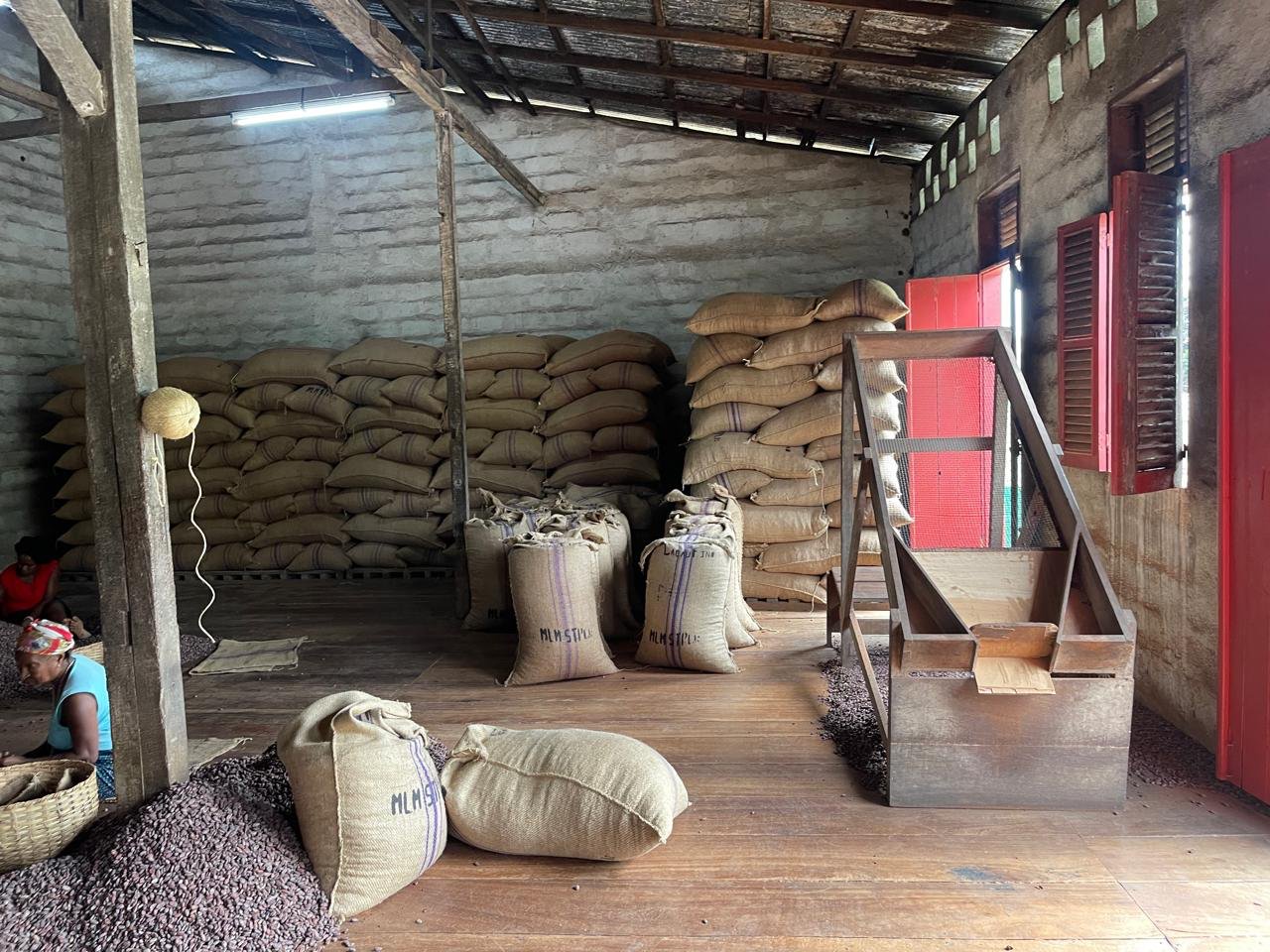
Cocoa arrives. Cacao trees, introduced from Brazil, prove ideally suited to the volcanic soil and equatorial climate of São Tomé and Príncipe. By the 1880s, the islands have become the world's largest producers of cocoa, a position they hold into the early twentieth century. The plantation system reorganises around the cacao crop. Vast roça estates spread across the island's interior and slopes, each a small economy in itself: processing buildings, workers' quarters, a great house, sometimes a hospital and a church.
The Roça System
The roça system represents a unique form of colonial agricultural organisation. Each estate operates semi-autonomously under a Portuguese administrator, worked by serviçais, labourers brought from Angola, Mozambique, and Cape Verde under contracts that in practice resembled indentured servitude. The Cadbury boycott of 1909, led by British journalist Henry Nevinson who documented conditions on the islands, briefly focuses international attention on the labour practices. The industry continues largely unchanged.
The Batepá Massacre
In February 1953, under Governor Carlos Gorgulho, Portuguese colonial forces massacre hundreds of Forro people, the indigenous creole population of São Tomé, following protests against forced labour laws. Estimates of the dead range from several hundred to over a thousand. The massacre, known as Trindade or Batepá, is a defining moment in Santomean political consciousness and a catalyst for the independence movement that follows.
The Independence Movement
The Movimento de Libertação de São Tomé e Príncipe (MLSTP) is formed in exile, primarily in Libreville, Gabon. The movement draws on the networks of the cocoa worker diaspora and the educated Forro community. Portugal, under Salazar and then Caetano, refuses to negotiate. The movement waits.
The Carnation Revolution
The Carnation Revolution overthrows the Portuguese dictatorship in Lisbon. The new government moves quickly to decolonise. Negotiations with the MLSTP begin almost immediately. The Portuguese administration on the islands begins to wind down.
Independence
São Tomé and Príncipe achieves independence on the 12th of July 1975. Manuel Pinto da Costa, leader of the MLSTP, becomes the first president. The new government nationalises the roça estates. Many of the Portuguese settlers and managers depart. The cocoa industry, stripped of capital and expertise, enters a prolonged decline. The great houses begin to fall silent.
Multi-Party Democracy
São Tomé and Príncipe becomes one of the first African countries to peacefully transition to multi-party democracy. A new constitution is adopted. Elections are held. The country establishes a reputation for political stability and peaceful transfers of power that it has maintained ever since. By the standards of the region, and by any honest measure, this is a remarkable achievement.
A Country Finding Its Feet
The islands remain small, beautiful, and struggling. Oil was discovered offshore in the early 2000s but production has remained limited. Cocoa is being revived, with small-batch artisan producers like Claudio Corallo bringing the islands' beans to international attention again. Tourism is growing slowly. The roças, some restored, some crumbling, some somewhere in between, remain the most visible monuments to the island's extraordinary, complicated history.
The Plantation System
The roças: a world within the island.
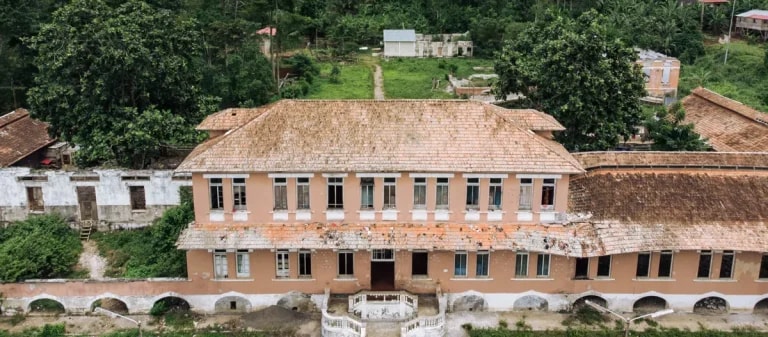
A roça (from the Portuguese, meaning a cleared or cultivated place) was a plantation estate. At their peak in the early twentieth century, the roças of São Tomé and Príncipe covered most of the island's productive land. Each operated as a largely self-contained community: processing factory, housing for hundreds of workers, administrative offices, the great house of the Portuguese manager, a church, sometimes a hospital.
Today, the roças exist in every state from ruin to restoration. Some are still working farms. Others have been converted into hotels, restaurants, or cultural sites. Many stand empty, their architecture slowly being reclaimed by the forest. Walking through them is one of the most singular experiences the islands offer: a direct encounter with a world that has ended but not entirely disappeared.
See it for yourself.
The history of São Tomé and Príncipe is easier to understand when you are standing in it. Our tours are designed to bring the landscape and its past together in a way that no book quite manages.
São Tomé Walking Tour
Colonial streets, the cathedral, the market, and the harbour, on foot with a local guide.
Explore →Central São Tomé Tour
Roça estates, cacao plantations, and the road to Pico Cão Grande.
Explore →Southern São Tomé Tour
The largest southern roças, turtle beaches, and the equator island.
Explore →Region: São Tomé City
A full guide to the capital, its sites, and its story.
Explore →Ethical Travel
How to engage with the island's history in a way that is honest and respectful.
Explore →Planning Your Trip
Practical advice for first-time visitors to the islands.
Explore →The History of São Tomé Chocolate
From the first cacao trees planted by Portuguese colonists to the fine-flavour bars sold in European shops. The full story of cocoa on the islands.
Explore →