The Second Island
PríncipeUNESCO Biosphere Reserve
How to get there, where to stay, and what to see on São Tomé's smaller sister island.
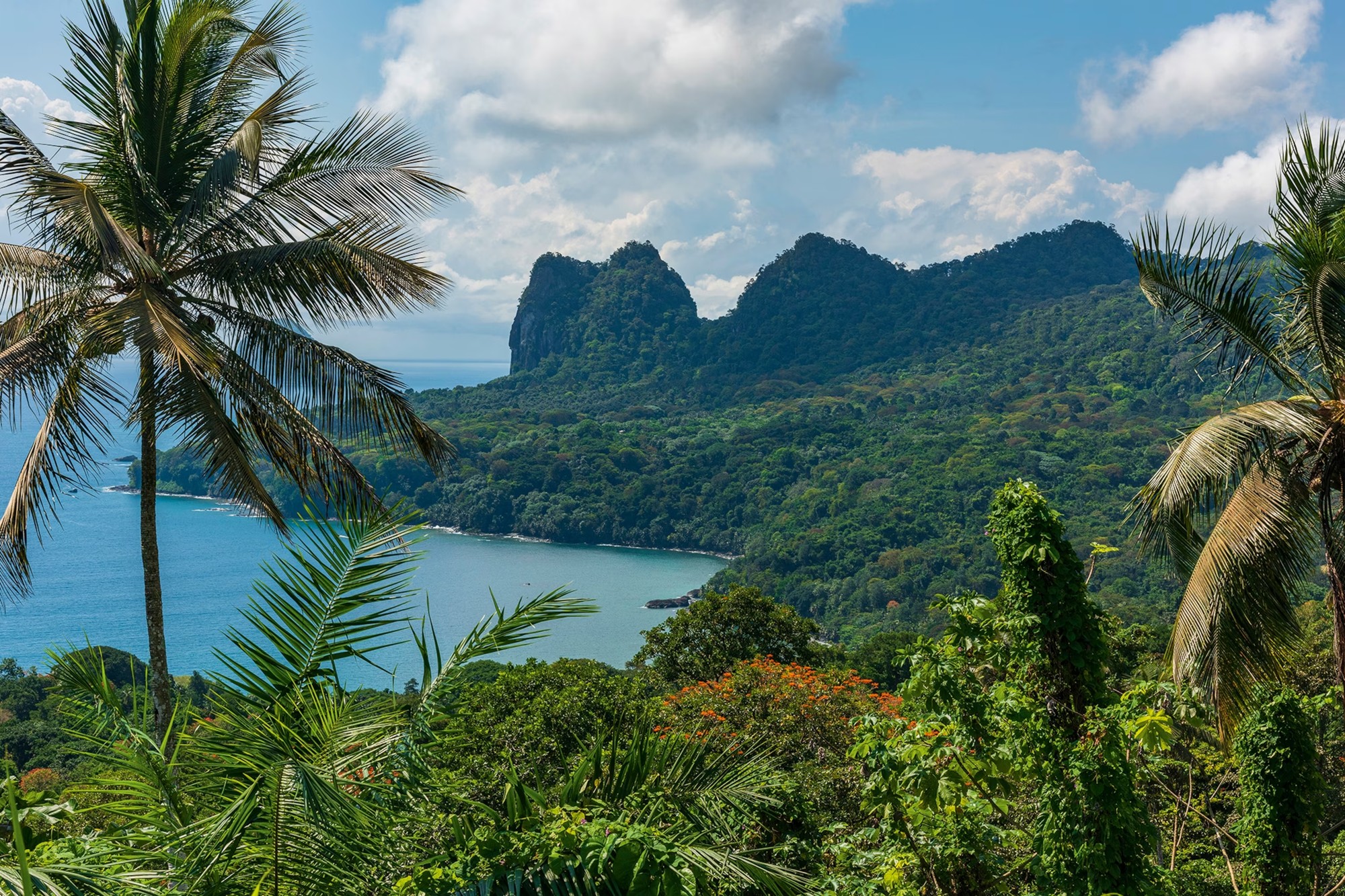
Explore Príncipe ToursThis Príncipe travel guide is essential reading if you are visiting São Tomé and Príncipe. The little sister of the main island, Príncipe is a volcanic island in the Gulf of Guinea and an autonomous region of São Tomé and Príncipe. It covers roughly 142 square kilometres and lies about 150 kilometres north of São Tomé. Geologically it is far older than São Tomé, its main volcanic formation dating to around 31 million years ago. That long isolation has produced a high level of endemism, making the island ecologically significant on a global scale.
In 2012 the entire island and its surrounding islets were designated a UNESCO Biosphere Reserve. This reflects a deliberate strategy built on low-impact, low-volume tourism rather than mass infrastructure. For visitors it means limited services, few redundancies, and a constant need for self-reliance. The island rewards patience and preparation, not speed or convenience.
Island at a Glance
Size
Roughly 142 square kilometres
Location
Gulf of Guinea, ~150 km north of São Tomé
Geology
Volcanic formation dating to ~31 million years ago
Status
UNESCO Biosphere Reserve (since 2012)
Tourism model
Low-impact, low-volume
Flights
Getting there: the São Tomé to Príncipe connection
Flights between São Tomé and Príncipe are scheduled by STP Airways, with a morning service on most operating days and an afternoon service on Monday, Wednesday, Thursday, Friday, and Sunday. The flight takes about 40 minutes each way. It is still a small inter-island route, so check the current schedule directly and avoid building tight onward plans around it.

On the ground
Santo António: practical realities
Santo António is the administrative and functional centre of Príncipe. It is the only place where you can attempt to access cash, fuel, mobile services, and basic supplies, though none of these should be treated as guaranteed.
Cash and financial services
Príncipe is best treated as a cash-first destination. ATM access is limited and unreliable, card payments are uncommon, and network outages can easily disrupt transactions. Outside a small number of higher-end lodges, do not expect to rely on cards. Arrive with enough Euros or Dobras to cover your stay, plus extra set aside in case of delays or emergencies.
Medical facilities
Medical care is limited to basic treatment and minor injuries. There is no capacity for complex procedures or intensive care. Any serious issue requires evacuation to São Tomé or onward to Europe. Your travel insurance must explicitly cover medical evacuation from remote locations.
Fuel, power, and connectivity
Fuel is concentrated in Santo António and should not be assumed elsewhere on the island. Supply interruptions are frequent, and shortages can halt all island transport. Electricity is uneven, with outages and load shedding more likely during heavy rain. Mobile coverage is strongest in and around the town and degrades rapidly outside it. Data speeds are slow, rarely better than 3G, and coverage in the remote south is often absent.
North of the island
Northern route: Bom Bom and Roça Sundy
The north of the island holds several historic roças and some of Príncipe's best-known beaches, but access remains demanding. Roads are a mixture of deteriorated asphalt, patched sections, and dirt tracks. In and near Santo António some streets have been upgraded with cobblestone paving, but conditions worsen quickly outside town. In the rainy season surfaces become slick and rutted, and standard vehicles will struggle.
Roça Sundy is historically notable for its link to the 1919 solar eclipse expedition connected to Arthur Eddington's work on general relativity. The access roads are narrow, and fallen vegetation or debris after storms is common. There are no reliable shops, pharmacies, or fuel points outside Santo António, so anyone exploring the north independently must leave town with a full tank and basic self-recovery capability.
Compare Bom Bom and Sundy Praia →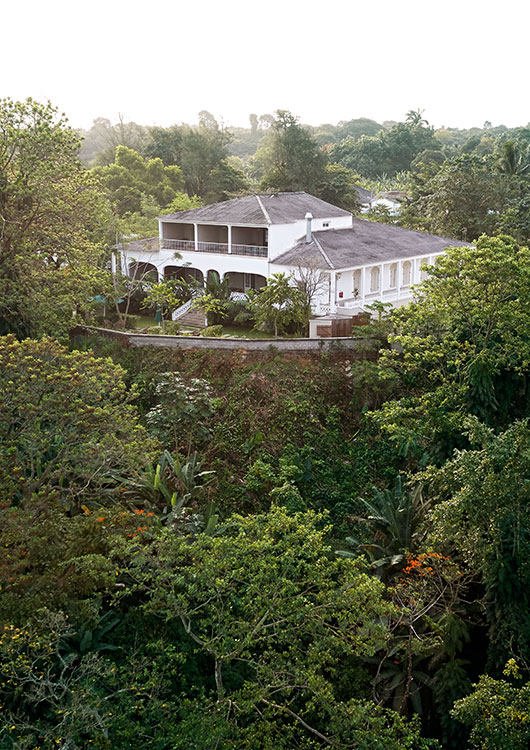
Before you go
The realities of Príncipe
Biosphere status and access
Access to the park is regulated under national conservation law and local park rules. In practice, visits into primary forest are organised with local guides. This is both a conservation measure and a safety requirement, since the terrain is steep, densely vegetated, and unmarked.
Road conditions
These vary sharply. Some routes are straightforward, others turn rough, steep, or difficult after rain, especially away from settled areas. Take care driving at night, and remember the drink-drive limit exists only in theory. Where you can, limit your driving to clear days. Be very careful if you hire a bike, because the roads are not what you are used to. A few weeks ago a tourist dropped his bike and burned his leg on the exhaust. That sounds trivial by European standards, but here it can quickly become infected.
Southern beaches
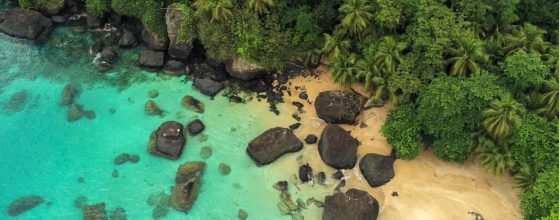
Beaches such as Praia Banana and Praia Burra are visually striking but logistically difficult. The hotels have tied up the easy access, so for those who cannot afford several hundred euros a night, and for locals, getting there often means steep, slippery approaches that can become impassable after heavy rain. There is little to no mobile reception and no local assistance if a vehicle gets stuck or damaged.
Quick facts
- Size
- 142 square kilometres
- Flight time
- 40 minutes from São Tomé with STP Airways
- Cash
- Arrive with enough Dobras or Euros to cover your stay, ATMs unreliable
- Medical
- Basic treatment only, evacuation insurance essential
- UNESCO
- Biosphere Reserve since 2012