Natural Attractions
Waterfalls ofSão Tomé and Príncipe
Cascata São Nicolau on São Tomé and Cascata Oquê Pipi on Príncipe, with honest advice on access and conditions.
São Tomé and Príncipe is one of the best places in Central Africa for rainforest waterfalls, but not every waterfall is suitable for a simple travel page. Some are realistic stops for visitors. Others need local checking because access, trail conditions and road conditions can change quickly, especially after heavy rain.
This guide focuses on the waterfalls with enough reliable information to be useful for travellers: Cascata São Nicolau on São Tomé and Cascata Oquê Pipi on Príncipe. Other waterfall names appear in tourism material, but they are not included here as main recommendations unless access and visitor suitability can be checked locally.
Cascata São Nicolau
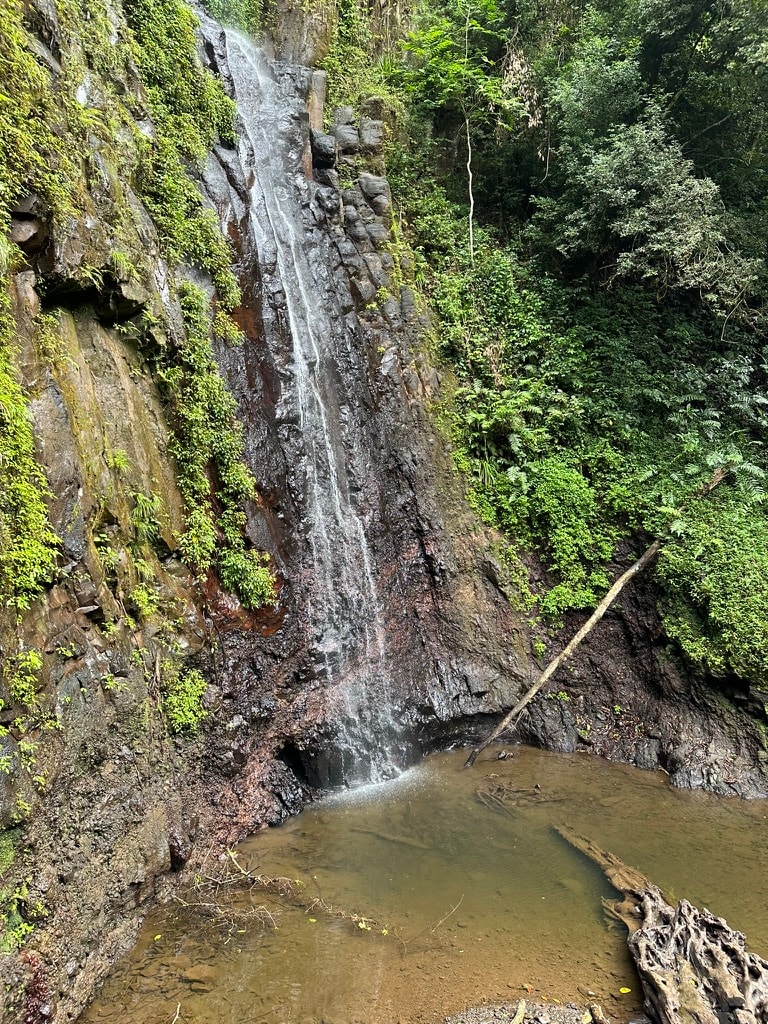
Cascata São Nicolau, São Tomé
Cascata São Nicolau is the most practical waterfall for many visitors to São Tomé. It sits in the green central part of the island and is often combined with Monte Café, the coffee-growing interior and the Botanical Garden area.
This is the waterfall to choose if you want a simple introduction to São Tomé's mountain landscape without planning a long expedition. The scenery is lush, the route fits naturally into a central island day trip, and the waterfall gives a clear sense of how quickly São Tomé changes from coast to forested highland.
São Nicolau is a good option for first-time visitors, photographers and travellers who want to see more than beaches. It is still important to check road conditions locally, especially during or after periods of heavy rain.
Cascata Oquê Pipi
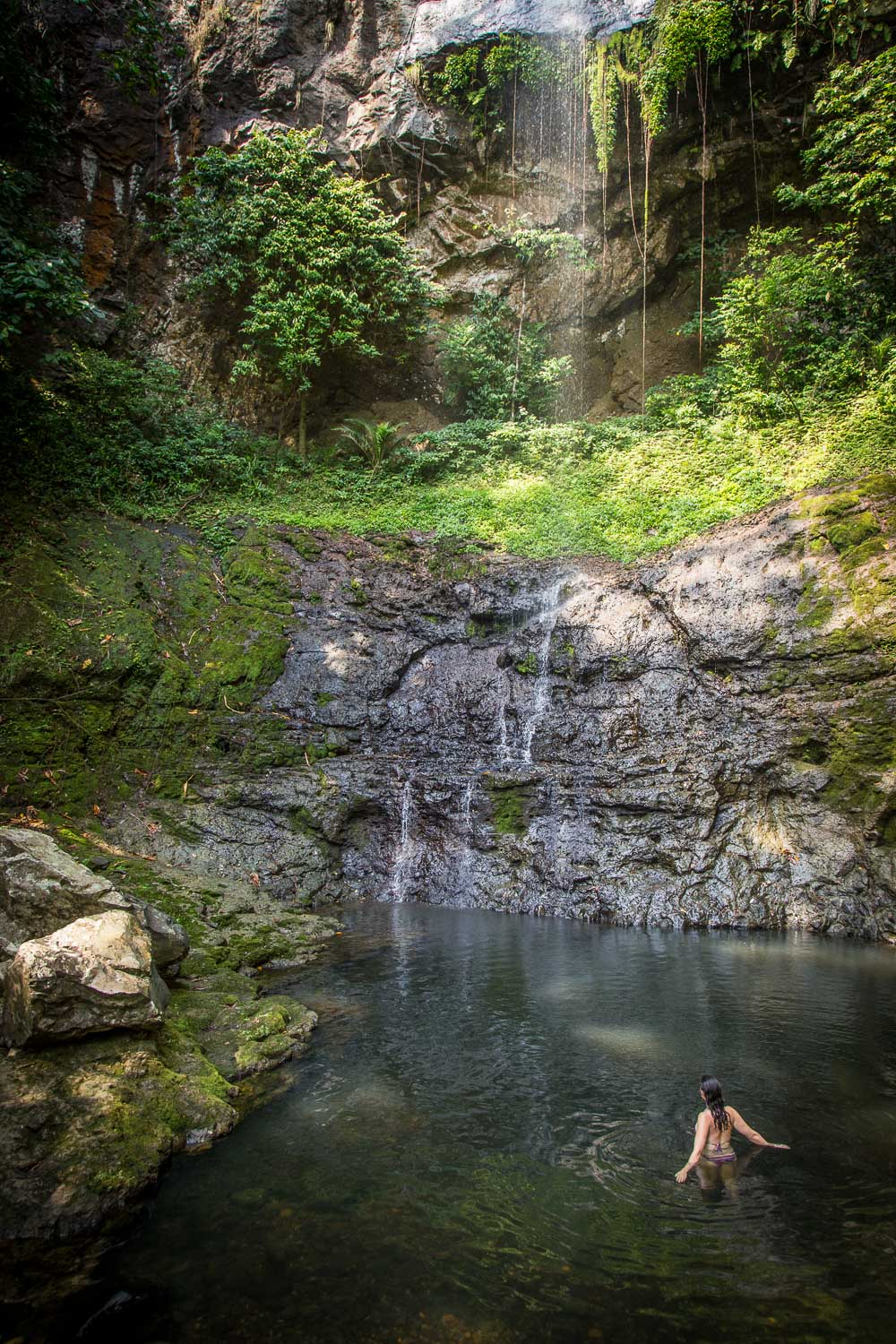
Cascata Oquê Pipi, Príncipe
Cascata Oquê Pipi is the main waterfall experience on Príncipe and one of the largest on the island. The waterfall drops around 30 metres into a natural pool at its base, surrounded by moss-covered rocks, overhanging forest and the constant mist of falling water.
A guide is not optional here. It is a mandatory requirement. The trail runs through Parque Natural Obô do Príncipe, and access regulations require all visitors to be accompanied by a certified local guide. This protects both the ecosystem and visitors on a trail that passes through dense tropical forest.
The walk itself is not extreme. It is described as a relatively short trail with some moderate climbing, suitable for visitors who are reasonably fit and prepared for forest conditions. The natural pool at the base is a rewarding destination and swimming is possible when conditions allow -- but never after heavy rain or without checking with your guide first.
Oquê Pipi is best for travellers already staying on Príncipe who want to spend time in the island's interior. Arrange the guide before you go, not on the day.
Other waterfalls
São Tomé and Príncipe has more waterfalls than the two listed above. Bombaim appears in tourism material for São Tomé, and Maria Correia is a waterfall on Príncipe reached via a coastal trail. Neither is included here as a main recommendation because there is not enough reliable public information to give exact visitor instructions for access, trail condition, swimming suitability or road conditions.
That does not mean they cannot be visited. It means they should be checked locally before being added to a day plan. Some waterfall routes may depend on recent rain, private land, forest access, road condition and local knowledge.
For most visitors, São Nicolau on São Tomé and Oquê Pipi on Príncipe are the clearest choices.
Best time to visit
Waterfalls are usually stronger after rain, but wetter conditions also make roads and trails more difficult. São Tomé and Príncipe has rainy periods when flooding, slippery paths and poor road conditions are more likely.
The best approach is not to choose a waterfall only by season. Check conditions close to the day of travel. After heavy rain, avoid entering rivers or pools unless a local guide confirms it is safe.
How to visit responsibly
Waterfalls in São Tomé and Príncipe are part of living forest landscapes, not managed attractions. Paths may be muddy, signs may be limited, and conditions can change quickly.
Wear shoes that can handle wet ground, take water, avoid leaving rubbish, and use a local guide where the route is not straightforward. Do not assume every waterfall is safe for swimming. Do not enter fast-moving water after rain.
Choose one good place, go slowly, check conditions locally, and treat the forest with care.