Regional Travel Guide
Central São ToméMonte Café and the Highlands
Escape the heat in the highlands. Cool mist, old coffee plantations, and mountain trails.
Big picture and background
The Mé-Zóchi Highland Interior
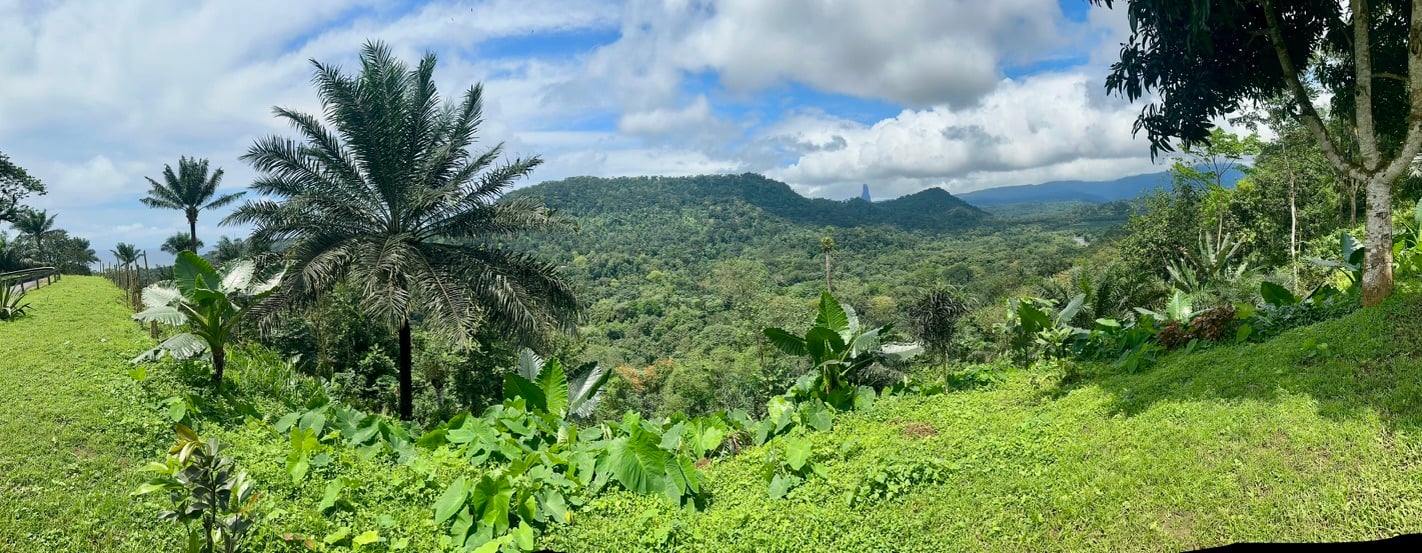
This guide covers the Mé-Zóchi district, which rises inland from the capital into the island's volcanic highlands. The route follows the EN1, the main road linking São Tomé city with the interior. Within roughly 20 kilometres, the elevation rises from sea level to more than 1,000 metres, making this the sharpest altitude change on the island.
Central São Tomé is shaped by steep terrain, frequent cloud cover, and high rainfall. These conditions helped establish the region as the centre of plantation agriculture, especially coffee. Steep valleys, ridgelines, and secondary forest dominate the landscape, much of it still marked by the colonial roça system that reshaped land, labour, and settlement patterns from the nineteenth century onward.
Compared with the drier north, temperatures here are noticeably cooler and the weather can change quickly. Mist and rain are common, especially in the afternoon. Much of the agricultural infrastructure built around these conditions is still visible and in use, linking present-day communities to the region's colonial past.
If you are planning to explore the highlands, you can view our tours or tackle the gradients independently with our car hire.
Coffee Plantation
Monte Café (670 m): Coffee Plantation and Museu do Café
Monte Café is a former plantation village founded in 1858 and remains the island's most significant centre for Arabica coffee production. Rather than a single attraction, it functions as a working settlement organised around the original plantation core.
The Museu do Café occupies part of the historic estate and documents the full production cycle, from cultivation through processing and export. A local guide will walk you through, but to be honest, do not expect a great deal of insight. They work from learned scripts and the performance is lacklustre. If you want to learn more, check out our roça guide or history page.
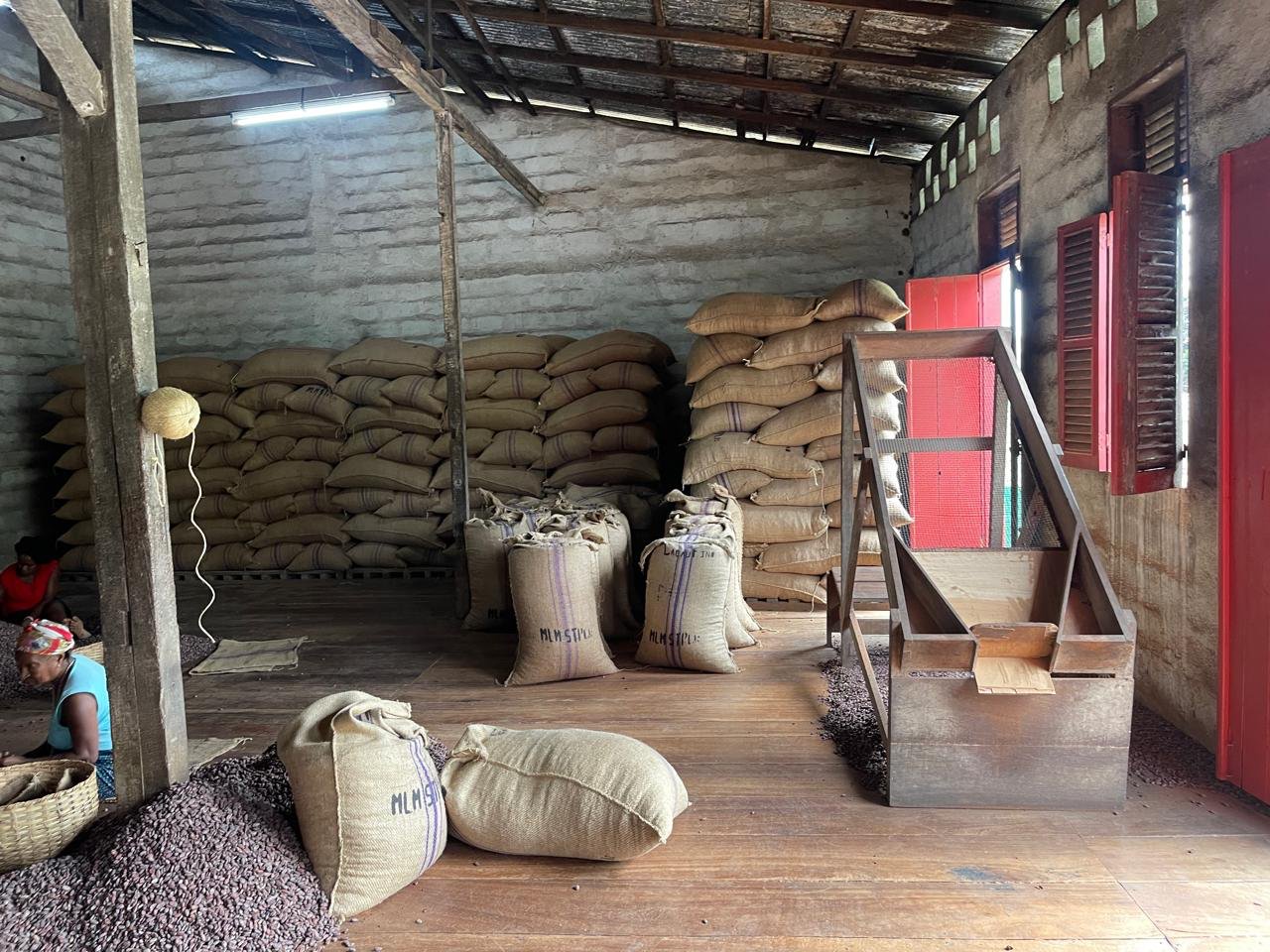
Large concrete drying patios, known locally as terreiros, are still used, and the original administrative buildings and worker housing remain structurally intact. At the end of the tour, you will be taken to a small shop where you are given the chance to try some local coffee. Weirdly, although they grow two types of coffee, Robusta and Arabica, you are not given the opportunity to try both, and the coffee is served from a machine. Furthermore, the coffee and chocolate sold here are available for lower prices elsewhere on the island.
These spaces are not preserved as static exhibits but are embedded in daily life, offering a rare view of how a colonial estate evolved into a post-independence community. Monte Café also serves as a primary gathering point for shared local transit to the surrounding highlands, making it a natural pause point rather than a final destination.
Highland Waterfall
Cascata de São Nicolau: Highland Waterfall on the EN1 Branch Road
Cascata de São Nicolau sits on a steep branch road in the central highlands. You climb to reach the waterfall, and the road continues uphill beyond it towards the São Nicolau area. The falls themselves drop around 30 metres over a basalt escarpment, with a bridge crossing the stream at the base.
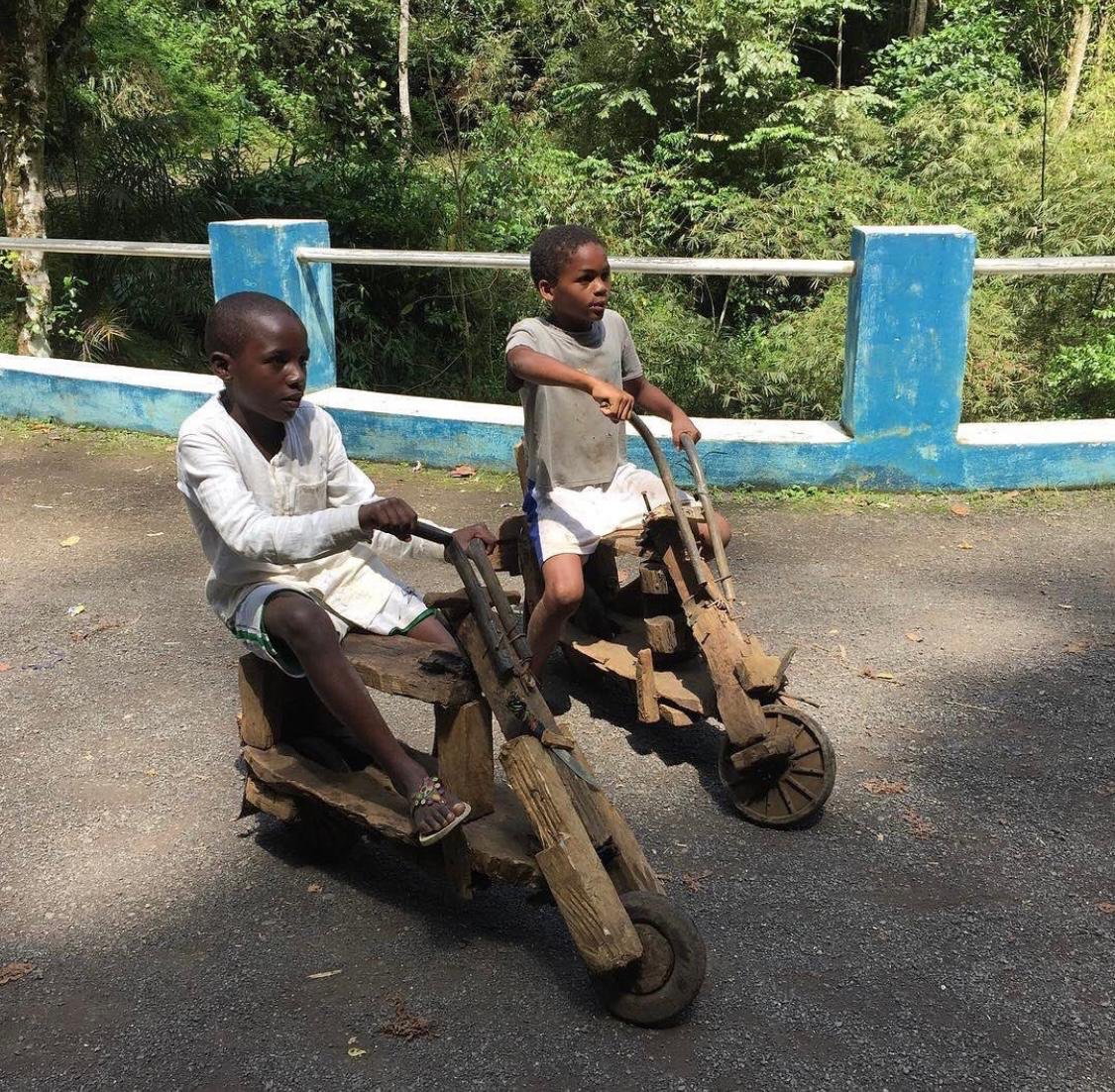
There is a wooden bridge down to the falls, but it is dangerous. The wood becomes slippery with algae, and I have seen several nasty tumbles there, so be careful if you go down. There is also some striking artwork on the bridge itself, and a reasonably priced souvenir seller sometimes puts in an appearance.
Access involves narrow bends, with a steep drop on one side and a steep vegetated slope on the other. After rain, leaves and small branches often collect on the road surface, and traction can be poor. Drive slowly on the approach and through the bend by the bridge, especially in mist.
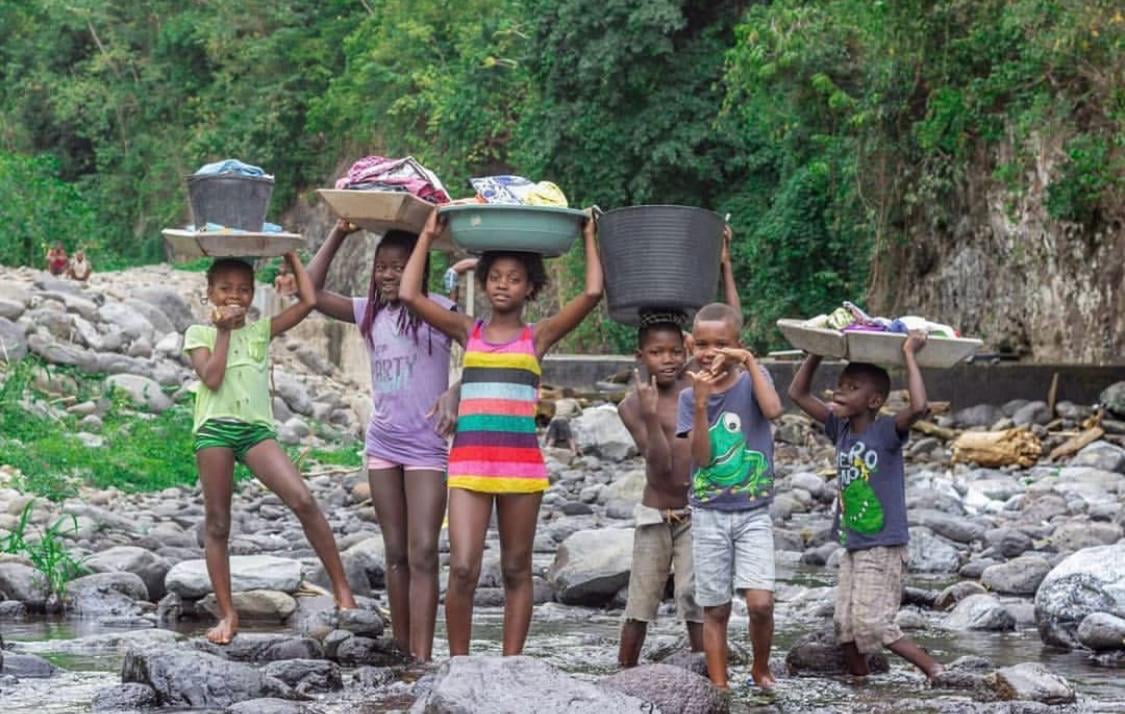
Along this stretch, children sometimes sell utjeu, small raspberry-like berries scooped into paper cones. They may step into the road to get your attention, so expect sudden movement on blind corners. If you buy, avoid school hours so tourism does not encourage truancy. You can also pick utjeu from shrubs just above the roadside, but the slope is slick. Even a few metres up is enough for a fast slide back down, and wet muddy clothes make for a miserable drive.
Botanical Garden and National Park
Bom Sucesso Botanical Garden and the Ôbo Natural Park Gateway
Bom Sucesso lies at the upper limit of regular road access and serves as the operational gateway to Ôbo Natural Park. At over 1,100 metres, the site sits within a cloud forest zone, characterised by persistent humidity, lower temperatures, and dense endemic vegetation.
Key functions include:
Orchidarium
A working enclosure containing a wide range of São Tomé and Príncipe's endemic orchid species, maintained for study and conservation rather than display. The best guide to São Tomé and Príncipe orchids, if you are into them, is found here.
Herbarium
A scientific archive supporting botanical research and species classification.
National Park headquarters
The administrative centre and starting point for hikes into the interior, including routes toward Lagoa Amélia and higher elevation forest zones.
Bom Sucesso is an academic and conservation site first and foremost. Visitors should expect a functional environment focused on research, not a landscaped garden.
Practical Information
Driving the Central Highlands: Logistics, Weather and Transit
Travel through central São Tomé is shaped more by terrain than by distance. A leve leve pace is essential for safety, especially given the poor traction on wet slopes and the lack of road sense among some local pedestrians. You may be a highly experienced driver, but our roads, children, leaves, and pigs are a great leveller.
Road conditions
The EN1 is paved but steep, with tight bends and regular slow-moving traffic. The branch road to the falls is prone to debris from the slopes above. The main road is generally pretty good by island standards up to the top, but the branch road to the falls is a different story. If you're walking up here, locals will often stop to offer a lift, but they will expect 20 Dobras. They may try to offer to go with you, this will generally be a pain in the neck. They will push for a tip at the end. Best advice: smile and say no thanks.
Weather and mist
Higher elevations are prone to neblina, a thick mountain mist that can reduce visibility to less than 10 metres and leaves the road surface, particularly around the Cascata de São Nicolau bridge, perpetually slick.
Vehicle choice
A high-clearance vehicle is strongly advised, particularly beyond Monte Café. A 4WD becomes more important during the rainy season, when fog, runoff, and reduced traction are common.
Supplies
Fuel, cash, and provisions should be secured in the capital. Services in the highlands are limited to small local stalls and the facilities at Monte Café.
Get There
Explore the Highlands on Your Own Terms
A high-clearance vehicle makes the difference between a comfortable highland drive and a stressful one. Our car hire service gives you a reliable, well-maintained vehicle with local knowledge included.
Closing Thoughts
Why Central São Tomé Matters
Central São Tomé is a region shaped by altitude, climate, and production. From the industrial legacy of Monte Café to the conservation work centred on Bom Sucesso, the interior shows how geography shaped both colonial exploitation and modern conservation. It is not a scenic detour, but a core route for understanding São Tomé beyond its coastline.