Travel Guide
São Tomé Currency: Dobra, Cash, Cards and ATMs
Island-based advice on the dobra, euros, exchange rates, ATMs and card payments.
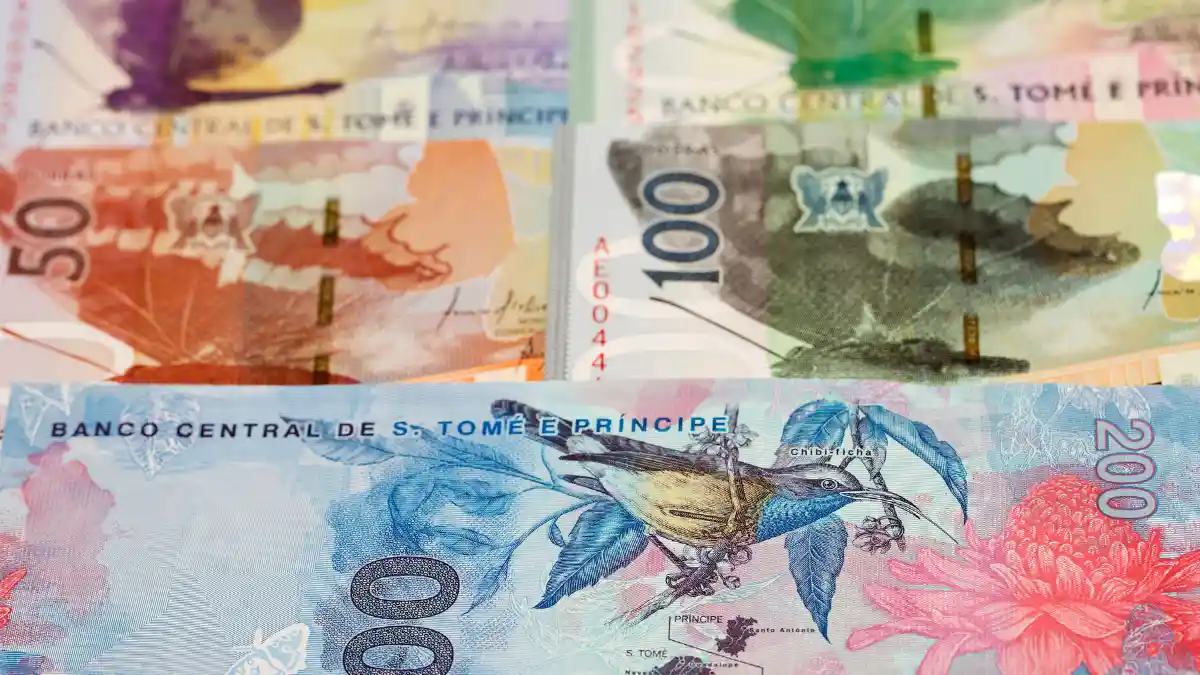
The currency of São Tomé and Príncipe is the dobra (STN). The official rate is fixed at 24.50 STN to €1. In practice, São Tomé is still cash-first: bring euros to exchange, carry enough dobras for everyday spending and treat cards and ATMs as a backup, especially on Príncipe.
I live on São Tomé and use this system myself. The advice below reflects what actually works on the islands, including where I exchange money, which cards tend to work and how to avoid running short of cash.
Quick Facts
São Tomé currency: the dobra (STN)
The national currency is the dobra, abbreviated as STN.
Most everyday payments are made in dobras. This includes meals, taxis, guides, markets, small shops, and many local services.
The official exchange rate is fixed at 1 euro to 24.50 STN. The Banco Central de São Tomé e Príncipe confirms the official conversion rate. Euros are sometimes accepted for larger payments, such as hotels or car hire, but São Tomé and Príncipe is not a dual-currency country. If you pay in euros, change is normally given in dobras at the official rate.
Exchanging São Tomé currency: banks and the street
Banks and hotels exchange money at below the official rate of 24.50 STN to 1 euro. This is formal and predictable, but usually less favourable for visitors.
Many locals and long-term visitors use the parallel exchange market instead. This operates openly and is part of everyday life in São Tomé.
In downtown São Tomé, especially around Rua de Angola near Zima, you will usually see exchange dealers during the day, including Sundays. The street money changers are at this Google Maps location. I normally use the men who sit on the corner rather than further up the road. I have never been ripped off or had a problem there.
The first rate offered may be slightly below the normal street rate, for example 25 STN for 1 euro. If you decline politely, the rate often moves closer to the usual street level: 26 STN for 1 euro and 29 STN for 1 British pound. Larger notes are accepted with no problems.
Using the street exchange market rather than banks or hotel desks can make a noticeable difference across meals, taxis, activities, and general spending.
If you are nervous about exchanging money this way, get in touch and I can help.
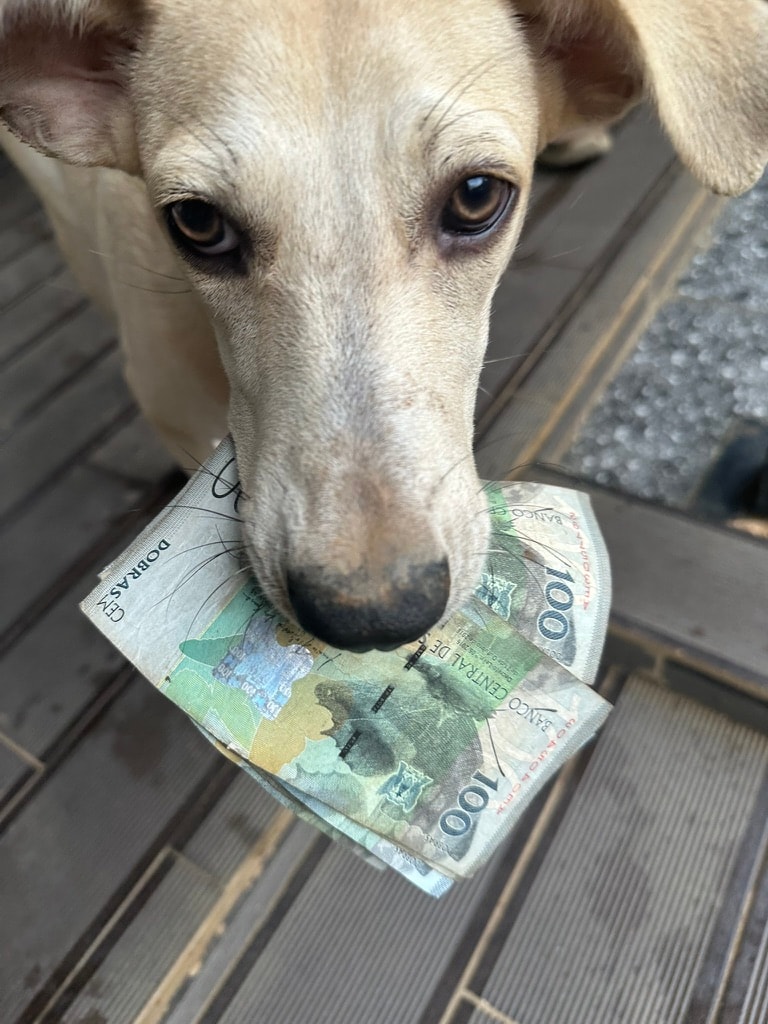
Bilbo did try his paw at currency exchange, but was swapping 200 dobras for a cookie. He's been relieved of his duty.
Transport prices and why numbers matter
Transport is one of the easiest places to overpay in São Tomé. This usually happens because the price is not agreed before the journey starts.
Always agree the price before getting into the vehicle.
Typical local prices are: moto taxi around town 20 STN, taxi within central São Tomé 50 STN, outer city hotels such as Omali 100 STN.
Some drivers may quote visitors prices such as "20 euros" for short local trips. That is more than 500 STN, far above the normal local rate.
If the price feels wrong, walk away and take the next taxi or moto. This is normal.
Or, simpler still, rent a car from us.
Cards, ATMs, and why you cannot rely on them
The domestic banking network is called Dobra24. Coverage has improved, but visitors should not rely on ATMs as their main source of money.
International Visa cards are the most likely to work in Dobra24 ATMs. Mastercard and American Express often do not, and even a compatible card can be rejected. Treat every ATM as a backup rather than your main cash plan.
When international flights arrive, ATMs in São Tomé City can be emptied within hours. Machines may then stay out of cash for some time.
One ATM I have found relatively dependable is Afrilande First Bank STP on Avenida Kwame N'kruma in São Tomé City. It is worth trying there first before working your way through the Dobra24 machines around town.
Card payments are limited. They are usually possible only in a small number of high-end hotels and a few supermarkets. For most local payments, cash is expected.
If you have a serious money problem while you are here, get in touch and I will try to help solve it.
Planning your São Tomé currency properly
The main rule is simple: keep a cash margin.
Do not depend on an ATM working on the day you need it. Carry enough dobras for daily spending, transport, food, and unexpected costs.
You should expect to pay in cash most of the time. You should also think carefully before exchanging all your money at hotels or banks, because the street rate is often better.
Príncipe needs even more planning. The island has more limited financial infrastructure than São Tomé. ATMs are fewer, outages are more common, and cash shortages happen.
Unless your accommodation has clearly confirmed that it accepts card payments or transfers, arrive on Príncipe with enough dobras, or enough money to exchange on arrival, to cover your stay.
Do not assume you will be able to withdraw cash once you are there.
Internet and connectivity
Forget wifi. On São Tomé, mobile data is how you stay connected.
Get a SIM at a CST store, and bring your passport. I'd go to CST Loja Central on Largo de Água Grande in São Tomé city, open daily from around 07h30 to 19h.
Skip the eSIM options you'll see advertised for São Tomé online. They don't work here, whatever the ads say. A physical CST SIM bought in person is the only reliable route.
To activate your data, call the free line 19300 or just ask at the counter. You can buy top ups at the various street dealers who sit with a CST banner above them, but ensure that the text you get tallies with the price you bought, it's not uncommon to buy 600 and get sixty. Your best option is to buy at CST and top up when needed.
CST's prepaid bundles run for 30 days:
- 1GB - 80 Dbs
- 2GB - 150 Dbs
- 4GB - 220 Dbs
- 6GB - 300 Dbs
- 12GB - 450 Dbs
- 30GB - 990 Dbs
- 60GB - 1,490 Dbs
4G is solid in São Tomé city and the main towns. Once you're off the main roads or into the interior, expect that to drop to patchy or nothing.
Larger hotels usually have wifi, but don't rely on it everywhere. We run Starlink ourselves, and it's the dependable option if you need something more consistent than mobile data.
Related Guides
All Travel Guides
Ready to book?
Browse tours, hire a car, or ask us to help plan your itinerary.