Travel Guide
Food in São Tomé and Príncipe
What to eat, what to expect, and how food works on the islands.
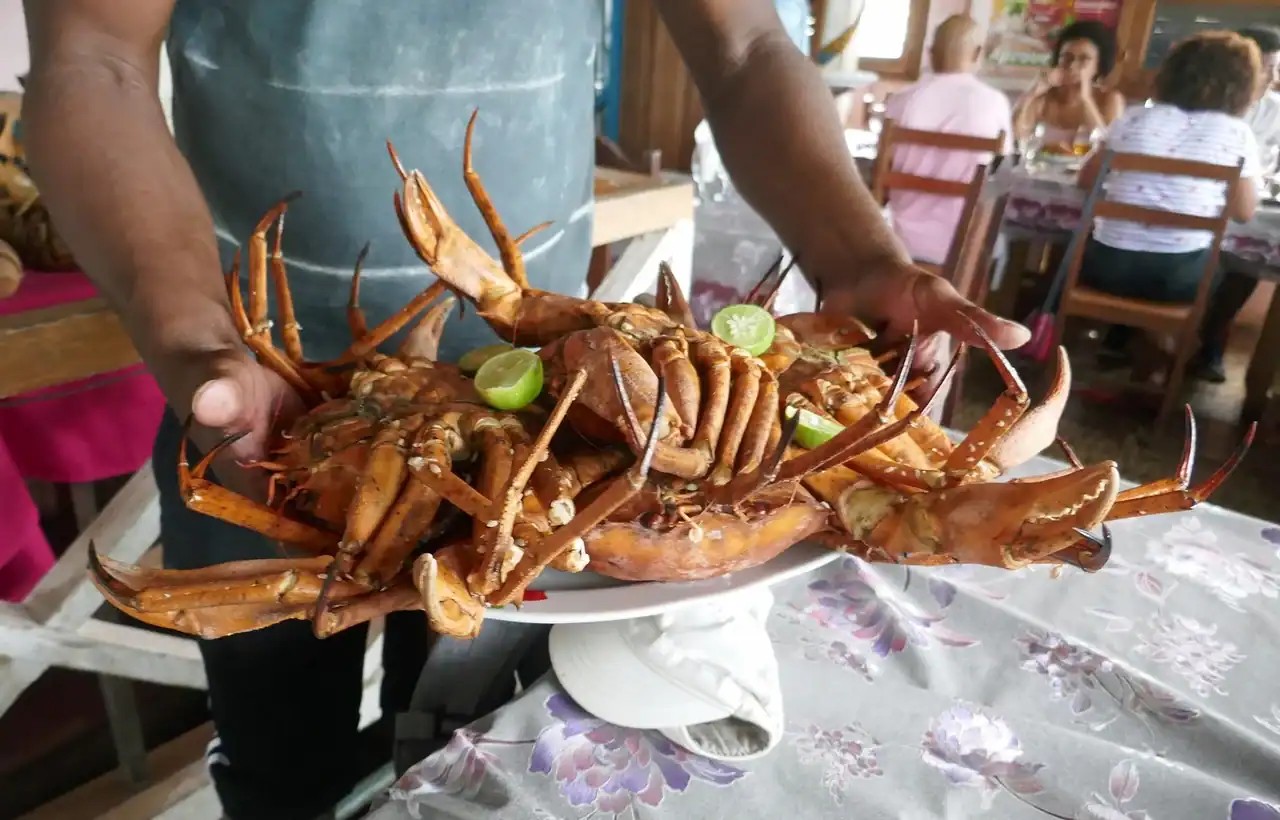
Food in São Tomé and Príncipe is simple, local, and tied closely to the sea and the land. This is not a destination built around restaurant culture, and the most memorable meals here are rarely the most elaborate ones. They tend to be fresh fish off the coast, a starch like banana pão or fruta-pão, fruit bought at the roadside, and whatever the cook had to work with that day.
For visitors, that is both the appeal and the adjustment. Eating well in São Tomé is less about finding the right restaurant and more about understanding the rhythm of the islands. Fish from the coast, fruit from the roadside, a simple lunch stop during a day tour, and dishes that carry African, Portuguese, and island influences all at once.
This guide is a grounded introduction to what you are likely to find, and how to approach meals here without expecting the infrastructure of a mass-tourism destination.
The food culture in simple terms
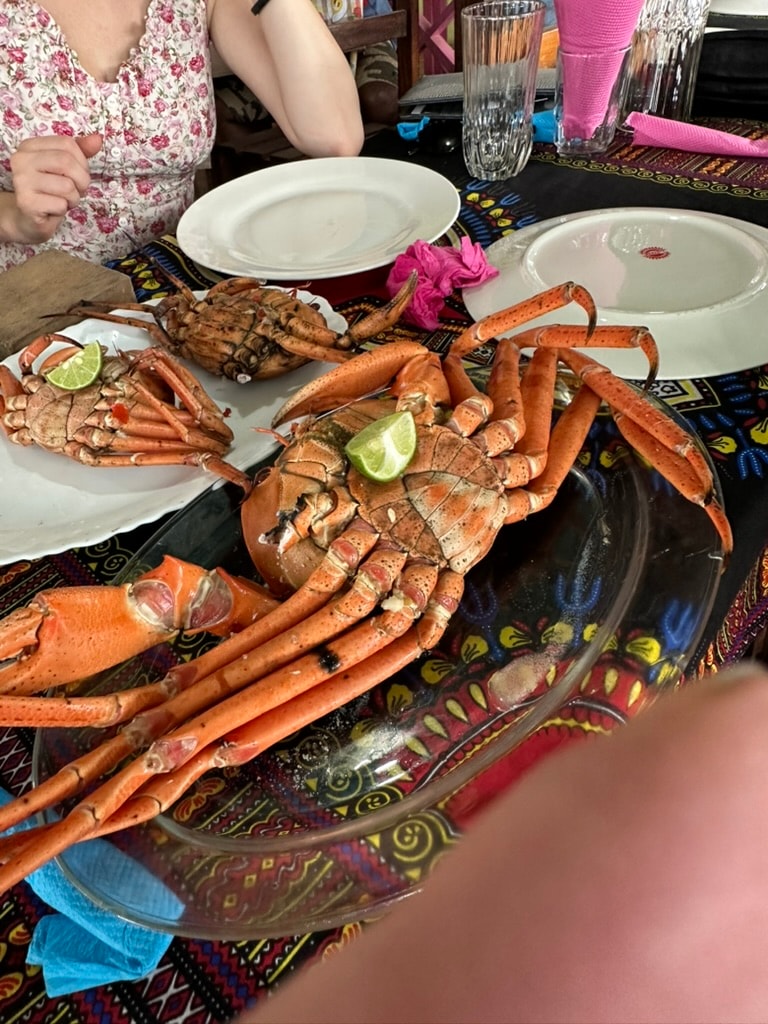
São Tomé and Príncipe is a small island country, so fish and seafood sit at the centre of everyday eating. Grilled fish is the staple, usually served with a local starch and little else. Meals are filling rather than fussy, and the best food is whatever has been cooked fresh with realistic expectations on your side.
The islands also have a long agricultural history. Cocoa and coffee are part of the country's identity, while bananas, breadfruit, taro, maize, beans, papaya, and palm oil run through local cooking. Most of it is practical, home-style, and seasonal rather than exotic or decorative.
It helps to know that São Tomé imports a great deal. Imported products can be expensive, inconsistent, or simply absent on the day you want them. Local food is usually a better window into the country than hunting for the meals you would eat in Lisbon or London.
Calulu
Calulu is the dish most closely associated with São Tomé and Príncipe. It is a slow-cooked stew, made with fish or meat alongside vegetables, palm oil, okra, tomato, garlic, and other ingredients that shift depending on the cook and the occasion.
You will come across fish calulu, meat calulu, and various local versions. It is not a quick meal. Traditional preparations take time, and the dish belongs as much to family gatherings, religious events, and weddings as it does to everyday eating.
If you want one genuinely local dish on your trip, calulu is the place to start. Just don't treat it as a fixed recipe. Like most traditional dishes, it changes from one house and one cook to the next.
Grilled fish and simple island meals
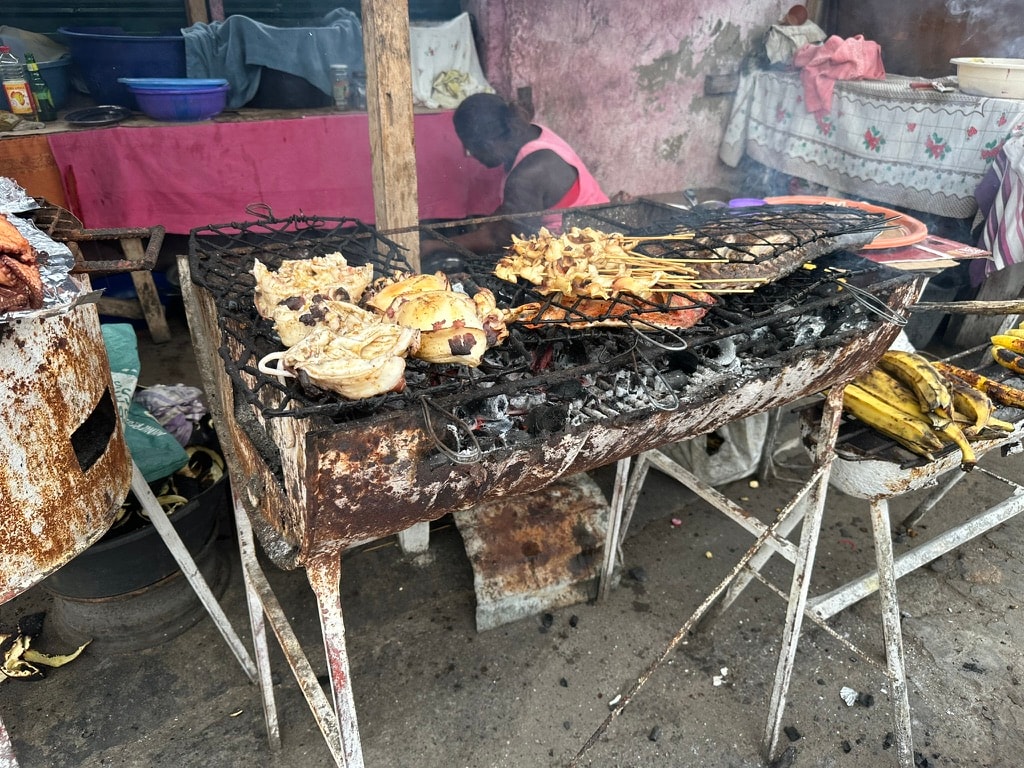
For most visitors, the most reliable meal in São Tomé is grilled fish with a local side, whether that is banana pão, fruta-pão, rice, or beans, depending on where you happen to be eating.
The appeal is freshness, not presentation. A good plate is often just fish, a starch, a little salad, and a sauce or seasoning. In coastal areas this makes far more sense than ordering imported meat or working through a long menu.
Travelling outside São Tomé city, don't assume every stop has a printed menu, fast service, card payment, or every dish going. Food here is flexible rather than formal. On longer days in the south or the central interior, plan lunch properly rather than trusting that something will appear the moment you are hungry.
Banana pão, fruta-pão, matabala, and local sides
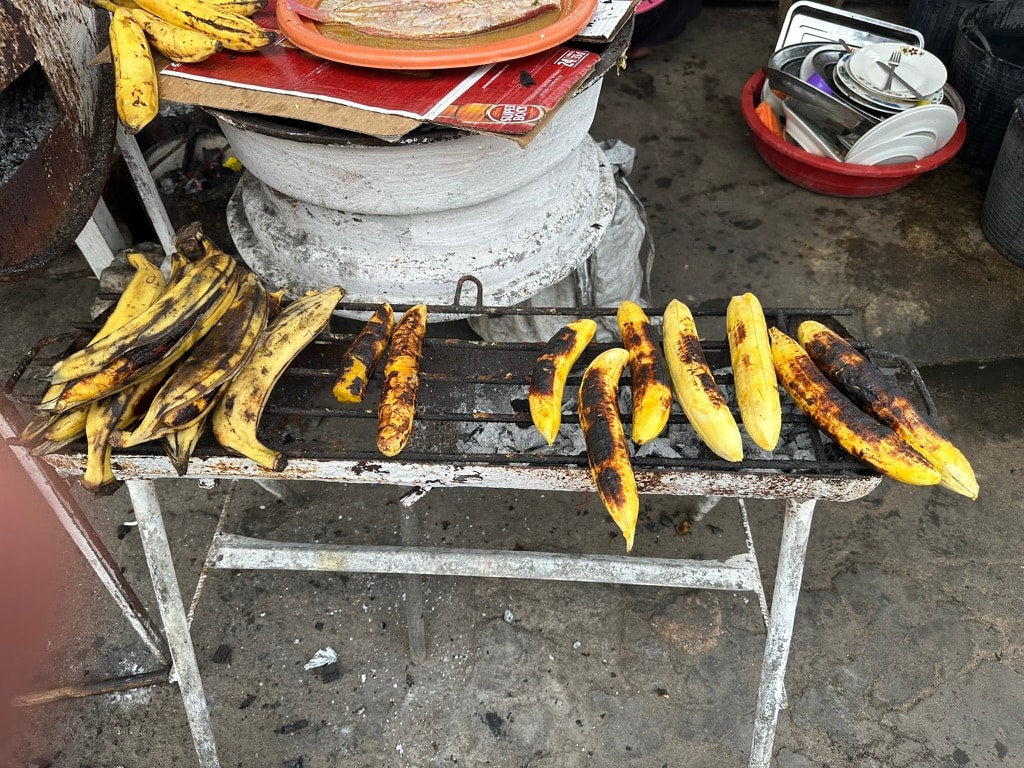
A lot of meals are built around local starches. Banana pão is a cooking banana, served fried or boiled. Fruta-pão is breadfruit, and matabala is a type of taro. Together these form the base of much of the everyday diet.
These are not extras on the side. They are usually the structure of the meal, the thing that turns a piece of fish or a sauce into enough food for a working day.
For travellers used to bread, potatoes, or pasta as the default, these starches are one of the easiest ways to taste the islands without anything staged or dramatic.
Fruit, cocoa, and coffee
Tropical fruit is part of daily life here. Depending on the season and where you are, you will see bananas, papaya, mango, pineapple, avocado, and jackfruit sold in markets and along the roadside.
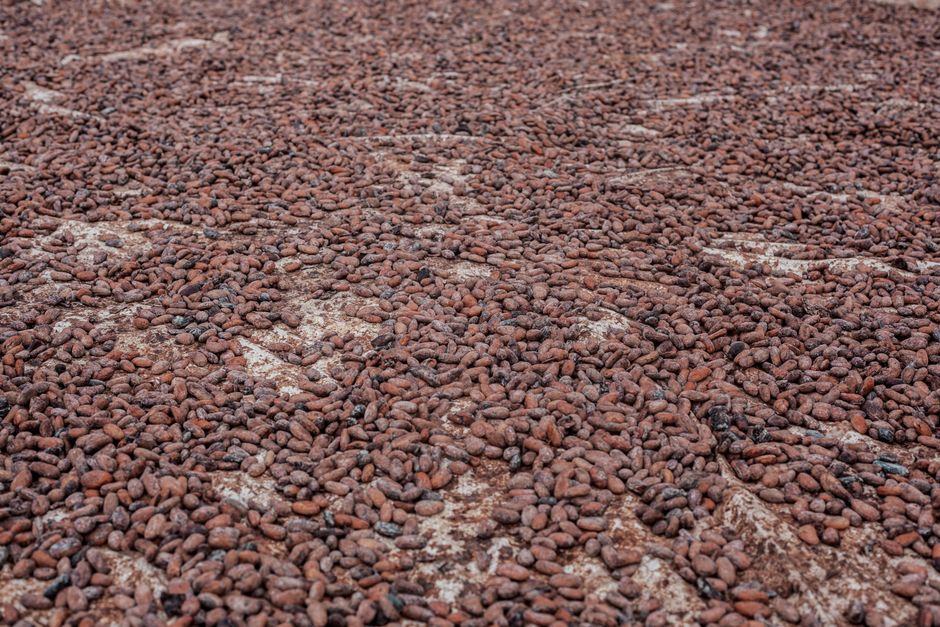
Cocoa and coffee matter for a different reason. They are bound up with the history of the islands, the roças, and the export economy that shaped the country. The name "The Chocolate Islands" is not just branding. Cocoa has marked São Tomé and Príncipe physically, economically, and historically.
That history is not a sweet story. Cocoa, coffee, and the roças are tied to colonial plantation systems as much as to today's producers and local livelihoods. If you visit a roça or buy chocolate here, it is worth holding both parts of that picture at once.
Drinks
Alongside soft drinks and imported options, there are a couple of local drinks worth knowing. Palm wine, tapped from palm trees, is part of the local drinking culture, especially outside the city. There is also the local beer, Nacional, which you will find in most bars and shops.
As with food, availability varies, and the more local the drink, the more it depends on where you are and who you ask.
Eating in São Tomé city
São Tomé city is the easiest place to find restaurants, cafés, markets, bakeries, and casual places to eat, and the best place to handle practical things before heading further out.
Here you will find the widest choice: local meals, Portuguese-influenced dishes, grilled fish, pastries, simple lunches, and imported products. Even so, keep expectations realistic, since service can be slow and what is on offer changes day to day.
For many travellers the capital is the right place to get a feel for local food before moving into rural areas, where the options narrow and depend more on planning.
Eating outside the city
Beyond the capital, food becomes more local, less formal, and less predictable. That is part of the experience, but it rewards a bit of planning.
On a day tour, lunch is easiest when it is arranged ahead or built around a known stop. In remote areas, particularly on longer trips, don't count on arriving somewhere and finding a full tourist restaurant waiting.
This matters most if you have dietary restrictions, young children, medical needs, or a tight schedule. Not every village has a menu shaped around visitors. That doesn't make travel hard, but it does mean treating food as part of the day's plan rather than an afterthought.
Vegetarian and special diets
Vegetarian travel is possible here, though not always straightforward. Many local meals are built around fish, meat, or seafood, and even vegetable dishes may be prepared with stock, fish, or palm oil.
If you are vegetarian, vegan, gluten-free, or have allergies, plan carefully, especially outside São Tomé city. Hotels and established restaurants are usually easier, while smaller local places may not read dietary restrictions the way you expect.
The safest approach is to communicate clearly, keep meals simple, and never assume that "no meat" rules out fish, seafood, or animal-based ingredients.
Practical food tips for visitors
Carry cash. Many smaller places don't take cards, and cash still matters even where they do.
Plan lunches on long day trips, particularly in the south, central São Tomé, and rural areas.
Don't expect fast service everywhere. Food is often cooked at its own pace.
Ask what is available today, not only what is printed on the menu.
Choose local fish and simple dishes when you want the most dependable meal.
Be wary of strong claims. If someone calls a place the "best" restaurant on the island, ask what they mean: best for local food, for tourists, for price, for the view, or simply for convenience.
Food and careful tourism
Food is one of the easiest ways to travel more thoughtfully in São Tomé and Príncipe. Eat local where you can, pay fairly, and be patient with small businesses. Don't treat family-style cooking or rural stops as though they exist only for visitors, and ask before photographing people, kitchens, markets, or private spaces.
The islands don't need to be dressed up as a food fantasy to be worth your attention. The food is simply part of daily life here: fish, fruit, cocoa, coffee, slow service, strong flavours, and local habits that won't always match what a tourist expects. That is the point of paying attention to it.
Quick Facts
All Travel Guides
Ready to book?
Browse tours, hire a car, or ask us to help plan your itinerary.