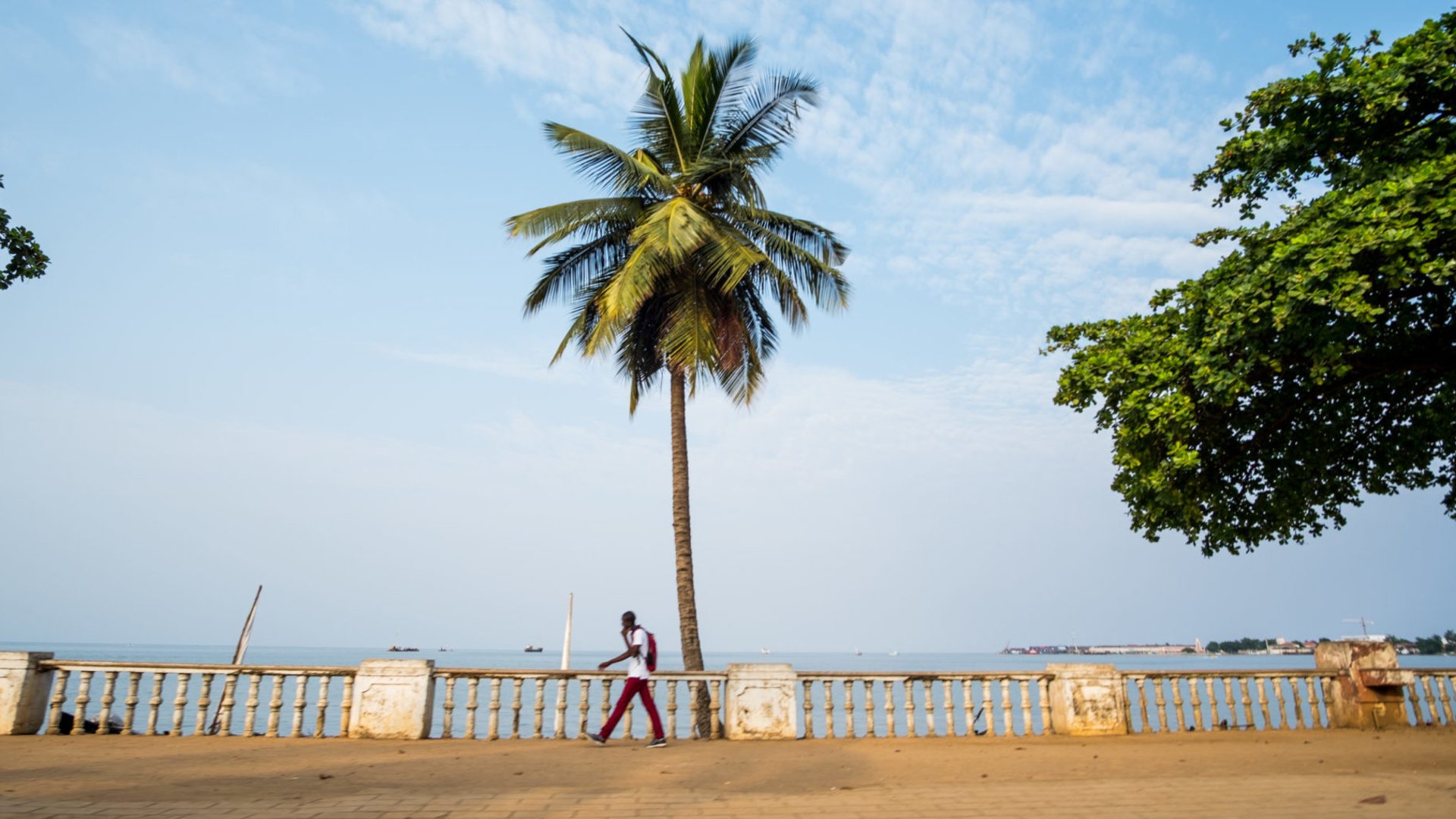
Isolation and Adaptation
How Evolution Shapedthe Wildlife of São Tomé and Príncipe
Millions of years of isolation turned these islands into one of the most extraordinary natural laboratories on Earth.
Why Island Species Are Different
Oceanic islands change the rules of evolution. On the African mainland, animals compete with hundreds of other species, dodge predators, and fight for limited space. On São Tomé and Príncipe, none of that applies. These islands have never been connected to the continent. Every species that arrived here crossed open ocean, and once here, found itself in a world with fewer competitors, fewer predators, and fewer parasites. Over millions of years, that freedom pushed species down evolutionary paths that would be impossible anywhere else. Small species grew larger. Large species shrank. Birds lost their colour. Animals that would flee on sight on the mainland became remarkably tame. Scientists call this collection of changes the island syndrome, and São Tomé and Príncipe display it across almost every group of animals and plants.
The Giants of São Tomé and Príncipe
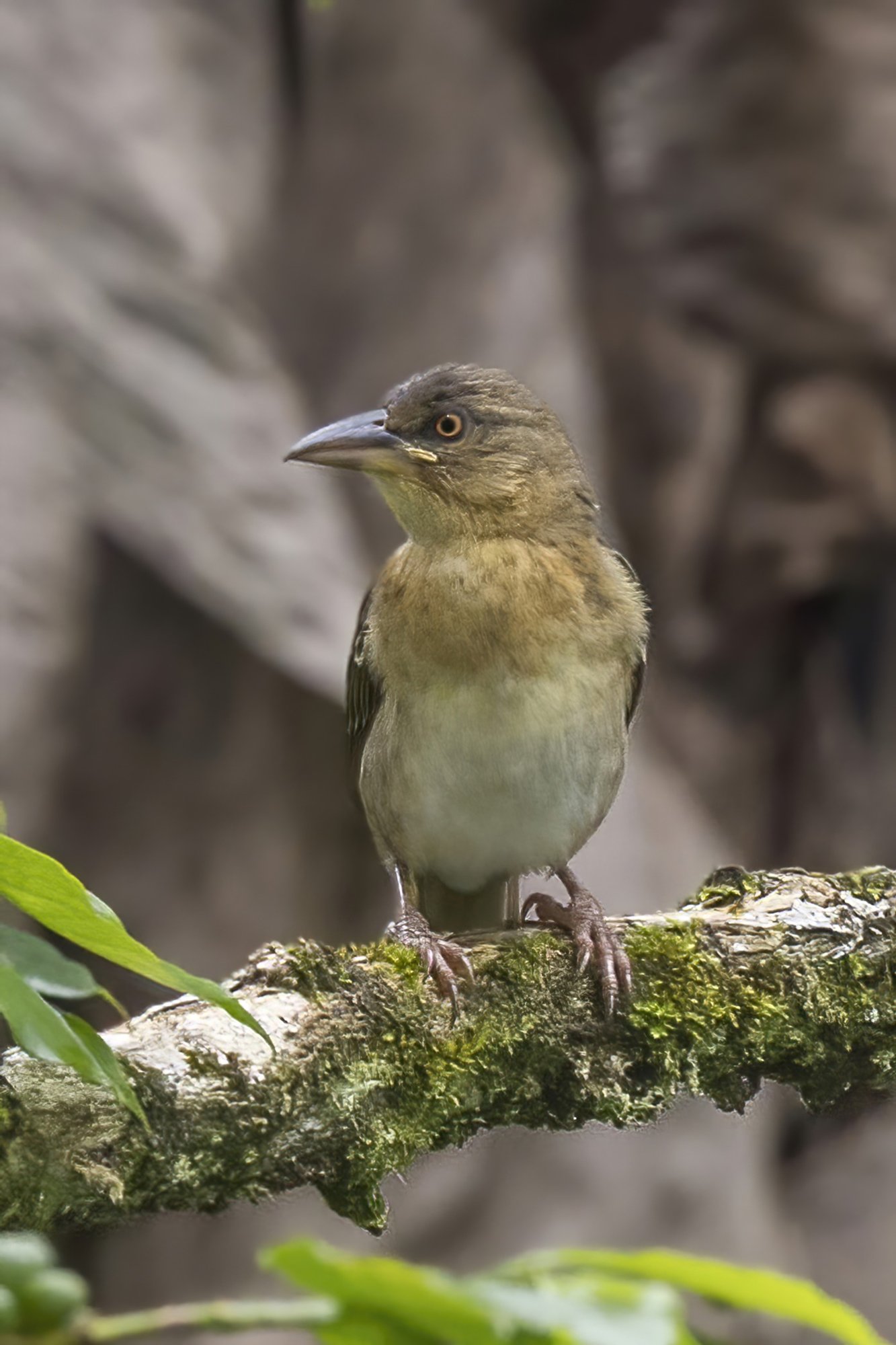
The most visible result of island evolution here is size. São Tomé is home to the world's largest sunbird, the São Tomé Sunbird. It is also home to the world's largest weaver, the Giant Weaver, and the world's largest canary, the São Tomé Grosbeak. On Príncipe, the Giant Tree Frog is far larger than its closest relatives on the mainland. The house snakes on both islands are considerably bigger than their counterparts in southern Africa. At the other end of the scale, the São Tomé Ibis, the only endemic descended from a large continental bird, is one of the smallest ibises in the world. The pattern is consistent: small species got bigger, the one large species got smaller. With fewer competitors and more available food, species drifted toward sizes that the pressures of mainland life would never have allowed.
Tame, Dark and Grounded
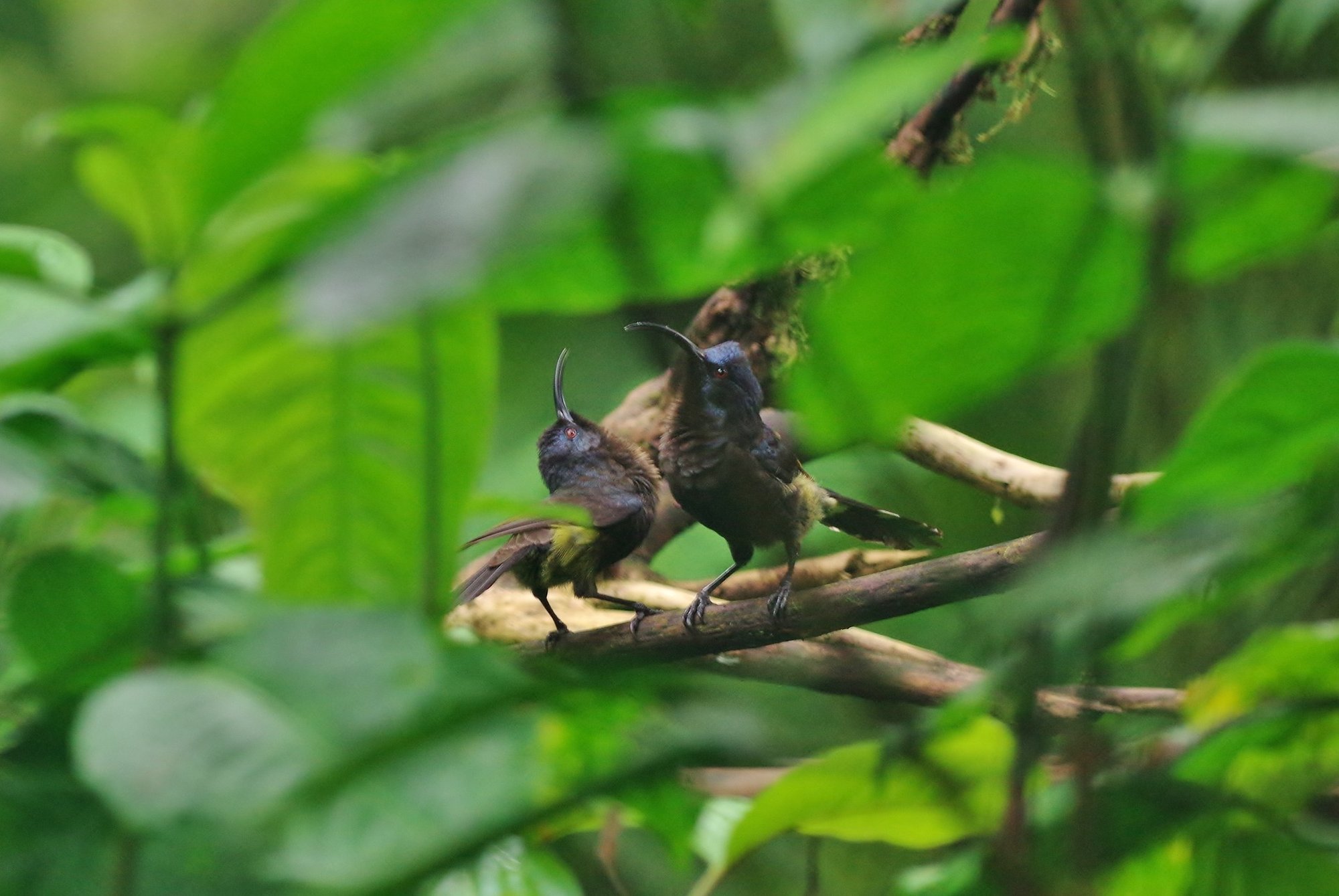
Size is not the only thing that changed. Many of the endemic birds on São Tomé and Príncipe have lost the bright colours carried by their mainland relatives. Yellows and greens have largely disappeared from the island white-eyes, the oriole, and the sunbirds. The São Tomé Paradise-Flycatcher is entirely black. One explanation is that with fewer parasites on the islands, the colourful signals that advertise good health on the mainland simply stopped being useful.
The birds have also become more sedentary. On the tiny Boné de Jóquei islet off the coast of Príncipe, just 600 by 900 metres, the resident population of Príncipe Seedeaters has evolved noticeably shorter wings relative to body mass, suggesting they are losing the ability and the need to fly long distances. The same birds are remarkably tame, showing almost no fear of humans. With no predators on the islet, there was never any reason to run.
Evolution You Can See
What makes São Tomé and Príncipe remarkable for scientists is the same thing that makes it remarkable for visitors. The wildlife is visibly, obviously different from anything on the mainland. The birds are larger, darker, and less afraid. The forests are full of species that exist only here. And the process has not stopped. On Boné de Jóquei, researchers have documented evolutionary changes happening in real time, over just a few thousand years. The oil palms on the islet produce giant fruits found nowhere else, possibly co-evolving alongside the seedeaters that feed on them.
For anyone walking the trails of the Obo National Park or watching birds in the forest canopy, this is the context that makes the experience extraordinary. You are not just watching wildlife. You are watching the result of millions of years of isolation, playing out on two small volcanic islands in the middle of the Atlantic.