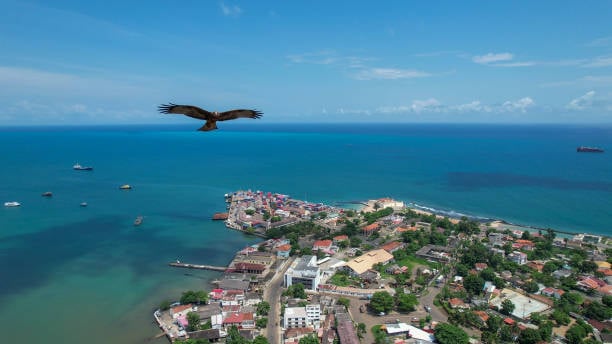
Wildlife of the Islands
The Birds ofSão Tomé and Príncipe
The highest concentration of endemic bird species for any island group of this size on the planet. Twenty-nine species found nowhere else on Earth.
The Highest Concentration of Endemic Birds on Earth
São Tomé and Príncipe hold 29 bird species that exist nowhere else, spread across a combined land area of just over 1,000 square kilometres. No island group of comparable size comes close. The Galapagos have 22 endemic land birds across 8,000 square kilometres. The six largest Hawaiian islands have 30 in over 16,000 square kilometres. São Tomé alone, at 857 square kilometres, has 17 single-island endemics. Príncipe, at just 139 square kilometres, has eight, plus three species shared with neighbouring islands. These 29 endemics represent 60 percent of all the endemic bird species in the entire Guinean Forests of West Africa biodiversity hotspot, an area covering more than 600,000 square kilometres. The concentration is without parallel.
The reason lies in geography. The islands sit close enough to the African mainland to receive colonists from the species-rich forests of West Africa and the Congo Basin, but far enough out into the Atlantic for those colonists to evolve in isolation once they arrive. Most of the 29 endemic species descend from independent colonisation events, each a separate mainland ancestor that crossed the ocean, established a population, and over hundreds of thousands or millions of years became something entirely new. Unlike the Galapagos, where a handful of colonisations produced large radiations, the endemics of São Tomé and Príncipe represent 20 distinct evolutionary lineages from 16 different families. The diversity is broad and deep.
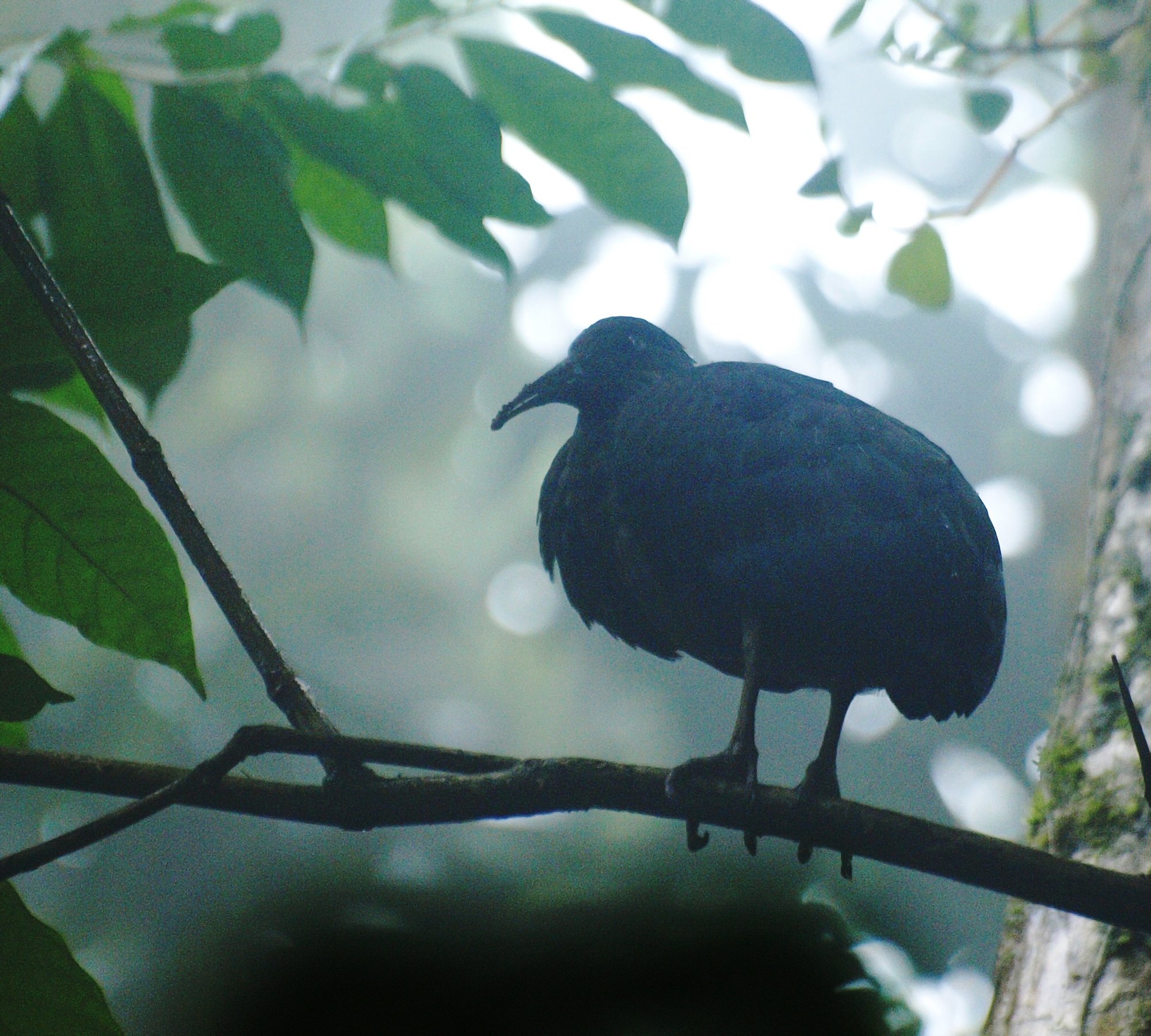
The Endemics of São Tomé
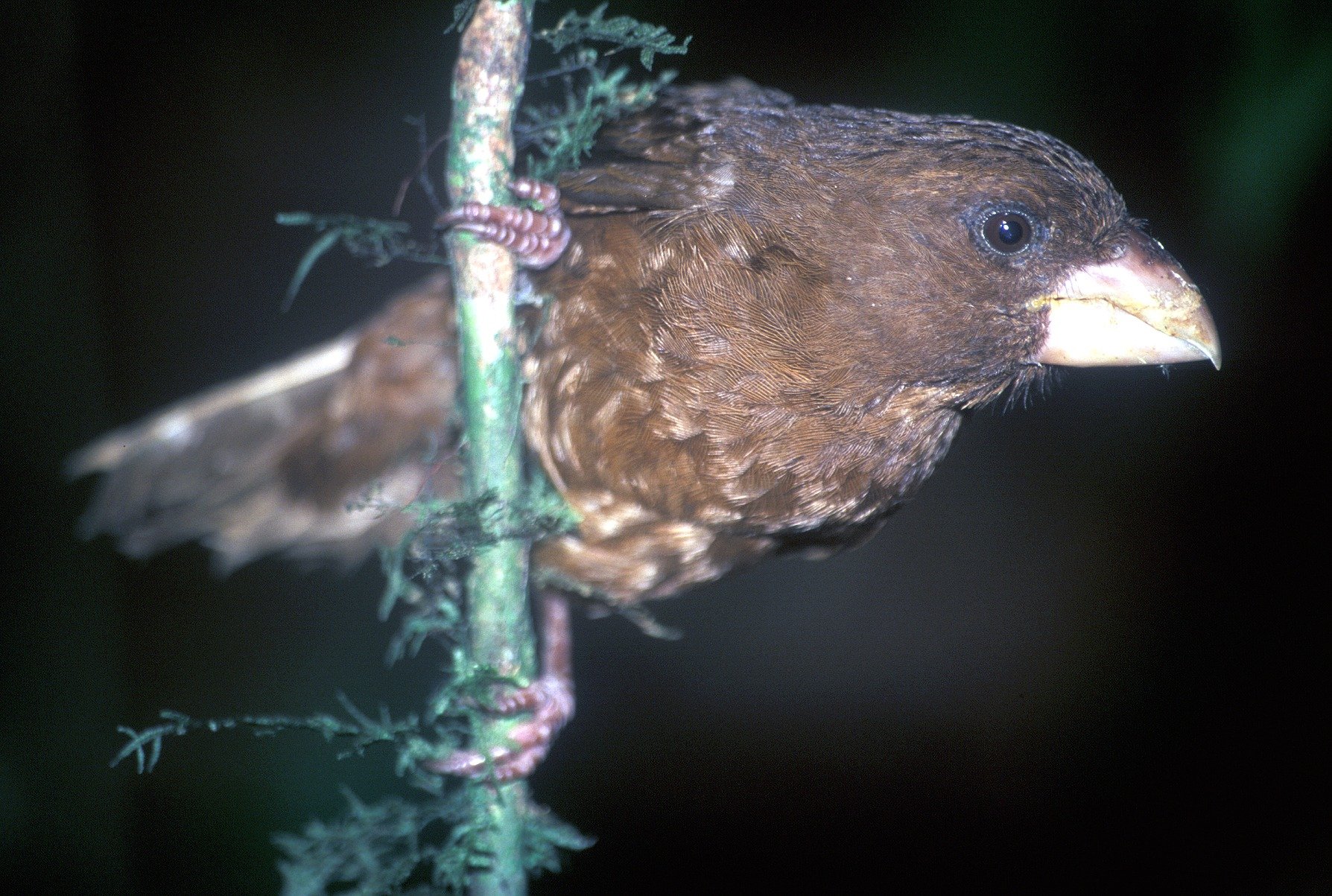
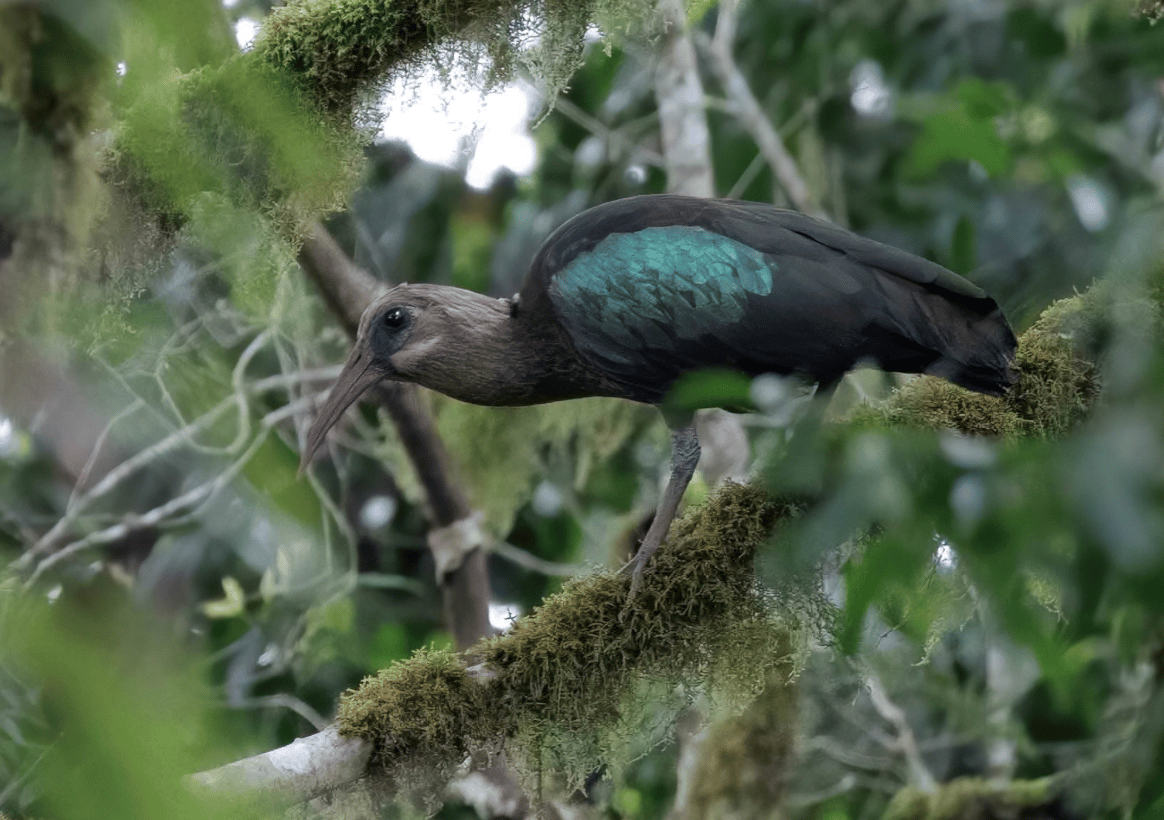
São Tomé holds four critically endangered bird species. The São Tomé Ibis is one of the smallest ibises in the world, a forest specialist restricted to the remote southwestern forests that were identified as the second most important site for bird conservation in Africa. Newton's Fiscal, a shrike, inhabits the same forests and is one of the rarest birds on the island. The São Tomé Grosbeak, the world's largest canary, was not seen for 101 years before being rediscovered in 1991. For most of that century it was classified as a weaver because of its size, until molecular studies revealed it is actually a close relative of the Príncipe Seedeater.
Among the other endemics, the São Tomé Sunbird is the largest sunbird in the world. The Giant Weaver is the largest weaver. The São Tomé Paradise-Flycatcher is striking for its entirely black male plumage, a feature linked to the loss of colour that island birds undergo when parasite pressure drops. The São Tomé Short-tail puzzled scientists for over a century. Its unusual anatomy, including an apparent reduction to nine primary feathers, led some to suggest it might be related to South American ovenbirds. Molecular data revealed it is in fact a wagtail, closely related to the Mountain Wagtail of mainland Africa, with which it shares a preference for forest streams.
The Endemics of Príncipe
Príncipe's eight single-island endemics include the Príncipe Thrush, critically endangered, which was rediscovered in 1996 after more than 50 years without a confirmed sighting. Dohrn's Thrush-Babbler is one of the oldest endemic lineages in the archipelago, with molecular estimates suggesting it may have diverged from its mainland relatives around eight million years ago, deep in the Miocene. Its unusual appearance led scientists to classify it as incertae sedis for decades before molecular work placed it firmly within the Sylvia warblers.
The Príncipe Scops-Owl was confirmed in 2016, ninety years after the Portuguese collector José Correia first recorded information from local people about a small owl on the island. It is one of the most recent bird discoveries in Africa. The Príncipe Starling, the Príncipe Sunbird, the Príncipe Speirops, and the Príncipe White-eye complete the endemic roster. The Príncipe Golden-Weaver, shared with São Tomé, is one of the few endemics more commonly found outside forest, often seen in gardens and around settlements.
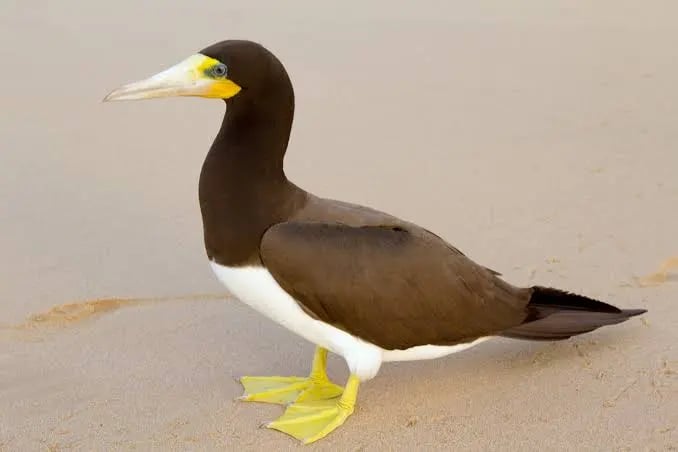
Príncipe's offshore islets are also significant for seabirds. The Tinhosas islets hold around 200,000 breeding pairs of Sooty Tern, accounting for one percent of the global population. Both Tinhosas and Boné de Jóquei hold breeding colonies of Brown Booby, though these are in decline.
The White-Eye Radiation
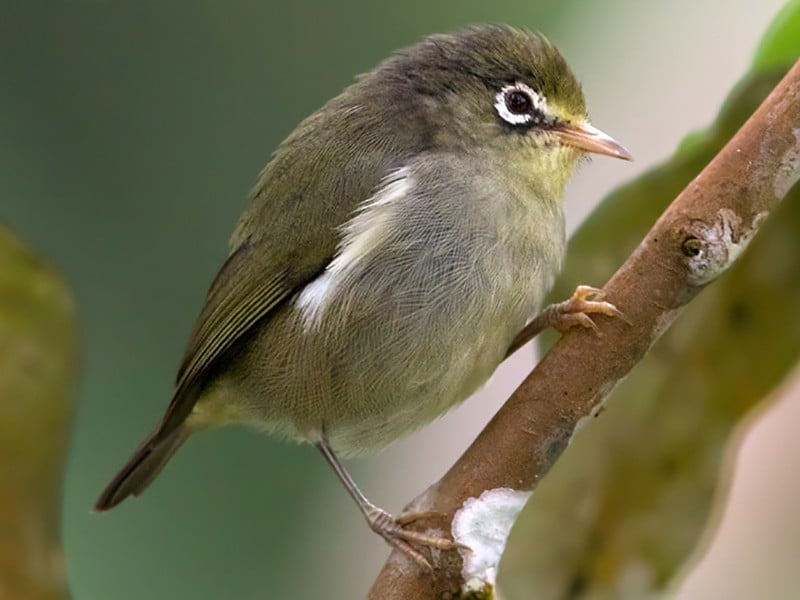
The five white-eye species of the Gulf of Guinea oceanic islands represent one of the most remarkable evolutionary stories in modern ornithology. All five descend from a single ancestor that reached the islands within the last 700,000 to 1.1 million years. The rate of speciation is among the fastest ever documented in vertebrates.
What makes the radiation unusual is the role of competition. When a white-eye population colonised an island already occupied by a related species, the newcomer was forced to change. It was always the arriving species that diverged most dramatically, evolving a different bill, a different body size, and strikingly different plumage. The Príncipe Speirops and the Black-capped Speirops of São Tomé look so different from a typical white-eye that they were originally placed in a separate genus. Molecular data revealed they are in fact the youngest species in the radiation, not the oldest. Their extreme appearance is the result of rapid divergence driven by competition with the white-eyes already present on their respective islands.
Rediscoveries and Mysteries
By the mid-twentieth century, four endemic bird species on São Tomé had not been recorded for over 50 years and were feared extinct. All four were eventually found. The São Tomé Short-tail was rediscovered in 1987. The São Tomé Ibis and Newton's Fiscal were both relocated in 1990. The São Tomé Grosbeak was found in 1991, more than a century after the last confirmed record. On Príncipe, the Príncipe Thrush was rediscovered in 1996. These rediscoveries were the result of targeted conservation expeditions funded by international organisations, and they transformed the understanding of what the islands still held.
Mysteries remain. The only confirmed extinction among the endemic birds is the Príncipe subspecies of the Olive Ibis. But the full extent of what has been lost is unknown. There is no fossil record to draw on. Sea level changes during glacial cycles may have caused extinctions that left no trace. And the volcanic history of the islands, with major eruptions continuing until relatively recently, may have wiped out earlier lineages entirely. The fact that almost all the endemic species are geologically young, most having diverged within the last 2.5 million years, suggests that the current community may have been assembled on top of earlier ones that did not survive.
Threats and Conservation
The moist lowland forests of São Tomé and Príncipe have been identified as the third most important in the world for the conservation of forest birds. The protected areas of both islands combined rank as the seventeenth most important globally for threatened species. The Obo National Park protects the forested heart of both islands and covers a significant proportion of the remaining native habitat. Only one endemic bird has gone extinct, which by the standards of oceanic islands is a remarkable record.
The main threat is habitat loss. Agricultural expansion, particularly for cocoa, palm oil, coffee, and horticulture, continues to eat into native forest. Logging, fire, construction, and tourism development add to the pressure. Hunting affects larger species, especially pigeons, the São Tomé Ibis, and the Brown Booby. Introduced mammals, including rats, feral pigs, and Mona Monkeys, prey on nests and disturb forest habitat. Enforcement of existing environmental laws remains weak, and several important forest areas still lack formal protection.
What has kept these species alive is the terrain itself. The steep, mountainous interior of both islands is difficult to access and difficult to farm. The forests that cling to the ridges and peaks are the last strongholds. Protecting them is not just a local priority. For an area this small to hold this many irreplaceable species, the stakes are global.
Birdwatching on São Tomé and Príncipe
For birders, São Tomé and Príncipe offer something that very few destinations can match: a high number of endemic species in a compact area, many of them visible with relatively modest effort. The forests of the Obo National Park on both islands are the core habitat, and guided walks along existing trails can produce sightings of multiple endemics in a single morning. The Giant Weaver and the São Tomé Weaver are among the easier species to find. The São Tomé Sunbird is regularly encountered. The critically endangered species require more effort, deeper access into the forest, and knowledgeable local guides who understand the habitat and behaviour of each bird.
Príncipe is less visited and more challenging logistically, but for serious birders the island is essential. The Príncipe Thrush, Dohrn's Thrush-Babbler, and the Príncipe Scops-Owl are all restricted to this one island. The seabird colonies on the Tinhosas islets, accessible by boat, are among the most spectacular in the tropical Atlantic. Annobón, belonging to Equatorial Guinea and rarely visited, holds the Annobón White-eye, the only single-island endemic on that island, along with several endemic subspecies.
What sets birdwatching here apart from more established destinations is the intimacy of it. These are small islands. The forests are close. The species are genuinely rare and genuinely unique. There is no crowd, no infrastructure built for mass tourism, and no guarantee of what you will see. That is precisely the point.
Explore More Wildlife
Discover the unique wildlife of São Tomé and Príncipe.