History
São Tomé Chocolate HistoryCadbury, Cocoa and the Roças
The real story behind São Tomé cocoa, the 1909 boycott, and what came back to the islands.
São Tomé and Príncipe was once one of the world's great cocoa islands.
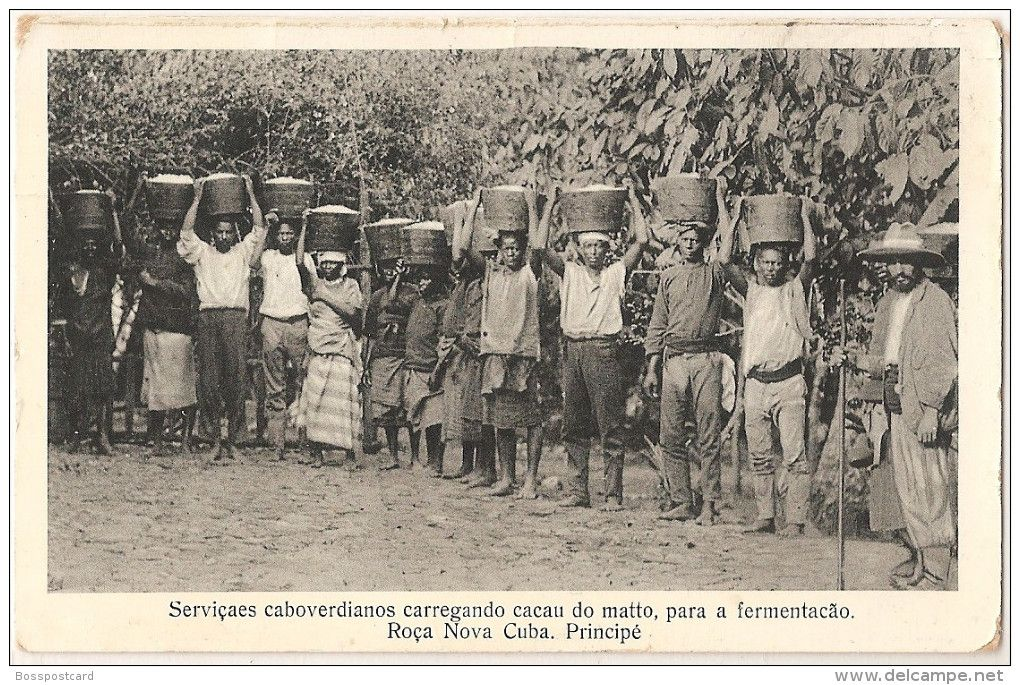
Its cocoa and cacao supplied European chocolate companies while chocolate was becoming a mass consumer product. The islands' roças produced cocoa for export, while plantation workers lived under labour systems condemned as slavery in practice.
Cadbury became the best-known name in the São Tomé cocoa scandal, but it was not alone. Fry, Rowntree and Stollwerck also appear in the history of the 1909 boycott of São Tomé and Príncipe cocoa.
More than a century later, one question remains: what came back to São Tomé and Príncipe?
The Beginning
São Tomé and Príncipe: the cocoa islands
São Tomé and Príncipe's link with chocolate begins with cocoa.
Cocoa did not arrive in a neutral landscape. Long before the cocoa boom, São Tomé had already been used as a plantation island. The earlier sugar economy created a pattern that cocoa later followed: fertile land, export crops, coerced labour and wealth moving outwards.
The islands' volcanic soil, humid climate and forest shade made them ideal for cocoa cultivation. During the nineteenth and early twentieth centuries, cocoa estates spread across São Tomé and Príncipe. These estates were known as roças.
The roças shaped the country. They changed the land, the roads, the economy, the villages and the way the outside world saw the islands. Cocoa made São Tomé and Príncipe globally important, but the value created by that cocoa did not stay evenly in the country that produced it.
The phrase "Chocolate Islands" comes from that history. It is not only about taste, cafés or souvenirs. It is about a country whose land and labour helped build part of the chocolate industry.
The Plantations
The roças behind the chocolate
The roças were large plantation estates. In some English-language sources, the word appears without the accent as "roca".
They often had housing, drying yards, stores, chapels, hospitals, workshops and administrative buildings. Some still stand today. Some are ruins. Some have become hotels, restaurants, farms or village spaces.
They are among the most important historic sites in São Tomé and Príncipe. They are also evidence of the labour system behind the cocoa boom.
After formal abolition, plantation labour did not become free in any simple way. Workers were brought from Angola and other Portuguese-controlled territories under contract systems that gave them little real freedom. Many were tied to estates and did not return home.
That is the human history behind São Tomé chocolate.
The roças are not just beautiful old buildings. They are part of the record of how cocoa was produced, who profited, and who paid the price.
Some roças on the island are now hotels or visitor sites. Read our guide to roça hotels in São Tomé for places where visitors can stay inside this history without forgetting what the buildings represent.
The Companies
Cadbury, Fry, Rowntree and Stollwerck
Cadbury is central to the São Tomé cocoa scandal because Cadbury Brothers bought cocoa from the islands and later became the public face of the boycott.
But Cadbury was not the only company involved.
Historical sources name Cadbury, Fry and Rowntree in the 1909 boycott of São Tomé's "slave-grown cocoa". Stollwerck, the German chocolate manufacturer, also appears in accounts of the boycott.
This matters because São Tomé and Príncipe supplied a wider chocolate economy. The scandal cannot be reduced to one company, even though Cadbury became the name most closely associated with it.
Cadbury's position was especially uncomfortable because of its public reputation. The company was associated with Quaker values, worker welfare and anti-slavery principles. That reputation made the São Tomé cocoa scandal harder to ignore.
The central issue was simple: European chocolate companies were buying cocoa from islands where plantation labour was being condemned as slavery in practice.
Investigation
What Cadbury knew
William A. Cadbury first heard reports about forced labour connected to São Tomé and Príncipe in 1901.
The Barrow Cadbury Trust background paper states that Cadbury Brothers bought 45% of their cocoa beans from São Tomé and Príncipe at the time. It also records that William Cadbury heard rumours that slave labour was being used on plantations in the Gulf of Guinea.
The same account describes a São Tomé plantation sale in which 200 black labourers were listed among the assets. That detail matters because it shows why the issue could not be dismissed as vague rumour.
Cadbury later sent Joseph Burtt to investigate. Catherine Higgs's book, Chocolate Islands: Cocoa, Slavery and Colonial Africa (Ohio University Press, 2012), follows Burtt's journey through São Tomé and Príncipe, Angola, Mozambique and southern Africa as he investigated whether cocoa bought by Cadbury was linked to enslaved labourers forcibly recruited from Angola.
The question is not only whether Cadbury eventually acted.
The question is why action took so long while cocoa from São Tomé and Príncipe continued to supply the chocolate trade.
The Court Case
The farthing libel case
The São Tomé cocoa scandal reached the courts.
Cadbury Brothers sued The Standard after the newspaper attacked the company over its use of cocoa from São Tomé and Príncipe. Cadbury won the libel case, but the victory was thin.
The jury awarded damages of only one farthing: a quarter of an old penny.
That tiny award mattered. It meant Cadbury had technically won, but had not received a strong moral victory. The Barrow Cadbury Trust background paper describes the award as contemptuous damages and suggests it may show that the jury was not convinced by Cadbury's delay in taking action.
For São Tomé and Príncipe, the case matters because it shows how public the scandal had become. This was no longer only a question for campaigners, planters or company directors. São Tomé cocoa had become a public test of chocolate, profit and responsibility.
The Boycott
The 1909 boycott
In 1909, Cadbury, Fry and Rowntree boycotted São Tomé cocoa. Stollwerck also appears in accounts of the boycott.
The boycott helped force the issue into the open. It placed pressure on Portuguese authorities and plantation owners. It also allowed chocolate manufacturers to shift supply away from São Tomé and Príncipe.
For the chocolate companies, the boycott created a cleaner supply route.
For São Tomé and Príncipe, the result was more complicated. The islands had supplied cocoa to European manufacturers. Their plantation system had become an international scandal. Then the buyers moved elsewhere.
The chocolate industry continued to grow.
São Tomé and Príncipe was left with the history.
Direct Response
Response from Rupert Cadbury and Sophy Blandy
The Chocolate Islands contacted Cadbury-linked trustees to ask about the historical debt owed to São Tomé and Príncipe, where cocoa linked to European chocolate companies was produced under coercive plantation labour before the 1909 boycott.
The following response was received from Rupert Cadbury, Trustee, and Sophy Blandy, Chair:
"Thank you for your email and for the introduction to the Chocolate Islands website. I had no idea that São Tomé is so stunningly beautiful.
You ask about the attitude of trustees to the debt owed by the stakeholders in Cadbury Brothers, our trust included, to the enslaved Africans who worked on the plantations in the period before the boycott in 1909.
First and foremost, we believe that, with the full backing of the firm, WAC did as much as was humanly possible to stop the slave traders and to alleviate conditions on the plantations - at a time when those directly affected, the enslaved, would benefit. He has been criticised for acting too slowly but nevertheless the result of his efforts, a coordinated boycott on the part of the European and indeed the North American chocolate manufacturers precipitated significant reforms previously blocked by the Portuguese authorities. In taking the lead Cadbury has become the public face of the scandal.
At the same time WAC developed close links with West Africa, and in particular the former Gold Coast where he was instrumental in establishing cacao production. As Trustees, we have maintained the connection, we have visited the region and we have supported a range of initiatives there over the years. The recently reported use of child labour on Ghanaian cacao farms is a matter of grave concern; it is suggested that, in spite of 'ethical' sourcing, the farmers are not receiving a fair price - the chocolate manufacturers of today should act now.
Our established practice is to provide overseas aid via trusted partners as we don't have the resources needed to evaluate and monitor such projects at first hand. The absence of English speaking and UK based NGOs working in the islands means that to date we have not supported any organisations or projects based in São Tomé or Príncipe. We have identified the Federação das ONGs de São Tomé e Príncipe as an umbrella organisation but with no links to or presence in the UK that we can find.
You ask if we would like a statement from trustees included in your historical summary. As this is likely to come across as a platitude or an excuse we would prefer to leave your statement as it stands. The link to the Campaign against Island Slavery 1901-1908 does provide a clear account from the Cadbury perspective.
Yours sincerely
Rupert Cadbury
Trustee
Sophy Blandy
Chair"
The response matters because it accepts the question of debt owed by stakeholders in Cadbury Brothers, including the trust, to enslaved Africans who worked on the plantations before the 1909 boycott.
It also gives a direct answer on São Tomé and Príncipe today.
The trustees state that, to date, they have not supported organisations or projects based in São Tomé or Príncipe. They explain that their overseas aid is normally given through trusted partners, and that they have not found English-speaking, UK-based NGOs working in the islands.
A Cadbury-linked institution has answered directly. It has recognised the question. It has explained its position. It has also confirmed that São Tomé and Príncipe has not received direct support from that trust to date.
The Others
The other named companies
The question is not only about Cadbury.
Fry, Rowntree and Stollwerck also appear in the boycott history. Their names matter because they show that São Tomé and Príncipe's cocoa was part of a wider chocolate supply chain.
Fry is part of the same historical frame through the 1909 boycott.
Rowntree is part of the same historical frame, and the Rowntree name still carries a public legacy around Quaker business, welfare and reform.
Stollwerck matters because the São Tomé cocoa question crossed national boundaries. This was not only a British scandal. It was part of a European chocolate economy.
The Chocolate Islands is seeking public responses from the relevant company owners, successors or legacy organisations connected to these names.
Today
Mondelēz, Cadbury and the modern question
Cadbury is now owned by Mondelēz International.
The response above is from Rupert Cadbury and Sophy Blandy. It is a Cadbury-linked family and trust response, not a response from the company that now owns the Cadbury brand commercially.
That distinction matters.
Mondelēz owns Cadbury today, so The Chocolate Islands is inviting Mondelēz to give its own public statement on São Tomé and Príncipe's place in Cadbury's cocoa history.
The questions are narrow and specific.
Does Mondelēz recognise São Tomé and Príncipe in Cadbury's cocoa history?
Has Mondelēz or Cadbury supported any São Tomé and Príncipe-based organisation, project or cocoa initiative?
If not, why not?
Any response will be published here in full.
The Question
What came back to São Tomé and Príncipe?
São Tomé and Príncipe supplied cocoa.
European chocolate companies profited.
The labour system became an international scandal.
Cadbury won a libel case but received only one farthing in damages.
The boycott came in 1909.
The buyers moved elsewhere.
The question now is what came back.
The Cadbury response says support has gone to West Africa, especially the former Gold Coast, but not to organisations or projects based in São Tomé or Príncipe.
That is the central point.
São Tomé and Príncipe helped build part of the chocolate industry, then became marginal to the responsibility conversation around that history.
Method
The questions we are asking
The Chocolate Islands is contacting companies and legacy organisations with a verified connection to São Tomé and Príncipe cocoa history.
We are asking:
- What role did São Tomé and Príncipe play in your company's cocoa history?
- Did your company, predecessor companies or suppliers profit from cocoa grown in São Tomé and Príncipe?
- Have you supported any organisation, project or cocoa initiative based in São Tomé and Príncipe?
- If São Tomé and Príncipe has not been included, why not?
- Would you provide a public statement for inclusion on this page?
Responses will be published here, clearly attributed.
Status
Company response tracker
- ✓Cadbury-linked trustees: response received from Rupert Cadbury, Trustee, and Sophy Blandy, Chair.
- •Mondelēz / Cadbury: pending.
- •Fry / J. S. Fry and Sons route: pending.
- •Rowntree legacy route: pending.
- •Stollwerck route: pending.
Now
São Tomé chocolate today
São Tomé and Príncipe is no longer the cocoa giant it once was.
Its cocoa economy is smaller now, but the history remains visible. The roças are still here. Cocoa trees still grow in shaded agricultural landscapes. Local chocolate producers, cafés and cocoa projects still connect visitors to the crop that shaped the country.
In 2024, the Cocoa Agroforestry System of São Tomé and Príncipe was recognised by the FAO as a Globally Important Agricultural Heritage System. That recognition matters because it treats cocoa here as living heritage, not only as colonial history.
Modern São Tomé chocolate should be understood through that whole story: cocoa, cacao, roças, labour, export wealth, scandal, survival and local value.
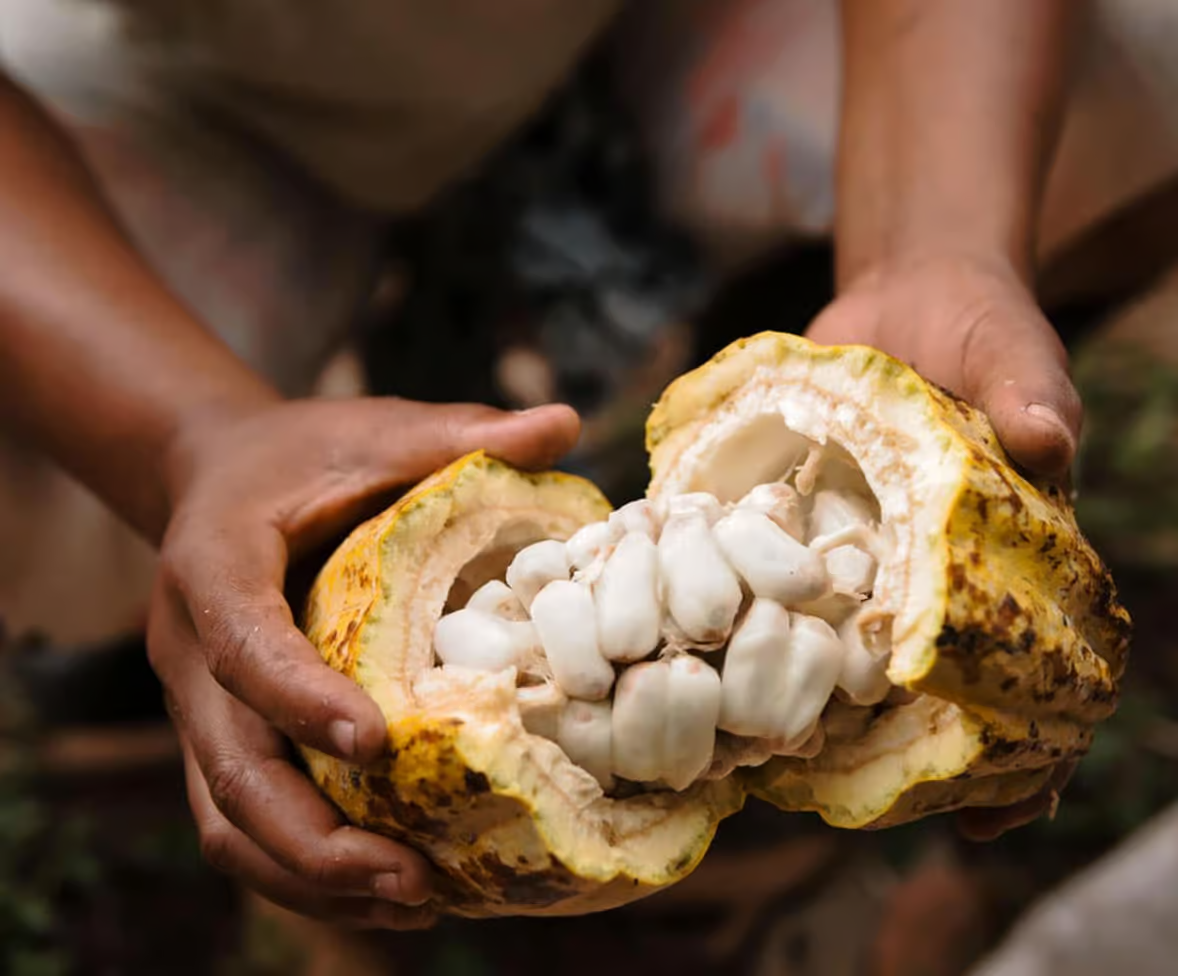
To understand the full picture, read our São Tomé chocolate guide - where to buy it, who makes it, and how to connect it to the landscape. You can also explore the history of São Tomé and Príncipe and the landscapes that cocoa shaped.
Transparency
Public record
This page will be updated as companies and legacy organisations respond.
Cadbury-linked trustees have answered directly.
Now the question goes to the companies and legacy routes directly connected to São Tomé and Príncipe cocoa history.
São Tomé and Príncipe helped make part of modern chocolate possible. The country should not be left out of the conversation about responsibility, repair and what the chocolate industry gives back.
To see the landscapes behind this history, our Central São Tomé tour passes through roça estates and working cocoa areas. You can also hire a car and explore the interior independently.