Landscape and Change
The Environment ofSão Tomé and Príncipe
Five centuries of settlement, plantation agriculture and population growth have reshaped these islands. What remains is extraordinary.
The Original Forest of São Tomé and Príncipe
When Portuguese navigators reached São Tomé in 1470 and Príncipe in 1471, both islands were uninhabited. Dense tropical forest, the Obo, covered everything from the coast to the highest peaks. No human had ever set foot on either island. The forest they found was ancient, layered, and home to species that had evolved in complete isolation for millions of years.
The Roças: How Plantations Shaped the Islands
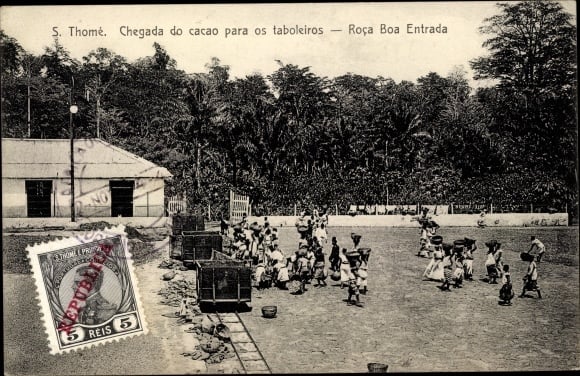
The Portuguese transformed what they found. Sugar came first. By the mid-sixteenth century, São Tomé was the world's largest sugar producer and the northeast of the island had been cleared for plantations. When the sugar economy collapsed, cocoa took its place. From the mid-nineteenth century, the roças, the great plantation estates that still dot the islands today, spread at extraordinary speed. By 1913, cocoa plantations covered roughly three quarters of São Tomé and Príncipe. Coffee, oil palm and banana filled whatever the cocoa did not. The Obo retreated to the mountains.
What You See When You Arrive
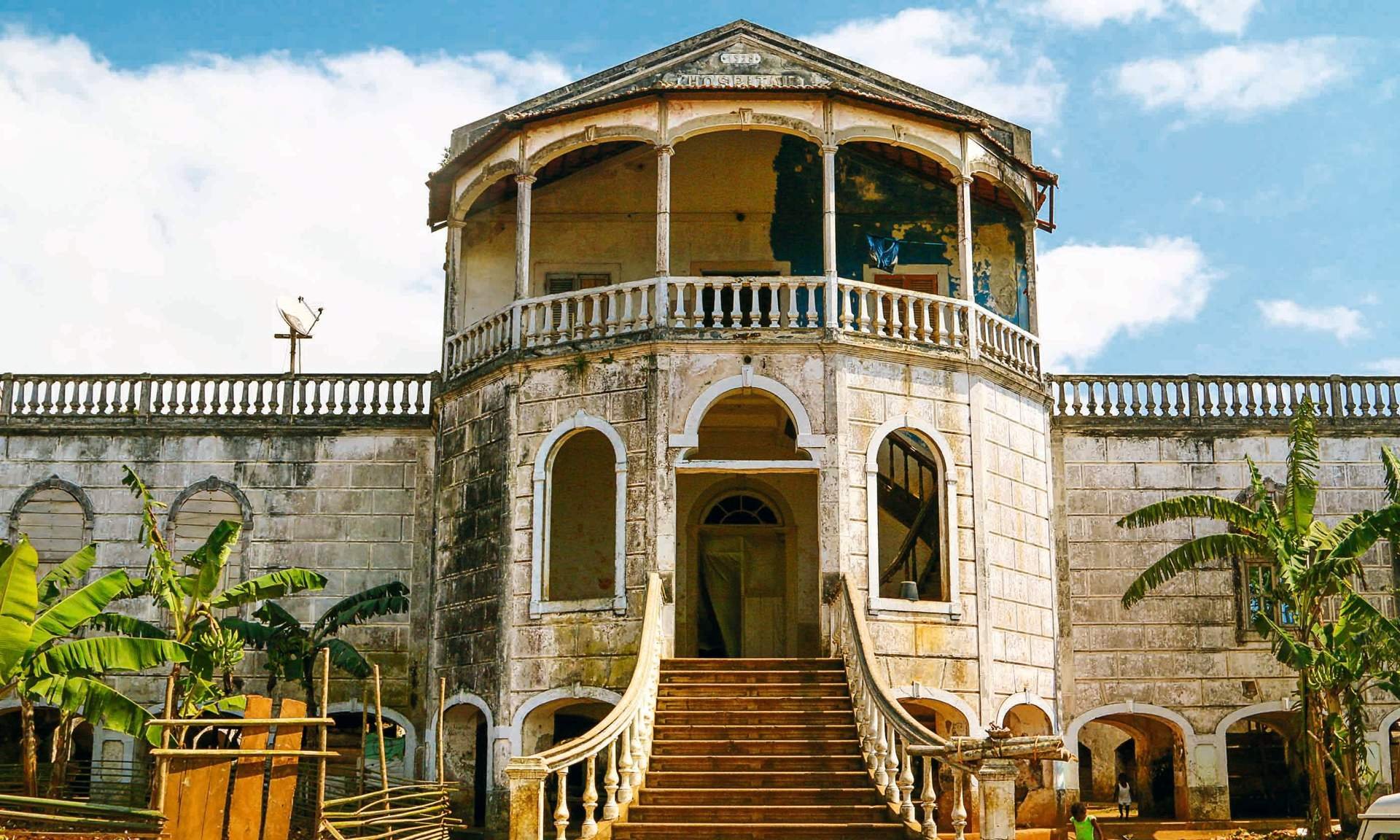
The first impression of São Tomé is overwhelming green. Forest reaches to the coastline in places and the landscape looks untouched. It is not. By the late 1950s, original Obo forest survived only above 1,400 metres. What visitors see below the peaks is largely secondary forest, regrowth that reclaimed abandoned roças over decades. Many of the roças themselves are still standing, some beautifully restored, others slowly being taken back by the forest. They are among the most visited sites on the islands and one of the best ways to understand how the landscape was shaped.
The real Obo survives in the mountainous heart of both São Tomé and Príncipe, much of it now protected within the Obo National Park. That is where the species found nowhere else on Earth still hold on. Fifty-seven percent of São Tomé's bird species are endemic. Every single amphibian species exists only here. The numbers are remarkable precisely because they have survived five centuries of change.
A Growing Population and a Changing Landscape
In 1758, the total population of São Tomé and Príncipe was around 12,700 people. By 2012 it was nearly 179,000, almost double what it was at independence in 1975. Growth has concentrated around the capital. The district of Agua Grande had a population density of over 4,200 people per square kilometre in 2012. The southern district of Caue had 23. Former roça workers moved to the city. The plantations emptied. Urban sprawl now extends along the main roads out of the capital, and the pressure on remaining natural areas is real.
Why It Still Matters
None of this diminishes what São Tomé and Príncipe are. The endemic species surviving in the Obo National Park are extraordinary. The secondary forests that reclaimed the old roças are full of life. The landscape is dramatic, layered, and deeply marked by human history. For visitors, understanding that history is part of understanding why what remains is so valuable, and why the work being done to protect it matters.
Travel Guide
Central São Tomé
The highlands, Monte Café and the road into the Obo National Park. This is where the old roça estates sit deepest in the forest and the landscape is at its most layered.
Explore Central São ToméFurther Reading
The History of São Tomé
From the Portuguese landing in 1470 to independence in 1975. The full political and social history behind the landscape you see today.
Read the History