The Chocolate Islands
São Tomé ChocolateCocoa, Roças and History
Beyond the souvenir. The real story of cocoa in São Tomé and Príncipe.
São Tomé chocolate is one of the easiest ways to understand the island beyond beaches and viewpoints. Cocoa shaped São Tomé and Príncipe for more than a century. It built the roças, changed the landscape, fed the export economy and left a history that is still visible across the island.
For visitors, chocolate is also practical. You can buy São Tomé chocolate in town. You can sit down at the Diogo Vaz café and chocolate boutique on Avenida Marginal, near Ana Chaves Bay. You can use the Diogo Vaz city shop in Bairro 3 de Fevereiro, opposite Papa-Figo. You can visit Claudio Corallo for a more serious cacao, coffee and soil-to-bar chocolate experience. You can also find chocolate in local supermarkets such as CKDO.
But this page is not just about where to buy a bar. São Tomé chocolate only makes sense if you understand the cocoa behind it: the roças, the plantation history, the farming, the agroforestry, the cooperatives, the export economy and the modern chocolate makers trying to keep more value connected to the islands.
The Connection
Why São Tomé is linked with chocolate
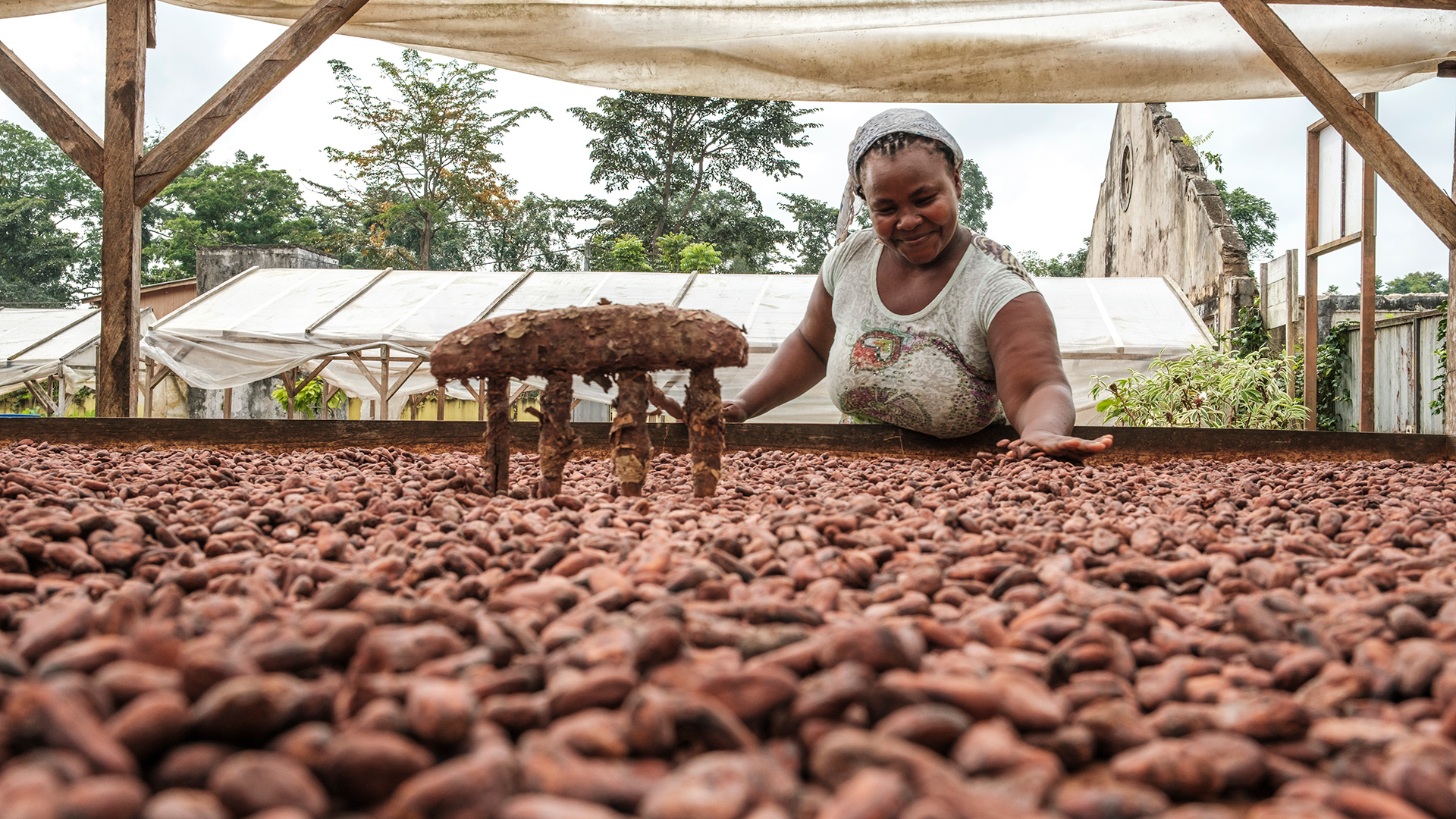
São Tomé and Príncipe's chocolate identity begins with cocoa. The islands' volcanic soil, humid climate and forest shade made them well suited to cocoa cultivation. Under Portuguese colonial rule, cocoa became central to the economy, and large plantation estates were developed across the islands.
This is where the idea of the Chocolate Islands comes from. It is not just a modern tourism phrase. It reflects a real agricultural history.
The history is not simple. Cocoa brought wealth and international attention, but the plantation system was built through slavery, forced labour and deep inequality. A serious São Tomé chocolate guide should not turn that into soft travel copy.
Chocolate here is food, but it is also land, labour and memory.
History
Cocoa, roças and the island's past
The roças are central to São Tomé's cocoa story. These were large plantation estates, often with housing, drying yards, warehouses, chapels, hospitals and administrative buildings. Some still function in changed ways. Others are partly restored, abandoned, or absorbed into nearby communities.
For visitors, the roças are often the clearest visible sign of the cocoa economy. They explain why cocoa shaped the island so deeply. They also show why the chocolate story needs care.
It is easy to describe the roças as atmospheric. That is true, but it is not enough. They are not just pretty ruins. They are part of the island's colonial and labour history.
A bar of São Tomé chocolate is connected to that wider chain: cocoa trees, fermentation, drying, transport, processing, sale and the people who worked the land. That is what makes chocolate here more than a souvenir.
Today
São Tomé cocoa today
São Tomé and Príncipe is no longer a mass cocoa producer. It is a small cocoa origin with a reputation for quality. Much of the cocoa is exported, so local chocolate production matters because it keeps more of the finished value connected to the place where the cocoa is grown.
Cocoa is often grown in agroforestry systems. In simple terms, this means cocoa trees grow with shade trees and other useful crops, instead of in a bare industrial plantation. In São Tomé, cocoa areas can include banana, breadfruit, matabala, medicinal plants and other trees.
This matters for farming families, biodiversity, food security and the look of the landscape. Cocoa here is not just a crop in a field. It is part of a mixed, shaded, lived-in agricultural system.
In 2024, São Tomé and Príncipe's cocoa agroforestry system was recognised by the FAO as a Globally Important Agricultural Heritage System. That recognition fits the island well. Cocoa here is not only an export product. It is part of the country's rural identity.
Soil-to-Bar
Claudio Corallo: cacao, coffee and soil-to-bar chocolate
Claudio Corallo belongs near the top of any serious São Tomé chocolate page. He is not a side note.
His work connects plantations, cacao, coffee and chocolate. The focus is not just on selling finished bars, but on understanding the quality of the cacao from the beginning. That is why Claudio Corallo is important for visitors who want more than a quick chocolate purchase.
The São Tomé visitor experience is built around soil-to-bar chocolate. Public information lists a tasting and lesson led by Claudio Corallo at Av. Marginal 12 de Julho 978, São Tomé. This is the more serious chocolate stop: cacao, coffee, chocolate, explanation and tasting.
This matters because São Tomé has both cocoa and coffee history. Claudio Corallo brings those two worlds together. For people interested in flavour, farming and process, this is one of the strongest chocolate experiences on the island.
Before going, check directly for booking, opening times and current arrangements. Do not assume a tasting is available without contact.
Café & Boutique
Diogo Vaz: café, chocolate boutique and city shop
Diogo Vaz is another central name in São Tomé chocolate. It is linked to Roça Diogo Vaz, a historic cocoa estate, and now produces chocolate from São Tomé cocoa.
For visitors, Diogo Vaz is especially useful because it is easy to access in town.
The Avenida Marginal 12 de Julho location is best understood as a café and chocolate boutique, not just a shop. It sits on the Ana Chaves Bay side of the city, towards the top of town. This is the place to slow down, sit down, have chocolate, coffee, hot chocolate, cake or ice cream, and buy chocolate to take away.
That distinction matters. It should not be described as simply a shop. It is a café-style chocolate stop with a bay-side setting.
Diogo Vaz also has a city shop in Bairro 3 de Fevereiro, opposite Restaurante Papa-Figo. This is the more convenient town stop if you simply want to buy chocolate while moving around the city.
So the simple visitor distinction is this: Avenida Marginal is the café and chocolate boutique near the bay. Bairro 3 de Fevereiro is the city shop opposite Papa-Figo.
Buying
Where to buy São Tomé chocolate
Buying São Tomé chocolate is straightforward.
You can buy from Diogo Vaz. You can look at Claudio Corallo if you want a more specialist chocolate and cacao experience. You can also buy chocolate in local supermarkets such as CKDO.
This should not be made to sound rare or difficult. Visitors do not need to arrange a plantation visit just to take São Tomé chocolate home.
The best approach is to combine the practical and the historical. Buy chocolate in town, then connect it to the island by seeing cocoa areas, roças and farming landscapes. That gives the bar more meaning.
Good things to look for include chocolate bars, boxed chocolate, cocoa products and small items that are easy to pack. If you want a sit-down stop, use Diogo Vaz on Avenida Marginal. If you want a convenient city purchase, use the Papa-Figo area shop or a supermarket.
Everyday
Chocolate and ordinary city life
One of the useful things about São Tomé chocolate is that it is not only hidden inside formal tours. It exists in ordinary city life.
You can sit with coffee and something sweet at Diogo Vaz by the bay. You can buy a bar from the city shop. You can pick up chocolate from CKDO while shopping. You can book a more serious tasting with Claudio Corallo if you want to understand cacao and chocolate properly.
That range is important. It means chocolate can fit different kinds of visitor.
Some people want a café stop with a view. Some want a good gift before flying home. Some want to understand fermentation, cacao quality and soil-to-bar production. São Tomé can offer all three, but they should not be confused with each other.
Planning
How to include chocolate in a São Tomé trip
Start in the city.
For an easy café stop, go to Diogo Vaz on Avenida Marginal, near Ana Chaves Bay. For a simple purchase in town, use the Diogo Vaz shop opposite Papa-Figo or look in CKDO. For a deeper chocolate experience, look at Claudio Corallo and check current booking details for the tasting or lesson.
Then connect the city experience with the landscape. Drive through cocoa areas. Visit roças. Notice the shade trees, the old estate buildings, the drying spaces and the way cocoa still sits inside everyday rural life.
A good São Tomé chocolate day does not need to be complicated. It can be chocolate in the city, then cocoa country outside it.
The important thing is not to separate the product from the place. São Tomé chocolate is better when you understand the island behind it.
Conclusion
Why chocolate matters here
Chocolate matters in São Tomé because cocoa shaped the islands.
It shaped the economy, the roças, the roads, the farms and the way the outside world saw São Tomé and Príncipe. It also left difficult histories that should not be hidden because they make the tourism story less comfortable.
Today, chocolate also points to a modern question: can São Tomé keep more value from its own cocoa? Exporting raw beans is one thing. Producing chocolate, running cafés, offering tastings and selling finished products locally is another.
That is why Claudio Corallo, Diogo Vaz, cooperatives, cocoa farmers and local shops all matter in different ways. They are not the same thing, but they are part of the same wider story.
For visitors, São Tomé chocolate is at its best when it is treated seriously. Buy it, taste it, enjoy it, but do not reduce it to a souvenir. The bar, the café, the tasting and the roça all point back to the same place: the real Chocolate Islands, and the real story of São Tomé and Príncipe chocolate.
Related Content
Explore more of São Tomé
The cocoa story is just one part of São Tomé's history. Learn about the roças that produced it, the regions where it grows, and the wider story of the islands.