
Wildlife of the Islands
The Whales and Dolphins ofSão Tomé and Príncipe
Twelve confirmed species in waters that are still barely studied. What we know, what was done here, and what still needs protecting.
Twelve Species in Island Waters
The volcanic origins of São Tomé and Príncipe created a marine environment unlike most tropical islands. The sea floor drops away steeply from the coast, reaching depths of over 200 metres within a short distance of shore. Deep-water species that would normally stay far offshore can approach close to land. Combined with warm currents, productive upwellings, and the sheer volume of the surrounding Gulf of Guinea, this draws cetaceans in numbers that are disproportionate to the size of the archipelago.
Twelve species have been confirmed. Five of those, the striped dolphin, the rough-toothed dolphin, Risso's dolphin, the pygmy killer whale, and the dwarf sperm whale, were only identified in recent years. The true count is almost certainly higher. Dedicated survey work has been limited, most of it concentrated around São Tomé, with very little around Príncipe and nothing at all around Annobón. Large stretches of the surrounding ocean have never been systematically surveyed for cetaceans.
Humpback Whales
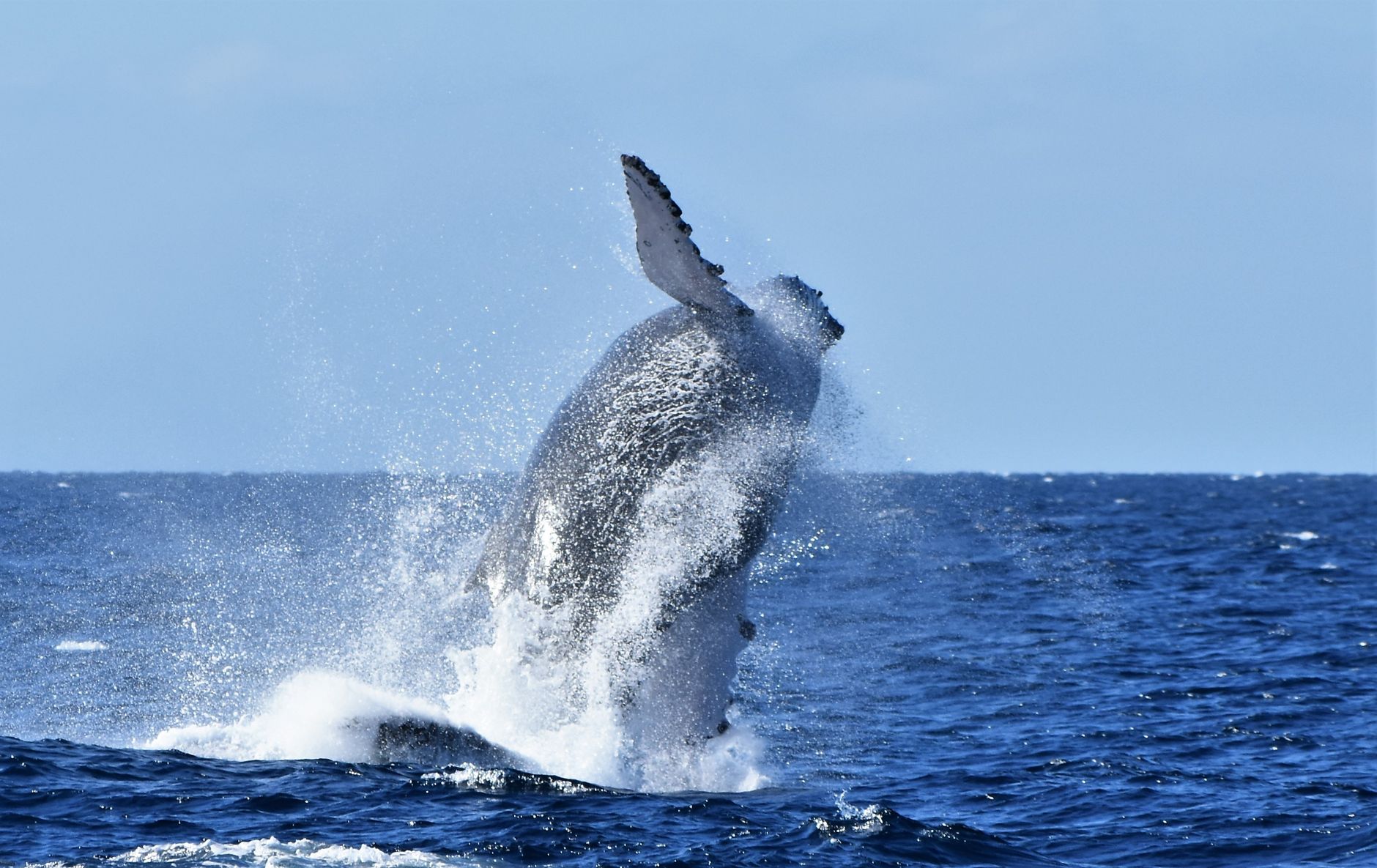
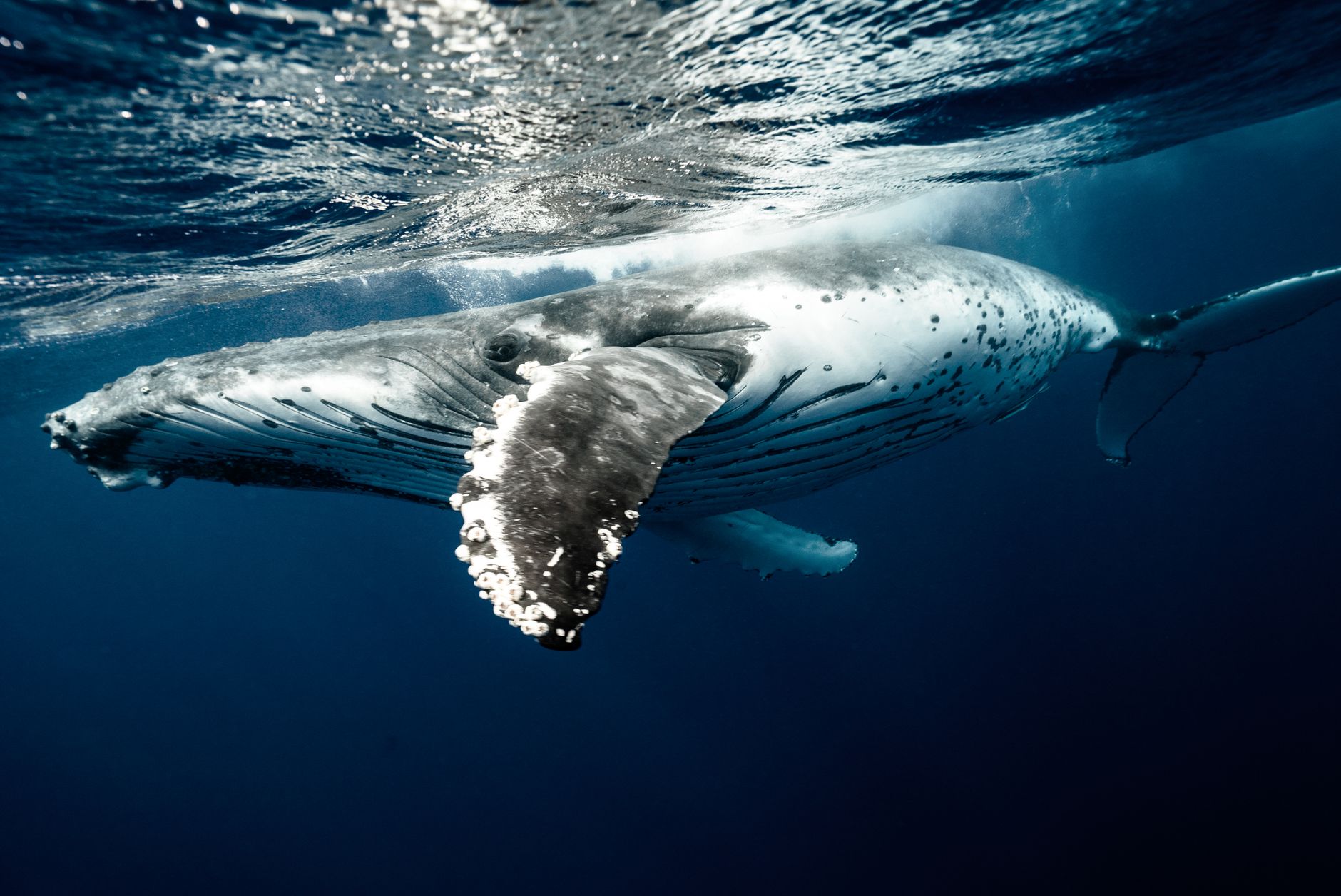
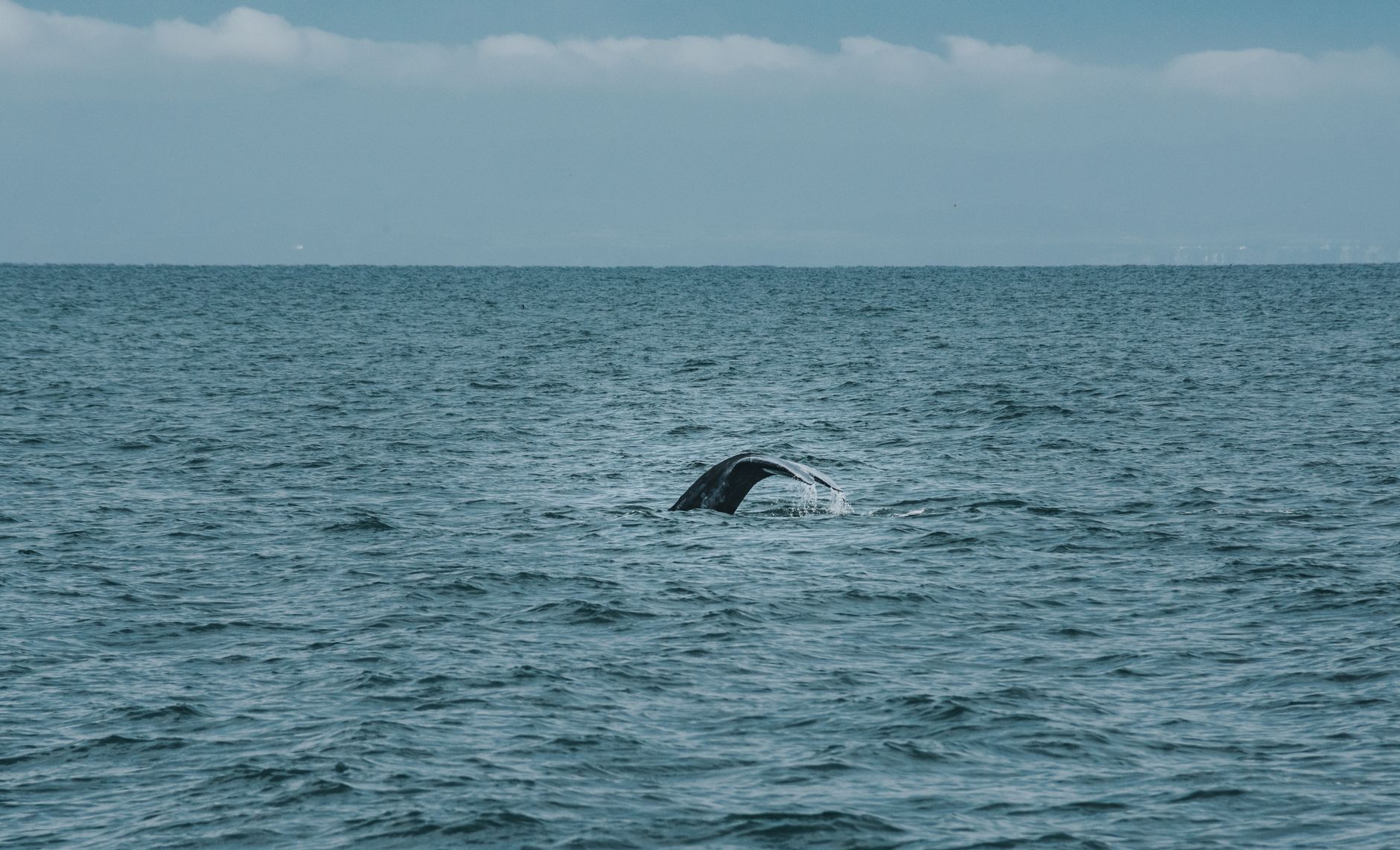
Humpback whales arrive in the waters around São Tomé and Príncipe between July and November, migrating north from the Southern Ocean to breed. The shallow bays around both islands are used as calving and nursing areas. More than 70 percent of humpback groups recorded here have included a calf, which tells you what this area is for. Mothers with newborns use the warm, sheltered water to rest and feed their young before heading south again. They have been observed close to shore around Rolas Islet, off São Tomé city, and around Príncipe.
These are not anonymous animals. Photo-identification work by EDMAKTUB through its Sacet Project has built the first humpback catalogue for the region, identifying more than a hundred individual whales and matching several through the global Happywhale database to confirm their movements across the South Atlantic. The science is recent, the sample is small, and the population is still poorly understood, but the baseline is being built.
Dolphins of São Tomé and Príncipe
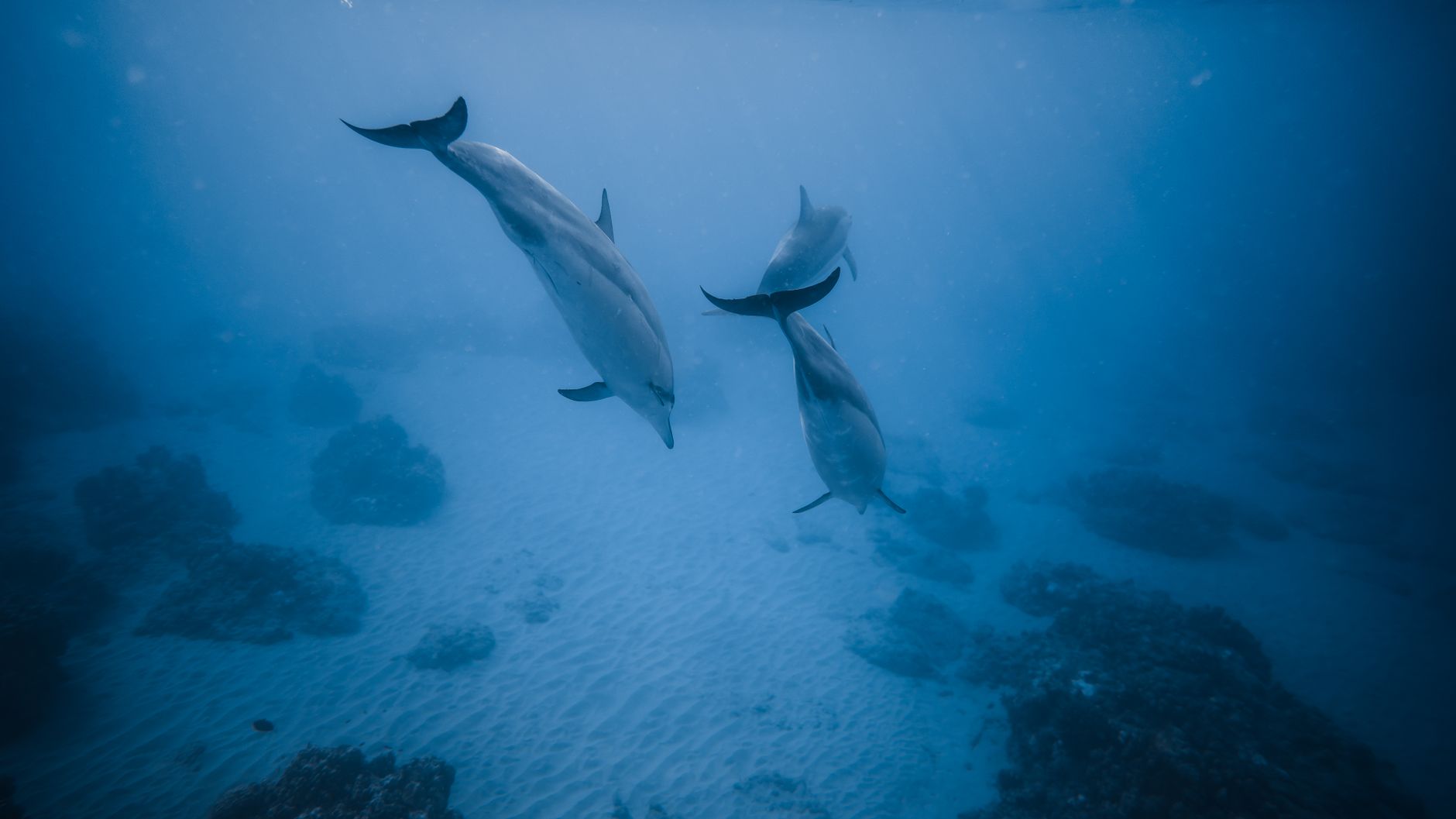
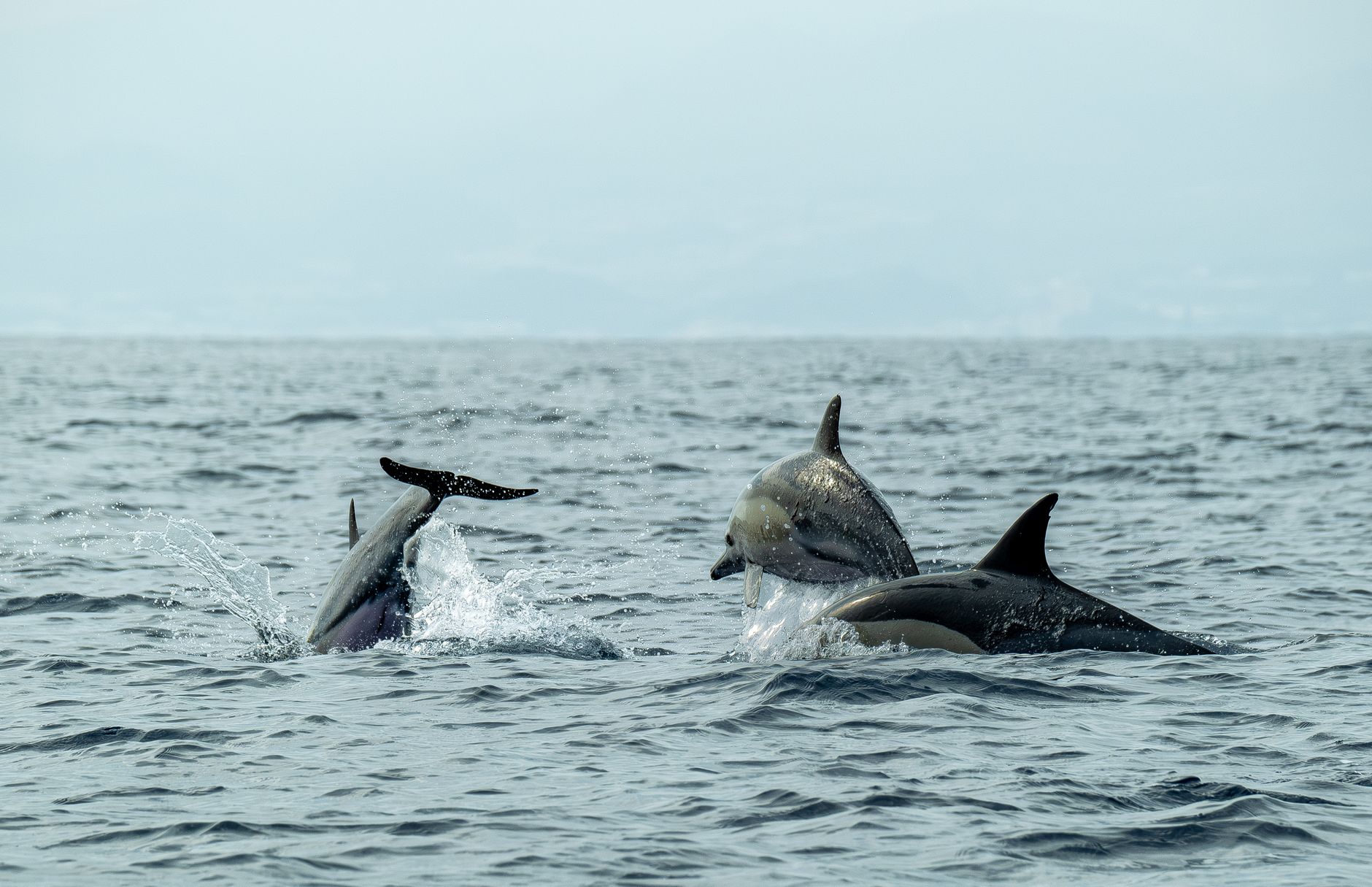
The common bottlenose dolphin is the most frequently sighted cetacean around São Tomé and is present throughout the year. Groups average around 45 individuals and regularly include calves. They are seen most often around Rolas Islet and off the northeast coast near São Tomé city, sometimes very close to shore. Photo-identification has tracked 140 individuals, with some returning to the same waters year after year.
The pantropical spotted dolphin is the other year-round resident, often forming groups of more than 100 animals over the deeper slopes to the north of São Tomé. Rough-toothed dolphins have been recorded in smaller groups off the north coast. On one occasion a group was observed swimming alongside pygmy killer whales close to shore.
Deep Water Visitors
Sperm whales have been recorded through both sightings and strandings, with evidence suggesting nursery groups with young calves use these waters. Killer whales have been sighted multiple times, primarily between November and January, with photo-identification confirming the same group returning across years. Short-finned pilot whales have been seen in mixed groups with bottlenose dolphins, and one individual was resighted after nine years, suggesting long-term fidelity to the area. False killer whales, pygmy killer whales, and the dwarf sperm whale have all been confirmed.
The Whaling Factory at Neves
The Gulf of Guinea was a slaughterhouse for humpback whales. Norwegian floating factories and catcher boats operated from Cap Lopez in Gabon from the early twentieth century, targeting humpbacks during their breeding season. More than 10,000 were killed across the region.
In 1951, a Norwegian company was granted a licence to hunt from a modern factory at Praia Rosema, near Neves on the northeast coast of São Tomé. In a single season, July to October, the factory processed 714 animals: 336 Bryde's whales, 323 humpback whales, 53 sperm whales, and two fin whales. Seven animals a day. The humpback whales belonged to a population the International Whaling Commission had already identified as depleted. Portugal was not a member of the IWC and the operation went ahead despite international criticism. Falling catches and mounting pressure forced the factory to close after one season. Its ruins are still visible on the shoreline at Neves.
On Annobón, a separate small-scale whaling tradition developed among local fishermen who had learned from foreign whaling crews. Small rowing boats with two rowers and a harpooner targeted humpback calves in coastal waters during July and August. The practice was integrated into local culture and has been reported to have continued in some form into recent years.
What Has Not Changed
At its first IWC meeting as a member, in 2018, São Tomé and Príncipe voted alongside pro-whaling nations against a proposed South Atlantic Whale Sanctuary. Cetaceans in these waters have no specific legal protection. There is no national licensing scheme for whale watching, no code of conduct, and no framework that would make boat-based encounters with whales or dolphins anything other than unregulated approaches to wild animals.
The animals are also under pressure from other directions. Bycatch in artisanal and industrial fishing gear is a documented problem, particularly for spotted dolphins and olive ridley turtles. Overfishing is reducing the prey base. Oil and gas exploration in the region has brought seismic surveys into waters used by acoustically sensitive species. The number of artisanal fishers in the archipelago more than doubled between 1955 and 2010, and industrial fishing by foreign fleets has continued to increase.
Until the research catches up and proper protections are in place, the honest position is that these animals need fewer boats around them, not more. If you want to know why we do not offer whale watching, we explain our reasons on a separate page.

Whale Watching Trips
Looking for a Responsible Whale Watching Trip?
If you would still like to see humpbacks in season, we run small-group trips from Porto Alegre on the southern coast between July and October. Trips use a traditional fishing boat with an experienced local skipper and follow the cautious approach this page describes.
Whale watching from Porto AlegreThe People Doing the Real Work
The organisations studying and protecting cetaceans in these waters deserve attention. EDMAKTUB, through its Sacet Project, built the first humpback photo-identification catalogue for the region. The Blue Marine Foundation, working with local partner Over the Swell and São Toméan fishers, monitors whale sharks and helped secure their inclusion as a protected species in national legislation. Over the Swell runs local surveillance teams, has trained former spear fishers as conservation rangers, and has engaged thousands of artisanal fishers.
If you see a whale, dolphin, or whale shark while you are here, the most useful thing you can do is record it. A clear photograph of a humpback tail fluke submitted to Happywhale adds to the global identification record. A whale shark sighting reported to Over the Swell feeds directly into the local monitoring effort. These are small actions that produce real data.
