 Photo: Torsten
Wildlife of the Islands
The Reptiles ofSão Tomé and Príncipe
29 species, most of them found nowhere else on Earth. Each island evolved its own.
Geckos and Lizards of the Islands
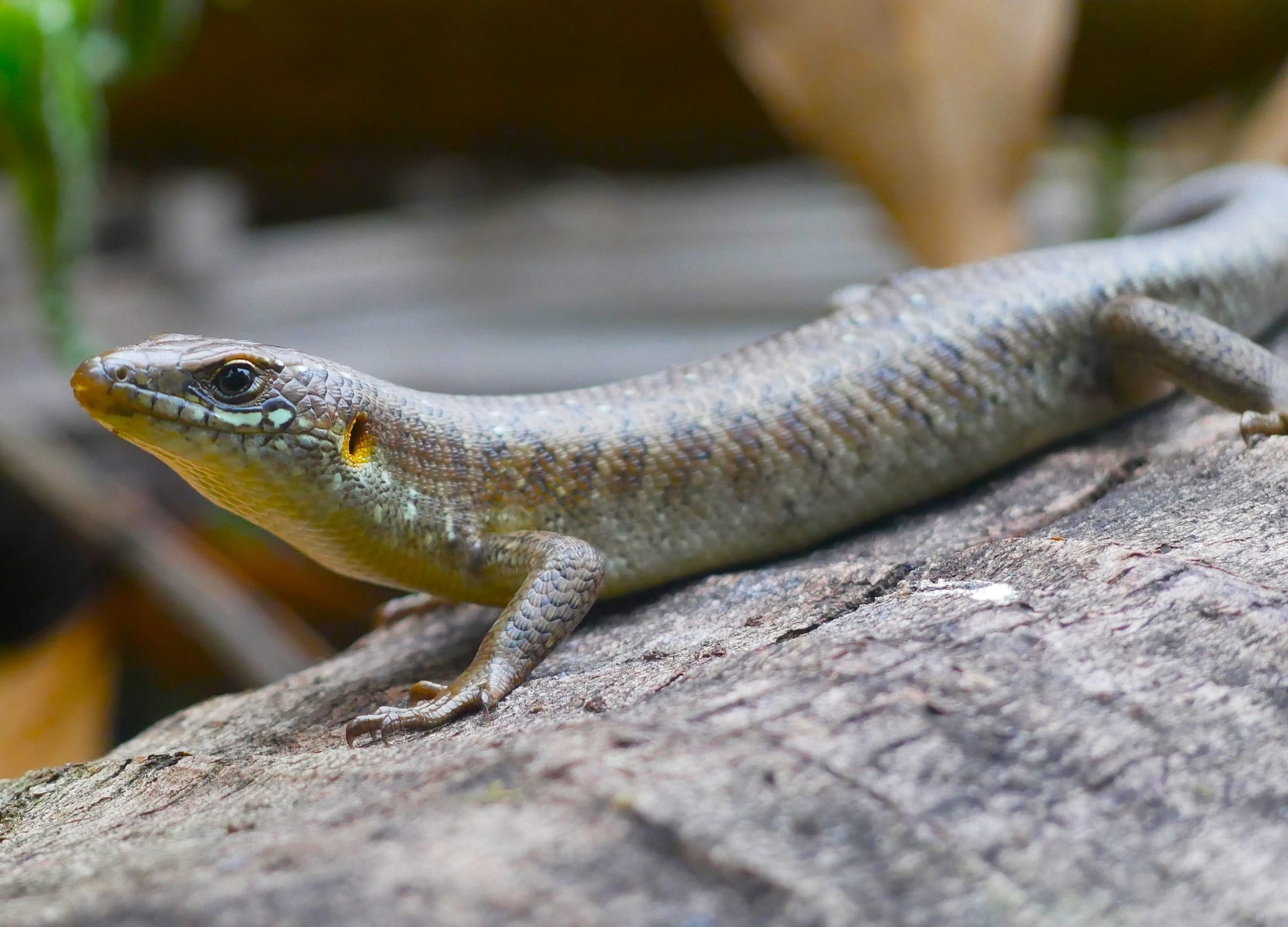
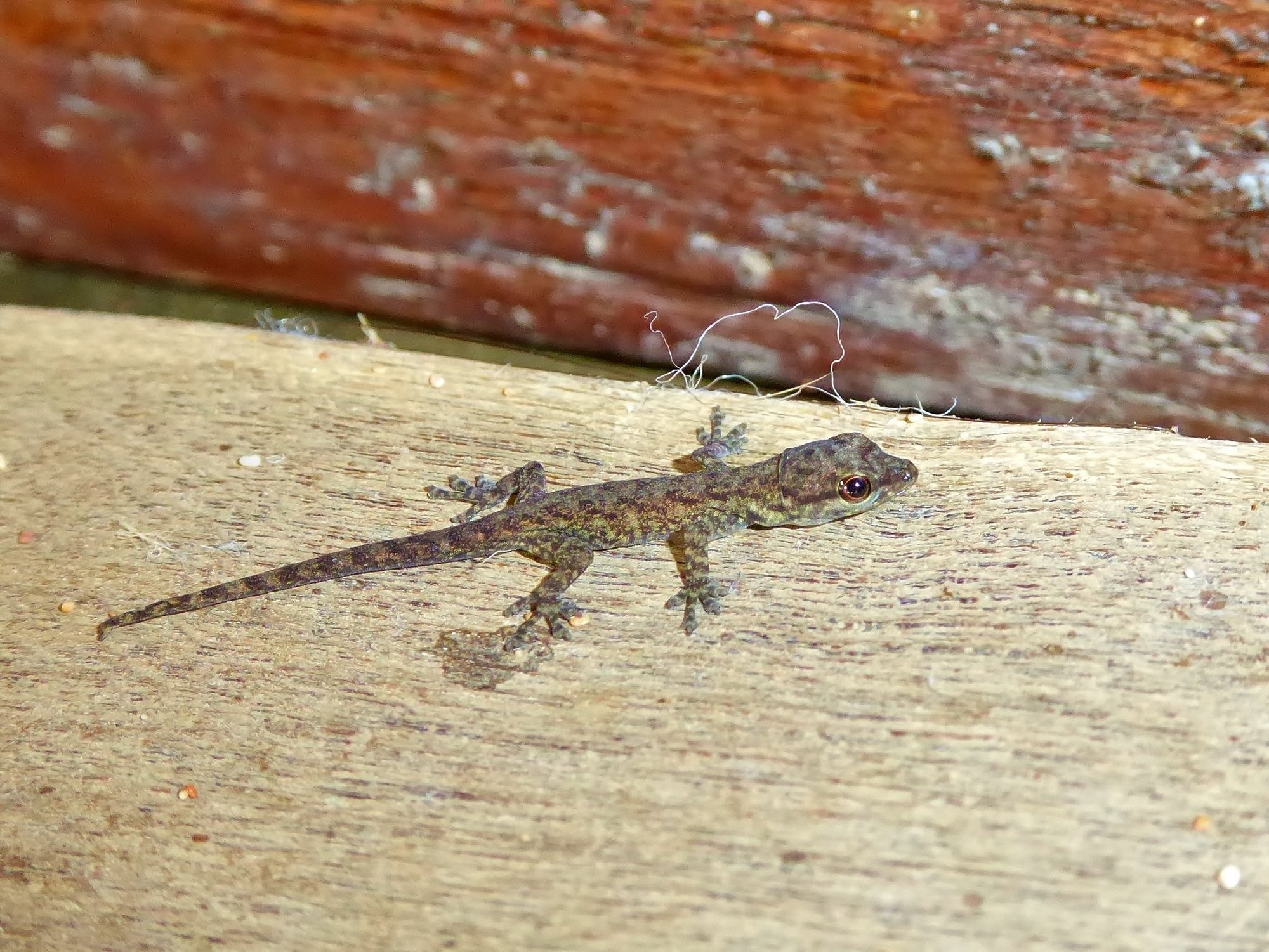
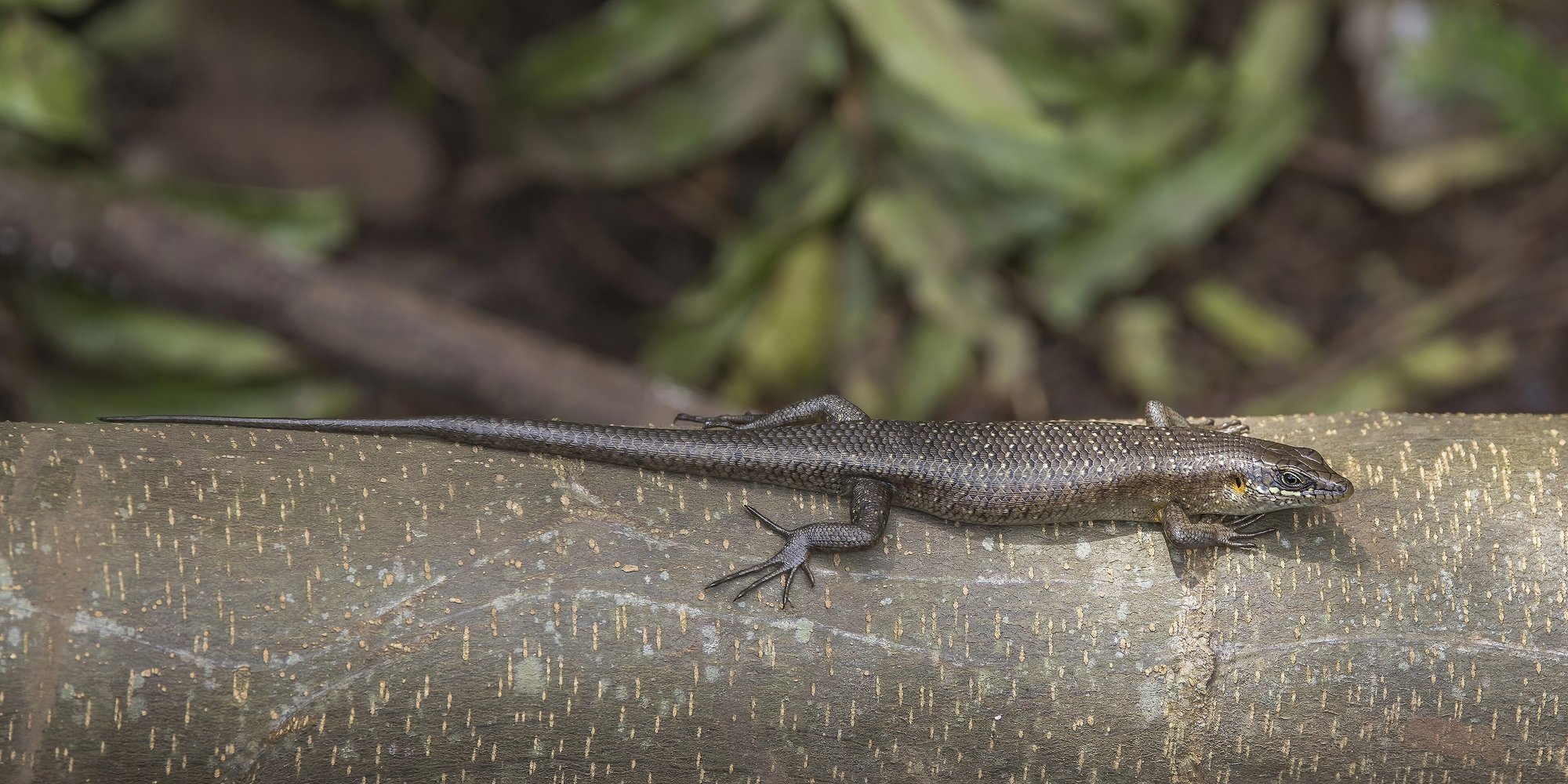
One of the most striking things about the reptiles of São Tomé and Príncipe is how precisely evolution divided them between the islands. Each of the three Gulf of Guinea oceanic islands has its own species of dwarf gecko, found only on that island. Príncipe has one, São Tomé has one, and Annobón has one. The same pattern holds for the leaf-litter skinks and the common skinks. These are small, quick lizards you will see everywhere, darting across garden walls, basking on tree trunks, and rustling through the forest floor. They look similar at first glance, but each island's population has been separated for so long that they have become distinct species.
The endemic geckos are among the more unusual. The Príncipe Gecko and its relative on São Tomé share a feature found in no other African gecko: they are missing the claw on their first finger. Both species prefer less disturbed forest habitat, though they can also be found in drier, rockier areas. The common house geckos you will notice on walls and ceilings at night are a different group entirely, introduced species that have spread across the tropics.
The Snakes of São Tomé and Príncipe
The islands have a surprising variety of snakes for their size. The most commonly encountered are the house snakes, known locally as the Jita. There is one species on São Tomé and another on Príncipe, both endemic, and both completely harmless to humans. Locals have known this for generations. The Jita is a calm, slow-moving snake often found in gardens, forest edges, and around areas where tree frogs breed. It is one of the most familiar animals on both islands.
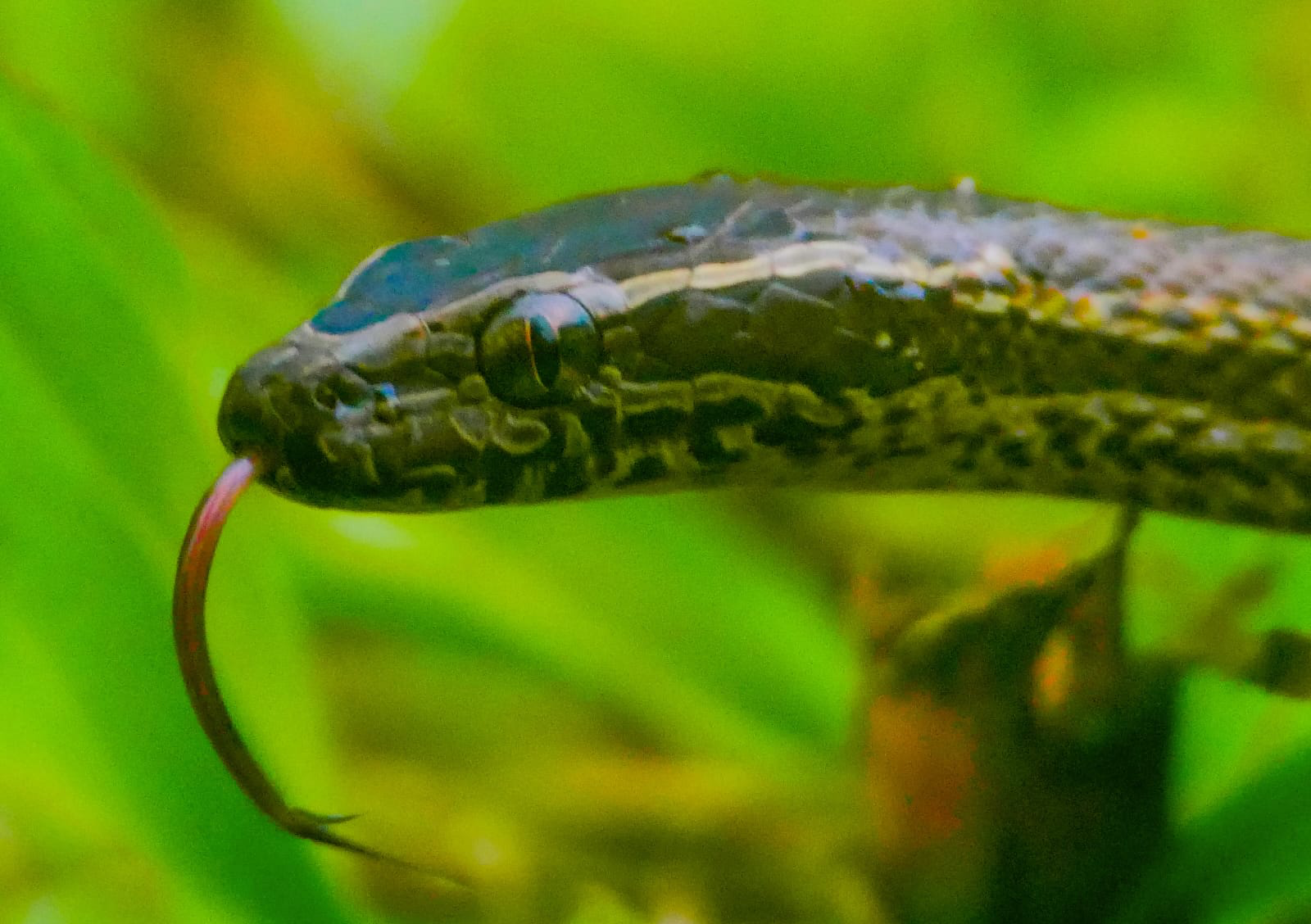
The green tree snakes are harder to spot. Príncipe has its own emerald snake, known locally as the Suá-suá, an arboreal species that lives in the forest canopy. São Tomé and Annobón each have their own species of green snake from a related but separate group. There are also several species of small, burrowing worm snakes that spend their lives underground and are almost never seen.
The Cobra-preta
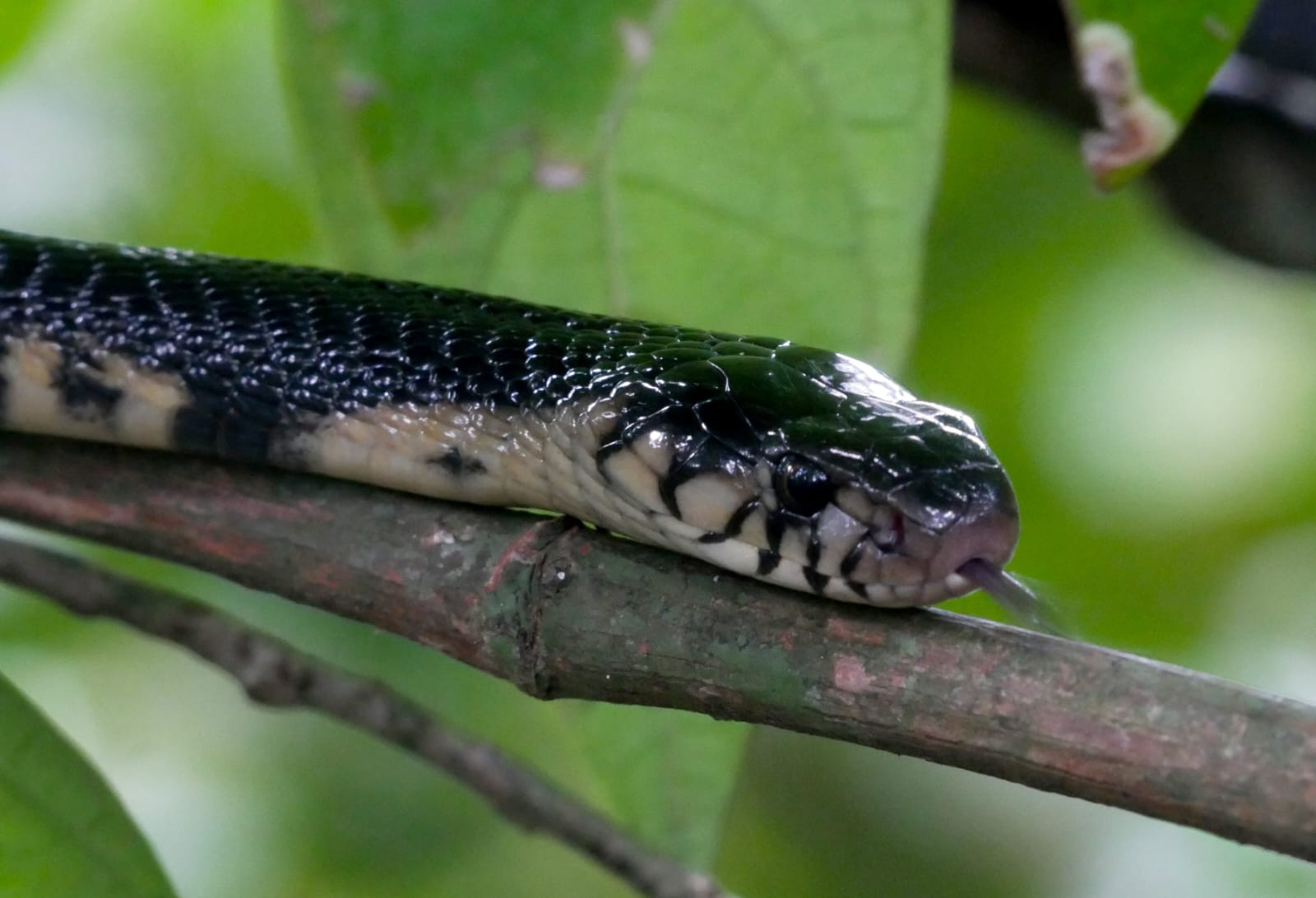
The one snake on the islands that demands respect is the Cobra-preta, the black cobra of São Tomé. It is the only venomous reptile on any of the Gulf of Guinea oceanic islands and the only species classified as endangered. For a long time it was assumed that the Portuguese had introduced the cobra to control rats on the plantations. That theory has since been disproven. The Cobra-preta is a genuine endemic, a species that evolved on São Tomé and exists nowhere else.
It is a large, conspicuous snake, mostly found in forested and shady areas across the southern half of the island. It is sometimes seen basking on roads during the day. Human fatalities from bites are extremely rare but can occur. In practice, visitors exploring the forests with a guide have very little to worry about. The Cobra-preta is far more threatened by humans than humans are by it. Habitat loss, direct persecution by people who fear it, and road deaths are the main risks to its survival.
The Mystery of the Green Mamba
There is one reptile mystery on São Tomé that has never been resolved. In the nineteenth century, three experienced scientists independently reported a species of green mamba on the island. One of them even published a detailed drawing of the specimen. The reports were credible, specific, and came from people who knew exactly what they were looking at.
The problem is that every one of those original specimens has been lost. Some were destroyed in the bombing of European museums during the Second World War. Others simply disappeared. No researcher in the past century has found a living mamba on São Tomé. Either the historical records are cases of mistaken identity and bad locality data, or there is an elusive species of green mamba somewhere on the island that has avoided detection for over 150 years. Nobody knows.
When a Crocodile Washed Ashore
São Tomé once had crocodiles. Early Portuguese accounts from the fifteenth century describe large reptiles in the rivers that attacked livestock and people. The settlers exterminated them. No archaeological remains have ever been found, and the species was never formally identified.
Then, in April 2021, a live crocodile appeared on a beach in the southeast of São Tomé. It was a female Nile crocodile, roughly two metres long, and it stayed on the beach for several weeks before the authorities killed it on safety grounds. Around the same time, two fishermen from Angola were rescued near São Tomé after their boat drifted from the mouth of the Congo River. Strong currents and heavy rains on the continent may explain both arrivals. Where the crocodile originally came from has never been confirmed. It was a vivid reminder that these islands, however remote they feel, are still connected to the African mainland by the sea.
Living Alongside Reptiles
For visitors, the reptiles of São Tomé and Príncipe are part of the texture of daily life on the islands. Geckos on the ceiling at night. Skinks in the garden. The occasional Jita crossing a forest path. The vast majority are completely harmless, and many are species you will see nowhere else. The Cobra-preta is the only one that requires caution, and encounters in normal tourist settings are very unlikely.
Most of the islands' endemic reptiles are currently protected within the Obo National Park, which covers the forested heart of both São Tomé and Príncipe. The bigger threat to these species comes not from visitors but from habitat loss, invasive species arriving on cargo ships, and the illegal wildlife trade. In 2018, a dead boa constrictor from South America was found near São Tomé airport, almost certainly smuggled into the country. Protecting what makes these islands unique means keeping that kind of introduction from taking hold.
Explore More Wildlife
Discover the unique wildlife of São Tomé and Príncipe.