Wildlife of the Islands
The Mammals ofSão Tomé and Príncipe
Nineteen wild species. Eleven bats. Two shrews that science cannot fully explain. And several that may still be unknown to science.
Why Bats Dominate
Oceanic islands are almost impossible for most mammals to reach. Thousands of kilometres of open water and no land bridges mean that the only mammals capable of naturally colonising islands like São Tomé and Príncipe are those that can fly. That is why bats make up the overwhelming majority of the native mammal fauna. Of the 13 native species recorded on the islands, 11 are bats. The remaining two are shrews, whose presence on islands this remote remains one of the more puzzling questions in the biology of the Gulf of Guinea.
In total, 19 wild mammal species are known from the three oceanic islands. Thirteen are native. At least seven species and three subspecies are found on only a single island. The remaining six species were introduced by humans, some deliberately, some as stowaways on ships. For islands this small, the mammal diversity is surprisingly high.
The Endemic Bats of São Tomé and Príncipe
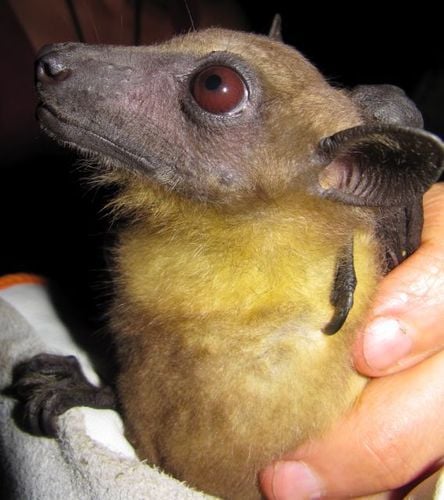
The most abundant native mammal on the islands is the straw-coloured fruit bat, a large, noisy species commonly seen flying above the canopy at dusk. It is present on all three islands. On the mainland it migrates, but the island populations are resident. The population on Annobón is recognised as a distinct subspecies and shows island dwarfism, with individuals significantly smaller than those on São Tomé and Príncipe. The species is hunted for food on both main islands.
The rarest bat on São Tomé is the São Tomé collared fruit bat, an endemic known from just three locations. It possesses the only asymmetrical dental formula recorded in any mammal on Earth, having lost a single lower incisor. It is classified as endangered. The São Tomé free-tailed bat, another endemic, is so scarce that extensive recent surveys failed to detect a single individual. It was last captured at two lowland sites and may now be detectable only through its echolocation calls, which differ from those of the more common little free-tailed bat that shares the island.
Other endemic bats include the São Tomé horseshoe bat, a large insectivorous species found roosting in caves and occasionally under palm leaves, and Newton's long-fingered bat, which forms colonies of thousands in underground roosts along the coast. The Egyptian rousette occurs on both São Tomé and Príncipe, but the two island populations have diverged: the São Tomé form is a giant, the Príncipe form a dwarf. Both are considered endemic subspecies.
Príncipe has its own exclusive bat, a small pipistrelle identified as a probable new species but not yet formally described as of the most recent published research. It is abundant across the island in urban, agricultural, and forest habitats. On São Tomé, a mouse-eared bat captured in a coastal cave appears to represent another undescribed species, distinct from its closest mainland relative in both genetics and echolocation calls.
One of the more unusual behaviours recorded on the islands involves the Noack's roundleaf bat, a small insectivorous species common on both São Tomé and Príncipe. On São Tomé, this bat regularly flies and forages during the daytime, a habit rarely observed on the mainland.
Two Shrews and an Impossible Journey
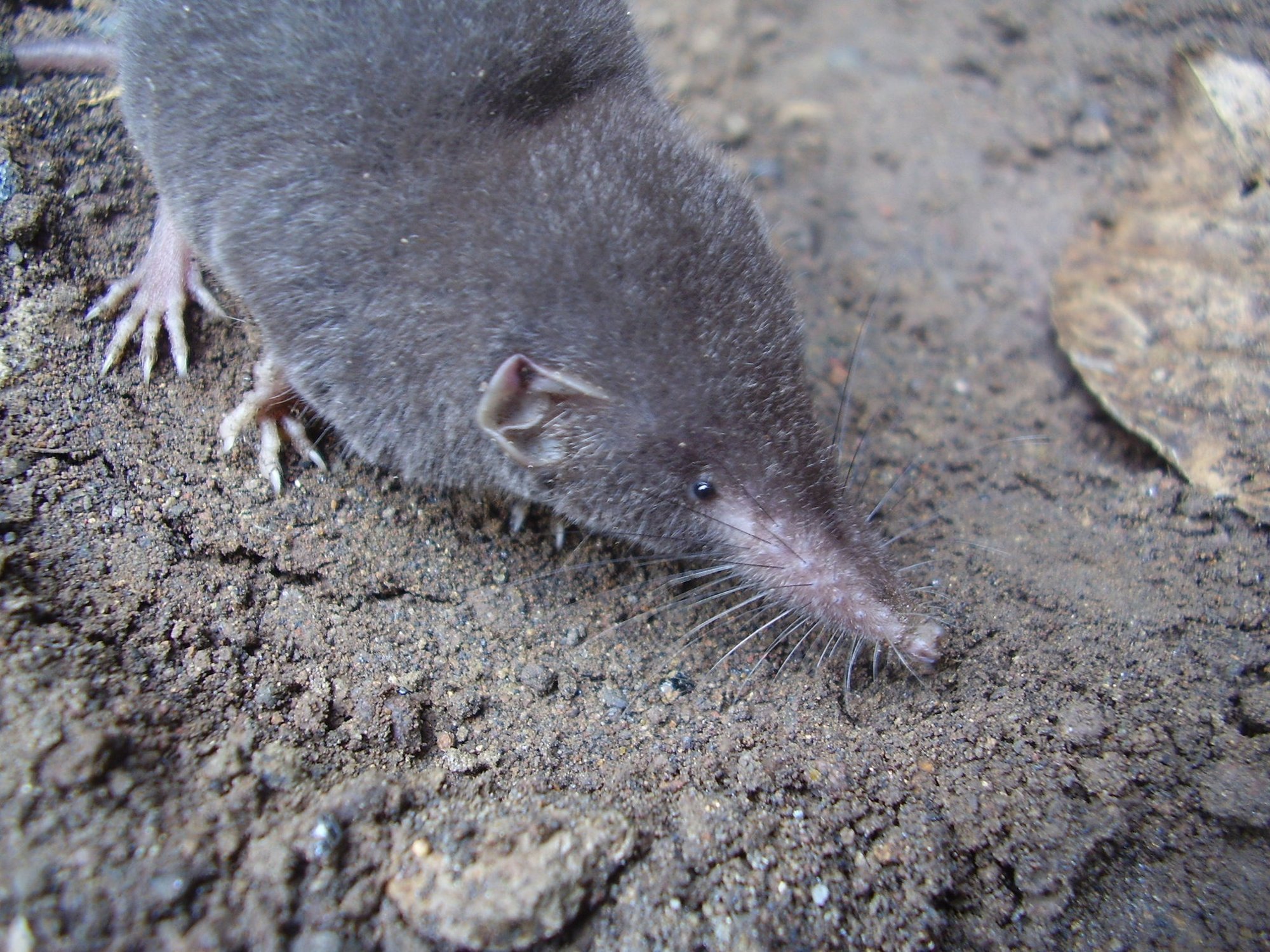
Each of the two main islands has its own endemic shrew. The São Tomé white-toothed shrew was described in 1887 and is classified as endangered. The Príncipe white-toothed shrew was only recognised as a distinct species in 2015, having previously been misidentified as a mainland form. Molecular analysis showed it diverged from its closest African relative roughly one million years ago.
The question is how they got here. Shrews are tiny mammals with extremely high metabolic rates and constant freshwater requirements. The idea that they survived a natural rafting event across hundreds of kilometres of open ocean is difficult to accept, and no satisfactory alternative has been proposed. Their presence on these islands remains genuinely unexplained.
The São Tomé shrew appears to be more widespread than originally thought, recorded at locations from sea level to high montane forest, always in humid areas where arthropod prey is abundant. The Príncipe shrew has so far been found only in the northern part of the island. Both species are potentially vulnerable to predation by introduced rats and weasels, and to habitat loss from agricultural expansion.
Monkeys of São Tomé and Príncipe
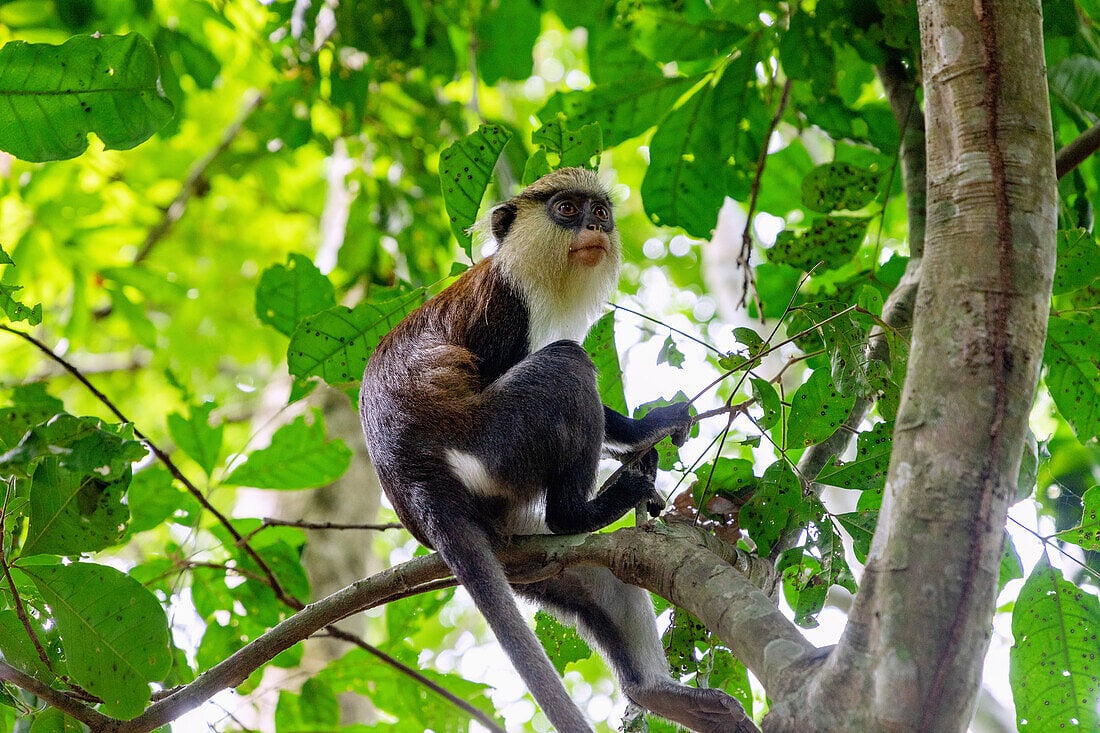
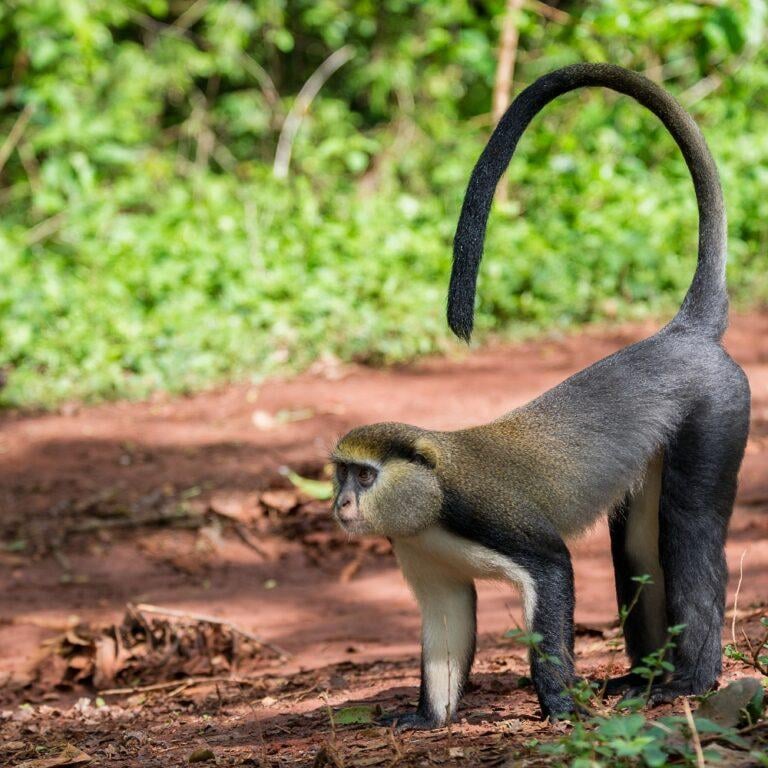
The mona monkey is the only primate on the islands other than humans. It was brought to both São Tomé and Príncipe between 150 and 500 years ago, probably kept as a pet by sailors or used as food by enslaved plantation workers. It is now common on both islands, with population densities similar to those found across its native range in West Africa. Ironically, while it has become rare or locally extinct in parts of the mainland due to habitat loss and hunting, it thrives on São Tomé and Príncipe.
The mona monkey is a generalist. It feeds on fruits, insects, leaves, flowers, small lizards, and bird eggs. It uses every type of forest on the islands and is particularly abundant in the transition zones between forest and farmland, where fruit is plentiful. On Príncipe it is a familiar presence around settlements and plantations. On both islands it is hunted for meat.
The monkey's impact on native wildlife is a growing concern. Predation on the nests of endemic birds has been confirmed, though the full effect on bird populations is not yet clear. Mona monkeys also favour large-fruited plant species, which may be disrupting the natural seed dispersal networks that the native forest depends on. The population that was later introduced to the Caribbean island of Grenada originated from São Tomé and Príncipe.
Rats, Weasels and Civets
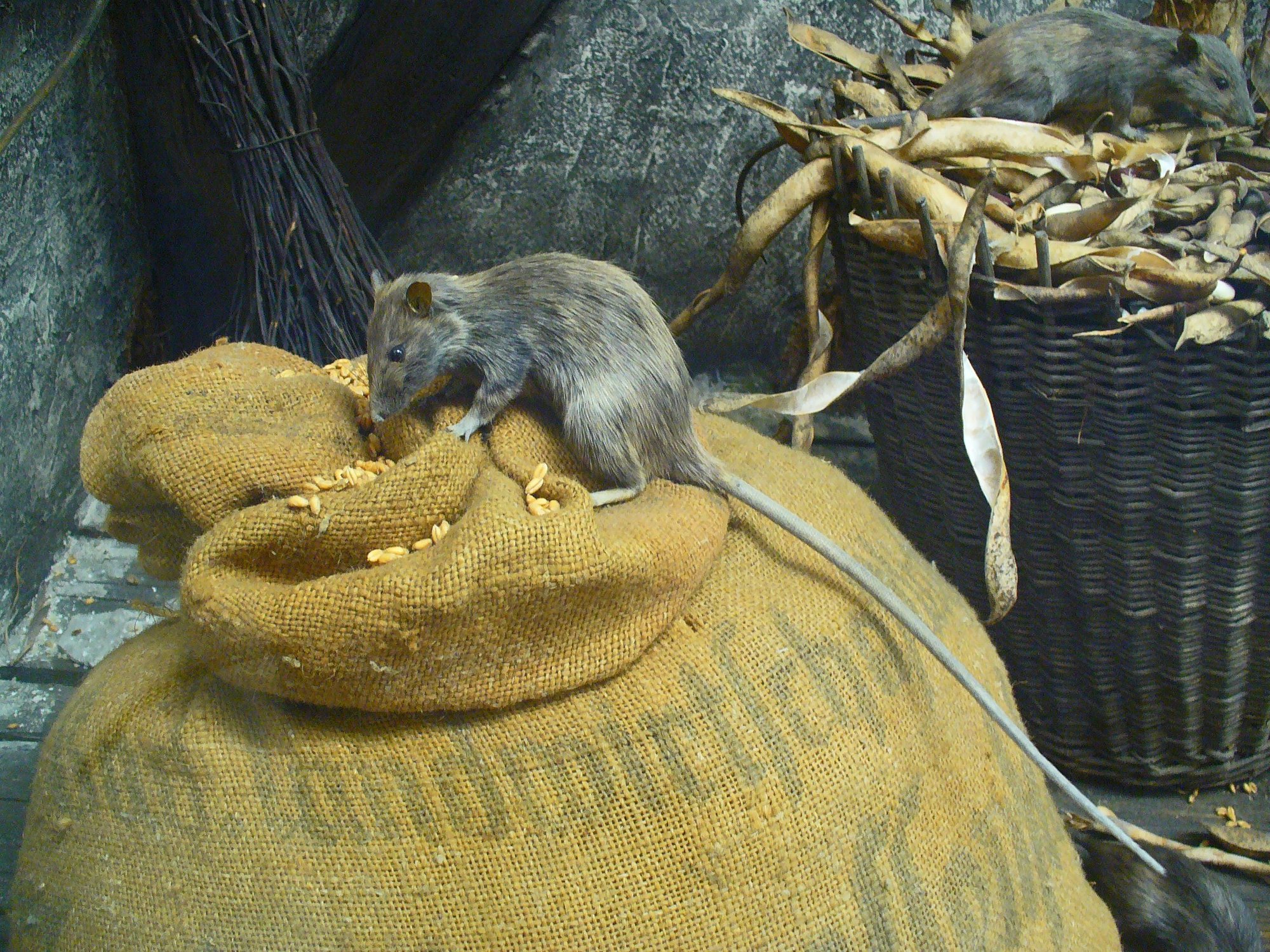
The ship rat, brown rat, and house mouse are all present on the islands, likely arriving as stowaways on Portuguese vessels from the fifteenth century onwards. The ship rat is abundant across São Tomé and Príncipe and is among the 100 worst invasive species in the world. It represents a serious threat to native wildlife, especially ground-nesting birds and the endemic shrews. On Annobón, a rat population explosion in 2004 caused significant damage to crops.
The African civet was introduced by the Portuguese, probably for both rodent control and musk production. It is nocturnal, solitary, and rarely seen, but has been recorded across São Tomé and on Príncipe. The least weasel, present only on São Tomé, has a surprising origin. Genetic analysis showed it is not related to mainland Portuguese populations but is instead identical to weasels from the Azores, which in turn appear to have come from the Balearic Islands in the Mediterranean.
Threats and Conservation
The single biggest threat to the native mammals of São Tomé and Príncipe is habitat loss. All the endemic species evolved in humid forest, and although large areas of native forest survive in the mountainous interiors of both islands, much of it now protected within the Obo National Park, pressure from agriculture, logging, and development continues at the margins. For cave-dwelling bats, the destruction or disturbance of roost sites is an additional and immediate risk. Five cave-dwelling species are known on São Tomé, two of which also occur on Príncipe. A single disturbed roost can affect thousands of individuals.
Hunting is a concern for the larger fruit bats. The straw-coloured fruit bat and the Egyptian rousette are both taken for food in significant numbers. The endangered São Tomé collared fruit bat, already known from only three locations, could be caught incidentally in traps set for the more common species. Introduced predators, especially rats and the least weasel, pose a chronic threat to the endemic shrews and potentially to roosting bats.
For many of the endemic mammals, the most honest assessment is that not enough is known. Several species have been recorded at only a handful of sites. Population trends are unknown. Basic ecological requirements are undocumented. The taxonomy of at least two bat species remains unresolved. Conservation on these islands starts with filling those gaps.
What Remains to Be Found
The mammal fauna of São Tomé and Príncipe may not be fully catalogued. In 2019, a small rodent was photographed at Lagoa Amélia on São Tomé that appears to belong to a genus of climbing mice not previously recorded on the islands. The identification has not been confirmed, and the animal's origin, whether native or introduced, is unknown. In the same year, a photograph circulated on social media appearing to show a hammer-headed bat, one of the most distinctive mammals in Africa, captured in the town of São Tomé. No specimen was collected and the record remains unverified.
At least two bat species on the islands, one on São Tomé and one on Príncipe, are considered likely new to science but have not yet been formally described in the published literature. Annobón has not been surveyed for mammals in decades. The possibility that these islands still hold species unknown to science is not speculation. It is a reasonable expectation.
Explore More Wildlife
Discover the unique wildlife of São Tomé and Príncipe.