Surfing
Surfing in São Tomé:Surf Spots and Local Culture
Five breaks, warm water year-round, no crowds.
By Jack Fitzgerald · British resident living on São Tomé · Updated 31 August 2026
✦ Local Surfing
Surf Culture in São Tomé: Tambuas, Local Crews and a Scene Built from Scratch
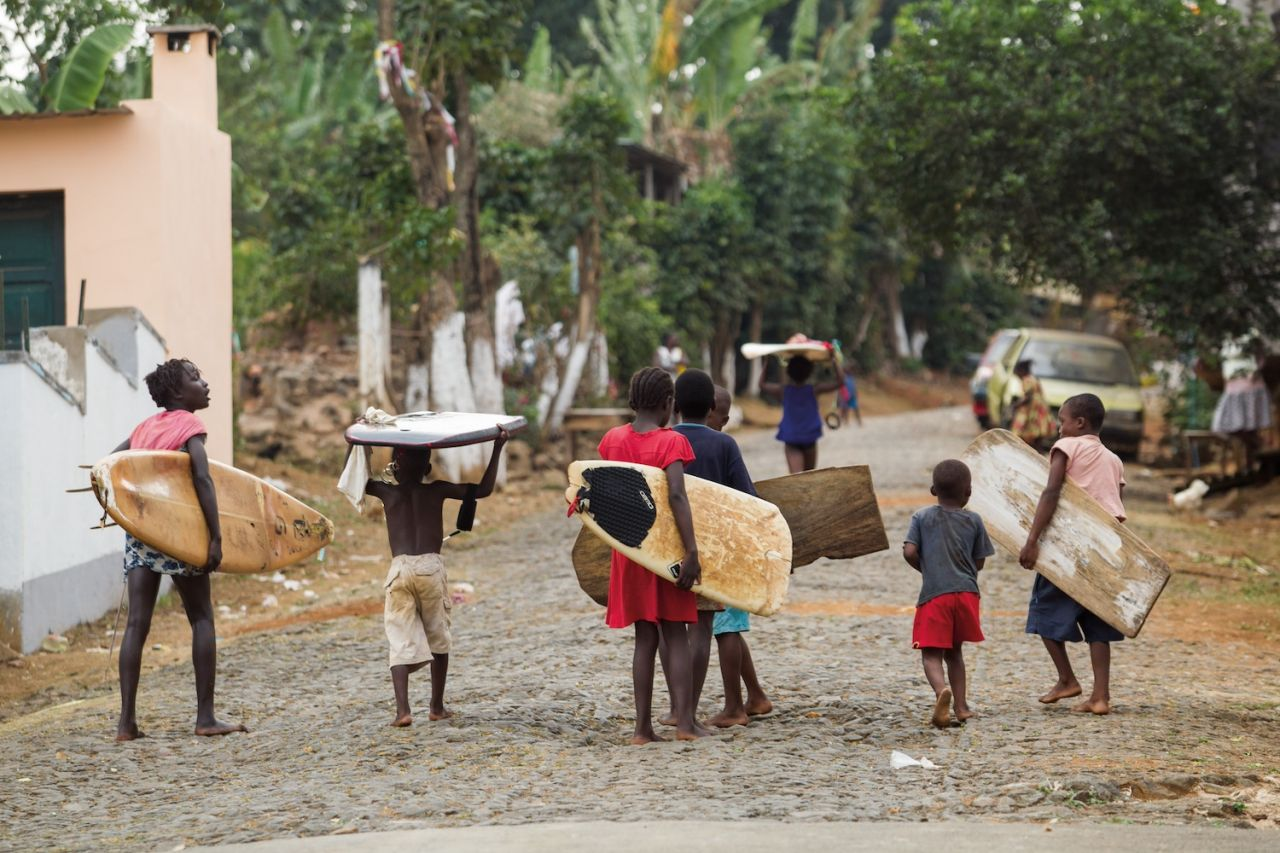
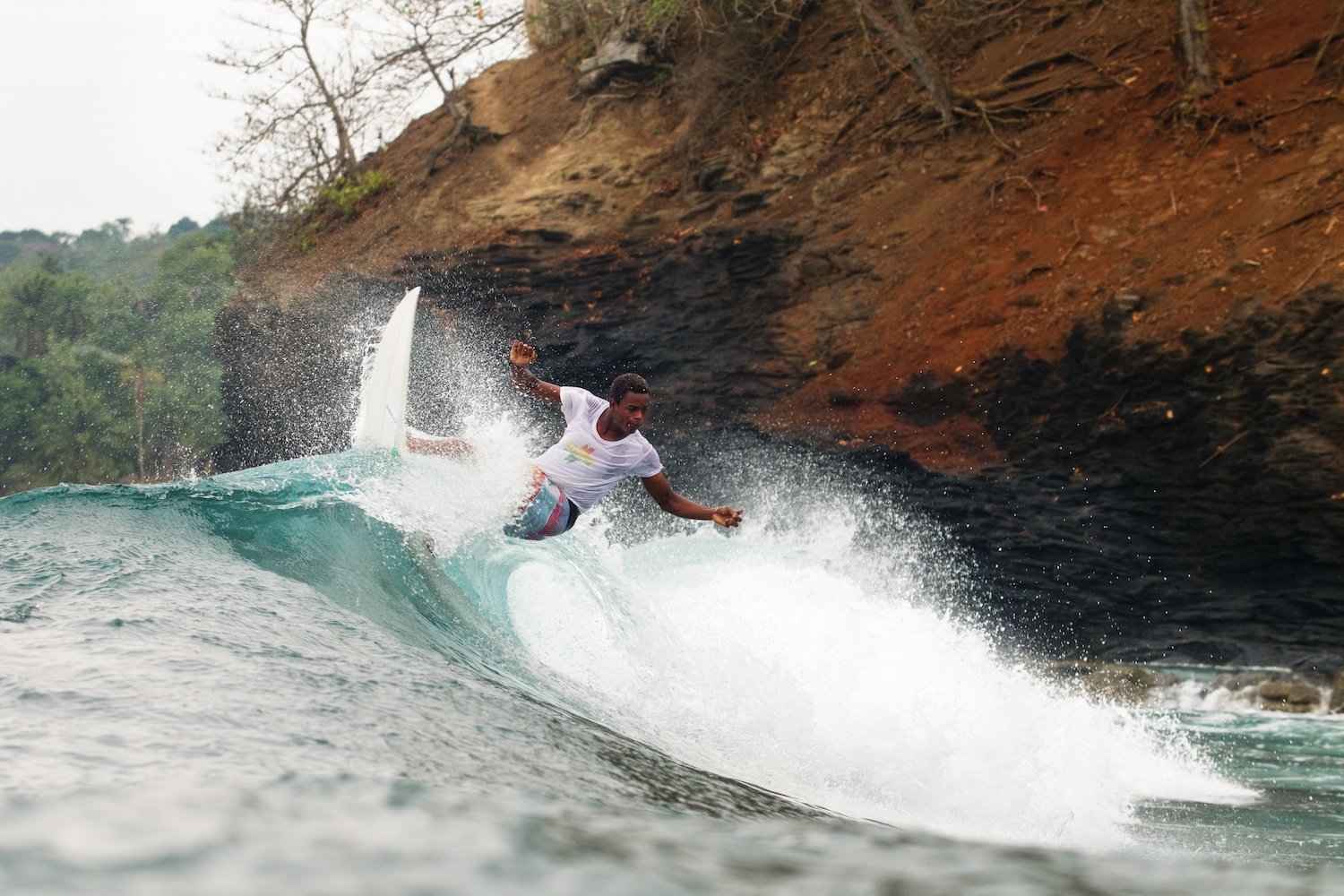
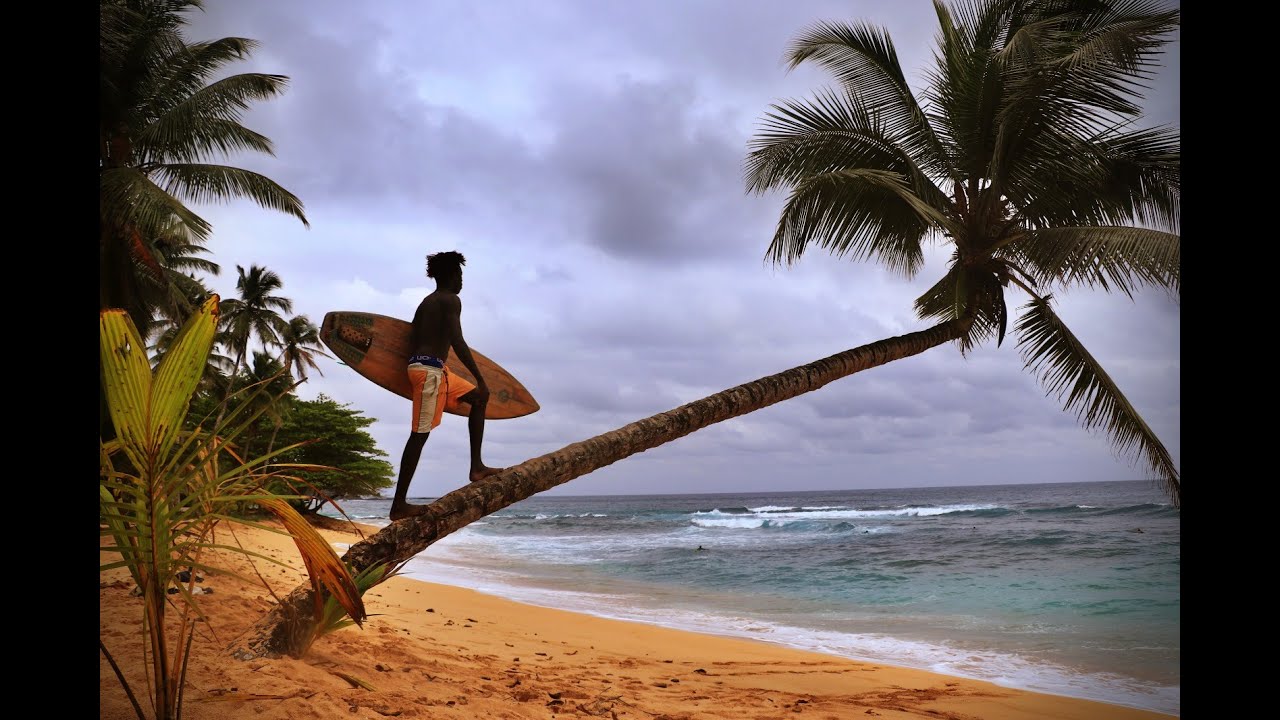
Before any surf magazine found São Tomé, the kids at Santana were already in the water. Not on imported boards - on tambuas, rough-hewn boards carved from the acacia tree with an axe. Four feet long, pinched rails, rolled bottom deck, squaretail. Each one different, each one made by hand. When visiting surfers first paddled out at Santana, they found a full lineup: kids riding snapped thrusters, old bodyboards, blocks of foam, and tambuas, bellyboarding the inside reform while watching the visitors throw airs off the point.
That scene is still there. The São Tomé Surf Club is based at Santana and remains the heart of the island's surf community. Local surfers who learned on tambuas are now learning to surf modern boards, teaching each other, building something entirely their own. As one of them put it to a visiting journalist: "Modern surfing is just beginning here. We see each other, we learn together."
The surf hub at Santana on the east coast is where the scene is rooted. None of the local surfers has a car. When visiting surfers hire local guides, buy from local families, or simply share boards in the water, it matters in a way that is difficult to overstate.
São Tomé's surf scene was not built for tourists. It was built by islanders, on handmade boards, out of a love for the ocean. That is still what it is.
✦ São Tomé Surf Breaks Guide
Discover the Waves of São Tomé
Radiation Point
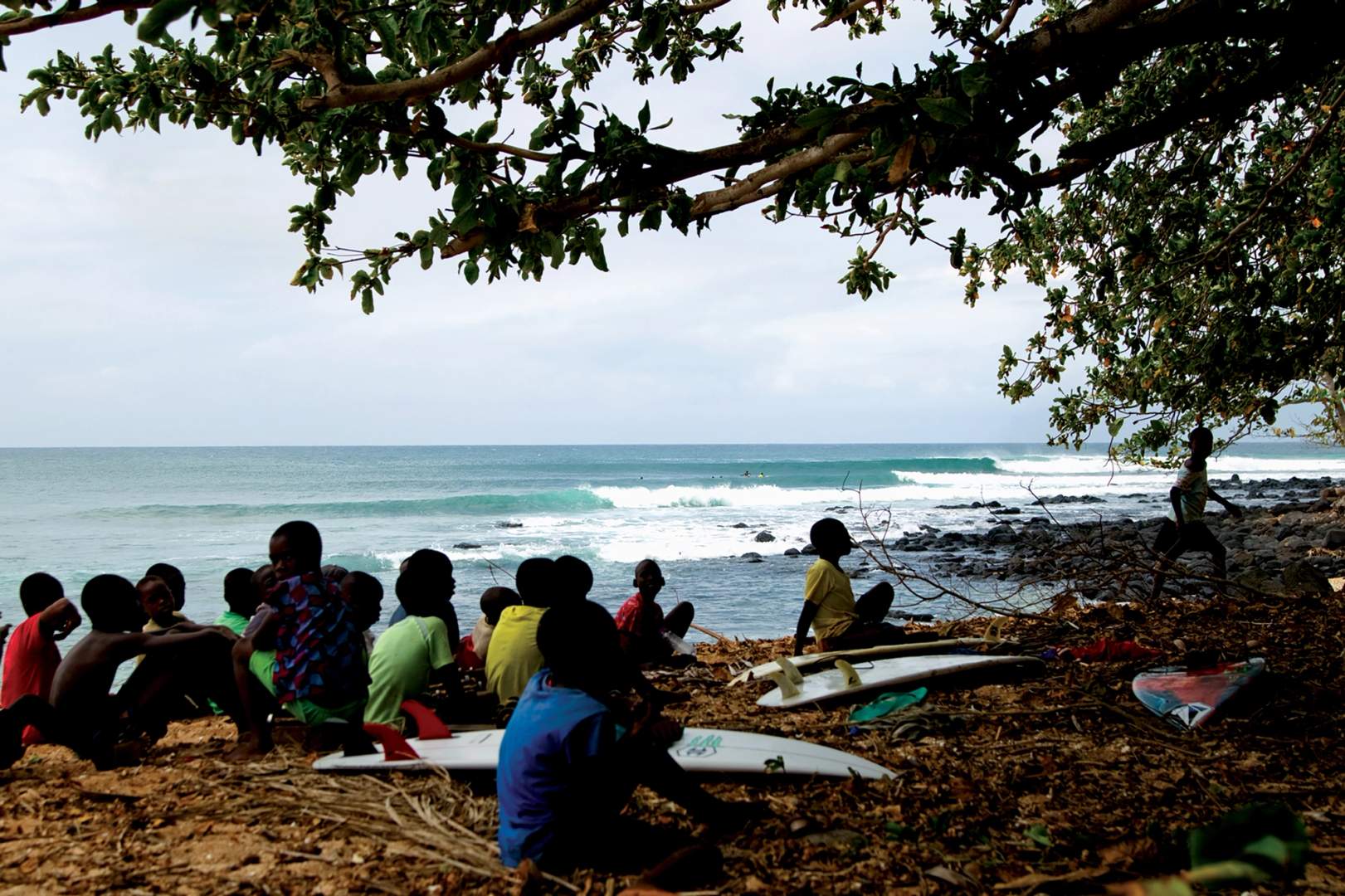
Right-hand point break north of Santana, named after the towering radio beacon of the former Voice of America relay that looms over the headland. South swell wraps around volcanic rock into long, mellow walls, widely cited as one of Africa's finest points. Known locally as Praia de Algés.
✦ Open in Google MapsSantana
The heart of São Tomé's surf scene, home to the São Tomé Surf Club and the island's most active local crew. A rocky beach break south of the capital where the community first took up surfing, still the easiest place to find a board and a session.
✦ Open in Google Maps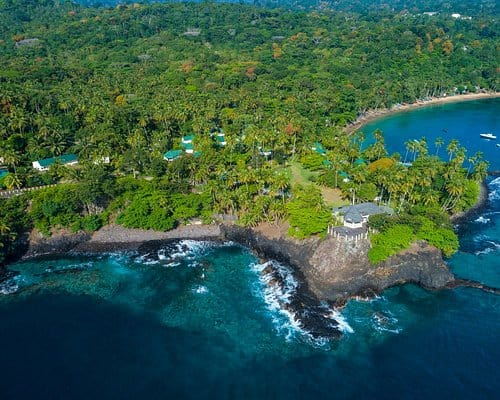
Sete Ondas
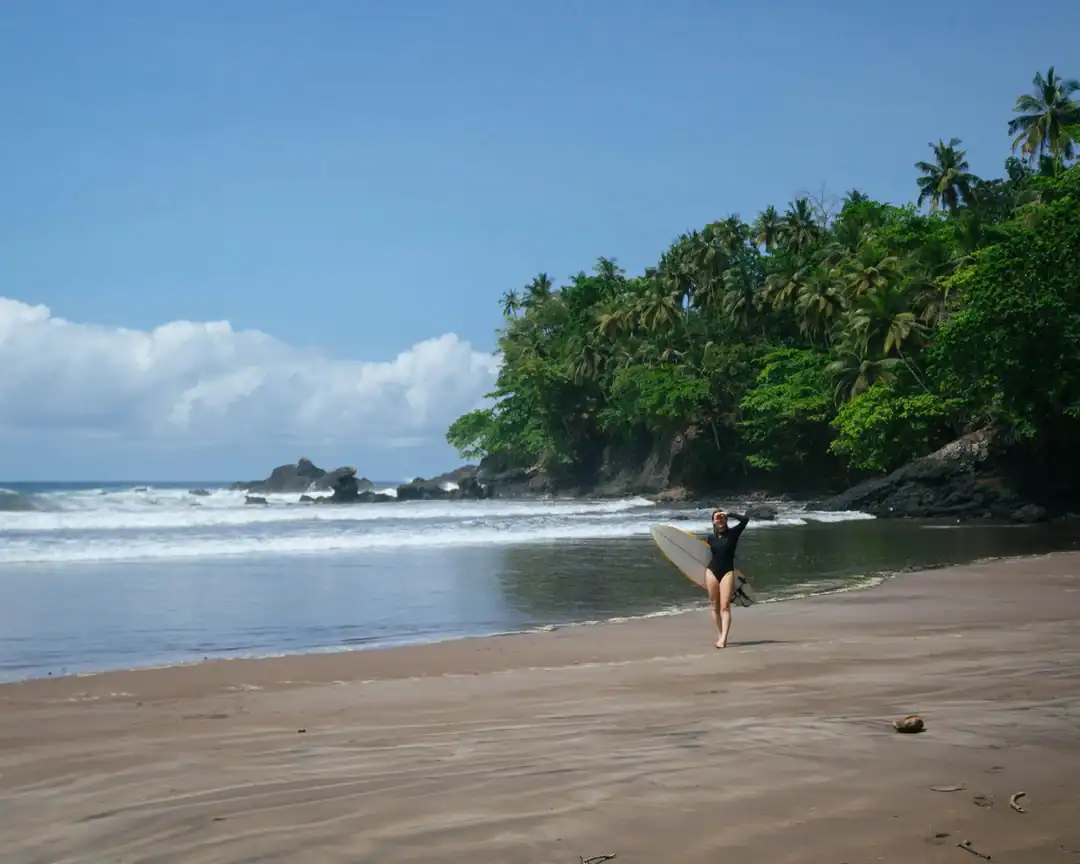
A beach break just south of Santana whose name translates as "Seven Waves". Sandy bottom and forgiving take-offs make it the go-to spot for beginners and where the surf club runs most of its lessons.
✦ Open in Google MapsPoint Zero
A left-hander breaking off Ilhéu das Rolas, the small islet straddling the equator south of São Tomé. First documented in 2000 by the Callahan, George and Rarick expedition that put the archipelago on the international surf map. Named for its position on latitude zero.
✦ Open in Google Maps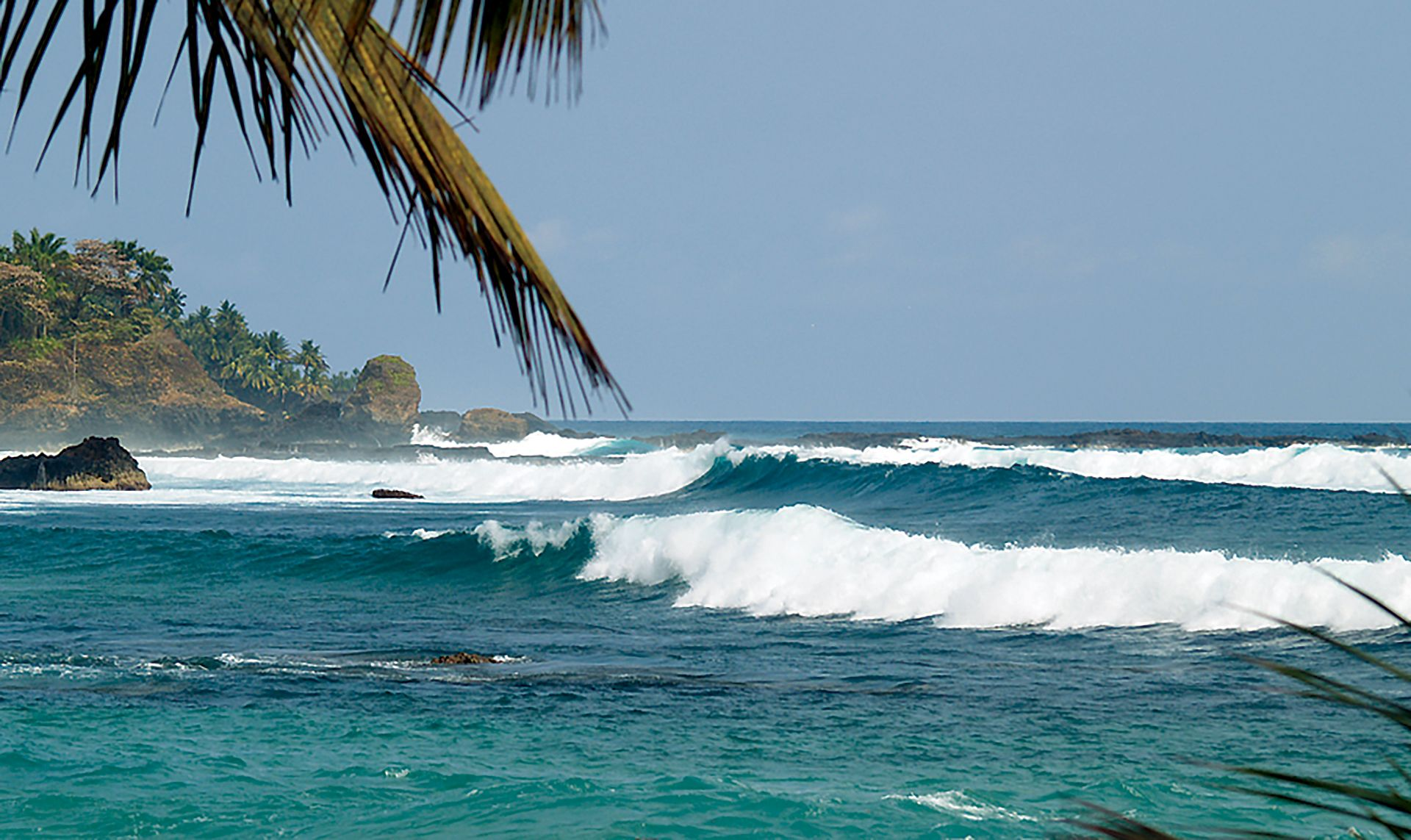
✦ What to Expect
Unhurried, Uncrowded, Warm
São Tomé's coastline shapes the surf. Volcanic rock, reef, lava shelves, and narrow bays all affect how swell bends and breaks. Conditions can change quickly with the tide and swell direction, so each spot needs to be read carefully before paddling out.
Reef and rock also make entry and exit more technical. Low tide can expose shallow sections, while more water can make a break less sharp. Reef boots can help at more exposed spots, and a basic first aid kit is worth carrying because surf gear and supplies are limited on the island.
✦ São Tomé Surfing History
Local Roots, Later Discovered
Surfing in São Tomé began with the island's own communities, particularly around Santana on the east coast, where local surfers were riding waves well before the archipelago appeared on any international surf map.
Point Zero at Ilhéu das Rolas was first documented for the wider surf world in 2000 by the Callahan, George and Rarick expedition. That journey put São Tomé on the radar for travelling surfers. Radiation Point, further up the east coast, has since been widely cited as one of Africa's best point breaks.
The São Tomé Surf Club is based at Santana and remains the centre of the island's surf community. Any visit to the island's surf scene should include time there.
✦ How Surfers Get Around
Mobile, Prepared, Flexible
You need your own vehicle
The breaks are spread across the island and roads can be slow. Public transport cannot carry boards, so most surfers hire a 4x4 for the duration of their trip. This gives you the freedom to chase conditions day by day.
Bring everything you need
Boards, fins, leashes, wax, and repair gear are hard to replace on the island. There are no full surf shops. I checked this at the TAP desk at São Tomé airport: TAP will carry surfboards even though it is not clearly stated on their site. Size limits and fees still vary, so check before travel.
Stay flexible
There is no fixed surf circuit and no set route. Most sessions depend on the tide, swell, and access on the day. A relaxed schedule works best here. Follow the coastline, check the conditions, and decide where to paddle out based on what the ocean is doing.
Smaller inter-island flights may restrict board length. Check in advance if you are travelling to Príncipe. For getting around São Tomé island with a board, our car hire service includes vehicles suited to the road conditions and coastline access required.
✦ Need Advice
Questions about the surf?
Jack lives on the island and can advise on current conditions, access, and anything else you need before you arrive. Message directly on WhatsApp or send an email.