Fire, Rock and Time
The Geography of theChocolate Islands
Two volcanic islands rising from the Atlantic, shaped by 31 million years of geological force. This is how they came to be.
How the Islands Formed
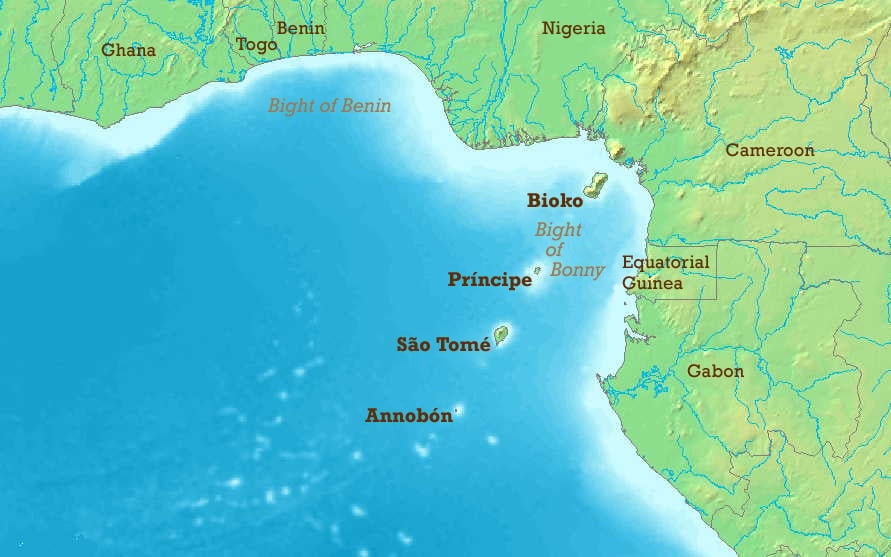
São Tomé and Príncipe were born from fire. Both islands are the product of the Cameroon Volcanic Line, a chain of volcanoes that stretches a thousand kilometres from the highlands of central Africa out into the Atlantic. Where the chain runs into the ocean, it built three islands from nothing: Príncipe first, around 31 million years ago, then São Tomé at roughly 15 million years, and finally the remote speck of Annobón at around 6 million years. None of them have ever been connected to the African mainland. Everything that lives here crossed open water to get here, which is why the wildlife is unlike anything else on the continent.
A Landscape Still Being Built
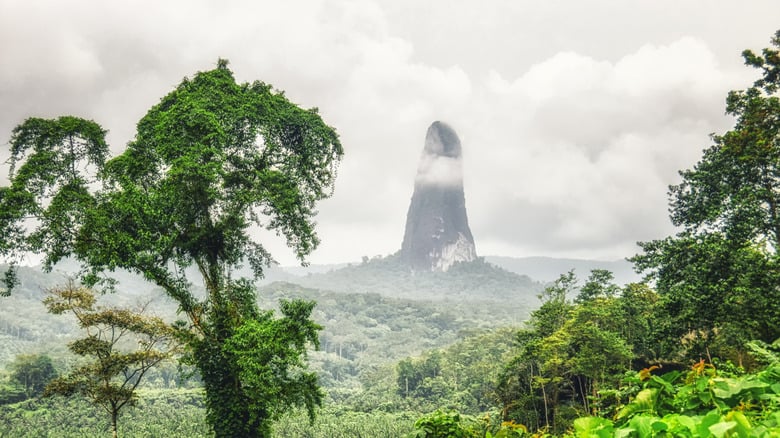
The volcanoes did not simply build the islands and stop. They kept going. São Tomé's oldest rocks are found not on the main island but on the tiny Cabras Islet to the north. The surface covering more than half the island, including the ground around its highest peaks, is geologically young, between 400,000 and 1.5 million years old. The result is an old island that looks and feels young: steep ridges falling sharply to the sea, deep river valleys cutting through dense forest, and volcanic rock formations rising from the jungle in shapes that seem almost impossible. Pico Cão Grande, the extraordinary stone needle in the island's south, is the most dramatic example, but the whole landscape carries that sense of rawness.
Pico de São Tomé reaches 2,024 metres above sea level. On Príncipe, Pico do Príncipe tops out at 942 metres. These are not large islands, but they rise steeply, and the elevation creates wildly different ecosystems within short distances.
How the Ice Ages Shaped the Islands
The islands were also once much bigger. At the peak of the last ice age, around 21,000 years ago, sea levels were roughly 134 metres lower than today. São Tomé was about 50 percent larger than it is now. Príncipe was around six times its current size. As the ice melted and the sea rose, populations of plants and animals were cut off from each other, isolated on what remained above water. That process, repeated over millions of years, is the engine behind the astonishing number of species found nowhere else on Earth.
Rivers, Craters and Coastline
The landscape that came out the other side is one of the most dramatic in the Atlantic. Rivers run from the central mountains through layers of forest to mangroves and estuaries on the coast. High in the mountains of São Tomé, the crater of Lagoa Amélia feeds the largest rivers in the island's north. On Annobón, the smallest and most remote of the three islands, a crater lake sits at the heart of the island, 150 metres above sea level.
These are not gentle landscapes. They are the product of deep geological forces, repeated volcanic upheaval, and millions of years of isolation. That isolation is the reason you come here.
Experience the Landscape
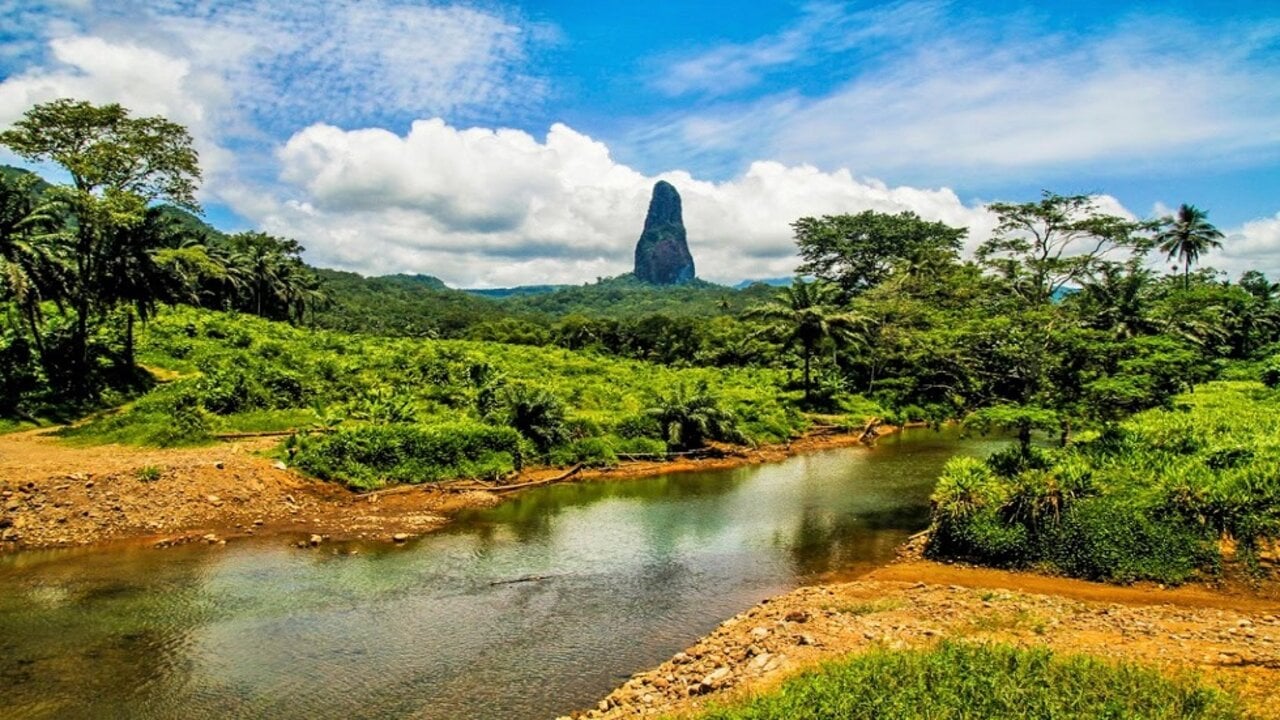
Trek to the summit of Pico de São Tomé, the highest point on the island, or explore the volcanic plug of Pico Cão Grande up close.